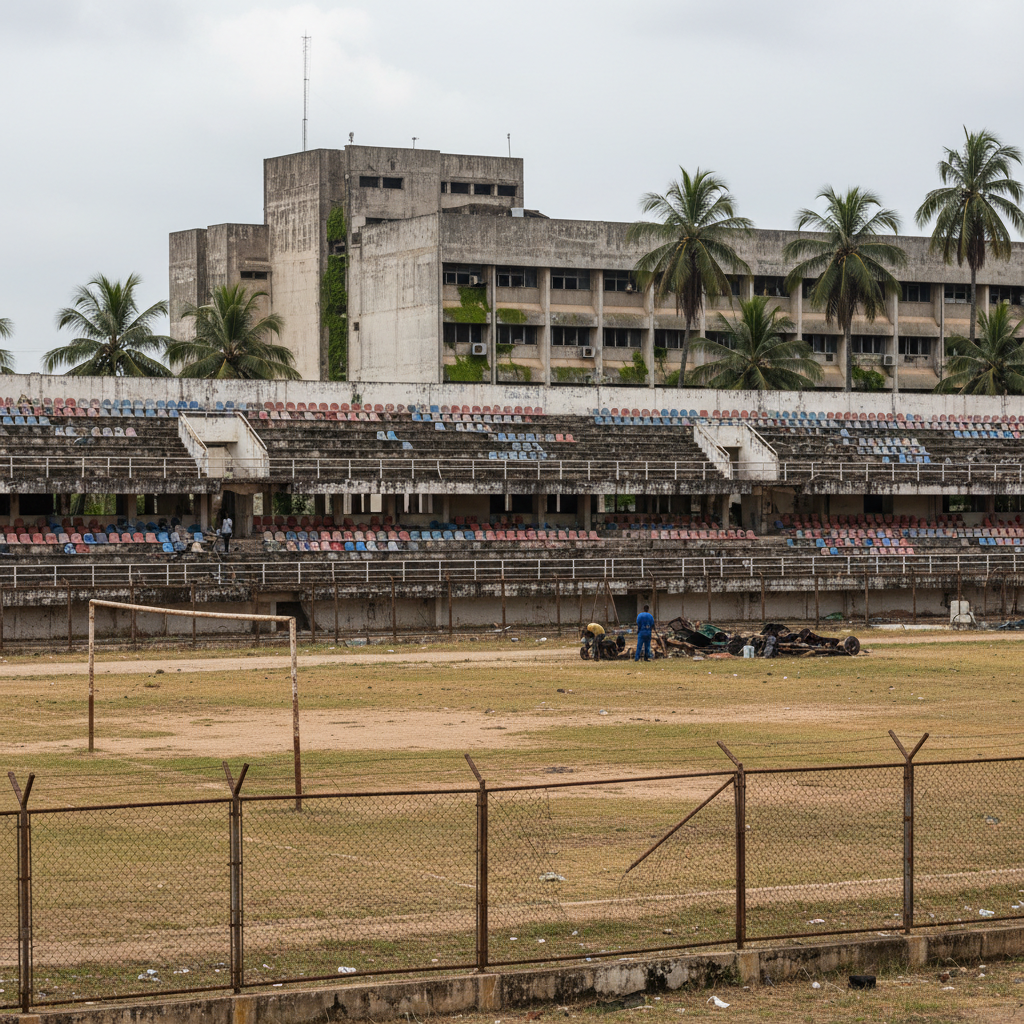
Ghana's sports facilities are falling into disrepair due to poor maintenance, according to Alhaji Yusif Sulemana, Deputy Minister for Lands and Natural Resources. He warned that some stadiums are steadily deteriorating. This decay risks substantial public investment in these critical national assets.
Mr. Sulemana raised these concerns during a parliamentary debate on the Public Accounts Committee's report. The report followed the Auditor-General's audit on small-scale mining regulation and sports stadia sustainability. He expressed shock at the state of facilities he visited, including the Bortman Stadium, which showed overgrown grasses and neglect. This neglect wastes significant public funds that could have funded other essential services like schools or hospitals.
The current state of sports infrastructure reflects a broader challenge in maintaining public assets across Ghana. Various government projects often face issues with long-term sustainability after initial construction. Data from past Auditor-General reports frequently highlight deficiencies in asset management across different sectors. This trend impacts the economic returns on significant state expenditures.
Mr. Sulemana criticized the lack of follow-through on facility upkeep, despite parliamentary discussions. He stated, “I was amazed to see grasses overgrown and the facility more or less going to waste.” He questioned whether private organizations would allow similar mismanagement of their investments. He stressed the need for accountability among those responsible for facility administration. He also mentioned that substantial public resources were invested in these facilities, emphasizing their economic opportunity cost.
The government must now consider allocating more resources for facility upkeep. Another option is to adopt commercial models enabling facilities to generate their own revenue. This approach could ensure long-term financial viability and reduce reliance on direct government funding. Decision-makers will likely face pressure to address these maintenance issues to protect public investments and promote sports development. Markets and stakeholders will watch how the government responds to these calls for action, particularly concerning fiscal responsibility.
Failure to act could lead to further financial losses and missed opportunities for sports-related economic activity. Effective management of these facilities could also boost Ghana's sports tourism potential. The issue underscores the need for robust asset management policies. These policies should cover all public infrastructure projects from inception to operational maintenance. This situation demands immediate attention to prevent further decay and safeguard taxpayer money.