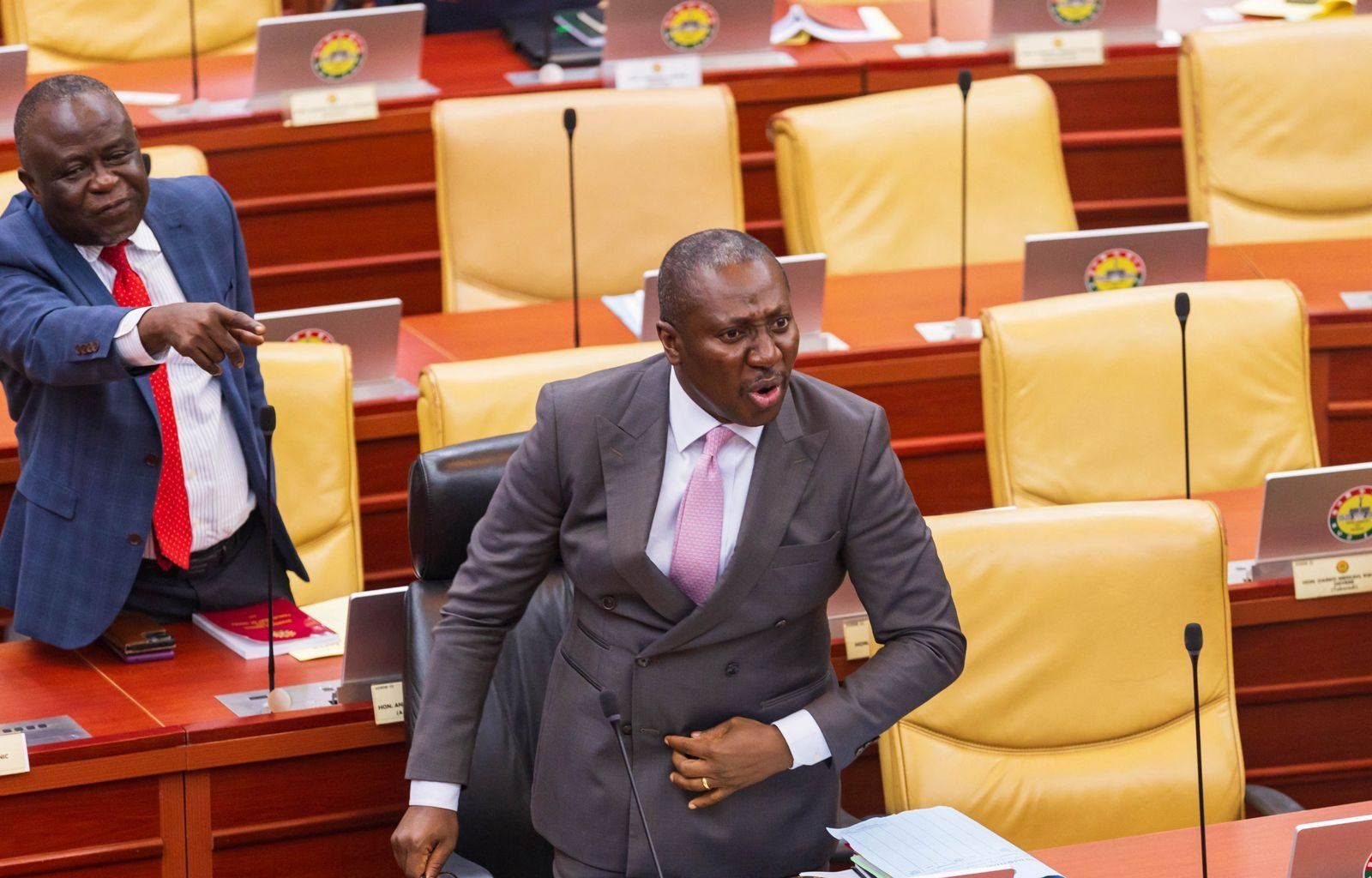
Minority Leader Alexander Afenyo-Markin has accused GoldBod of failing to account for US$1.7 billion, equivalent to GHS 22 billion. This financial discrepancy emerges as mining communities across Ghana face a severe health crisis linked to illegal mining pollution.
Mr. Afenyo-Markin stated that residents in these communities suffer from alarming rates of kidney and lung diseases. He attributed these grave conditions to extensive pollution of water bodies and air by illegal mining, known locally as galamsey. The Minority Leader emphasized that this health epidemic demands immediate government attention and action.
This situation highlights ongoing challenges in Ghana's mining sector, a critical contributor to the national economy. Gold, a major export, generated US$6.8 billion in 2022, according to the Bank of Ghana. However, illegal mining has long plagued the sector, causing environmental degradation and social unrest. Previous government efforts to combat galamsey have yielded mixed results, with critics often citing a lack of sustained enforcement and accountability. The alleged GHS 22 billion shortfall adds another layer of concern regarding financial oversight within the gold trade.
Speaking during Parliament’s emergency sitting on Monday, August 24, Mr. Afenyo-Markin declared, “So while Gold Board cannot account for 1.7 billion, an equivalent of 22 billion Ghanaian cedis, Ghanaians in our mining communities are paying with their kidneys, their lungs, and in other cases their lives.” He stressed that Parliament owes these affected citizens an answer and a solution. This direct statement underscores the urgency and gravity of the issues.
The government now faces increased pressure to address both the financial accountability of GoldBod and the public health emergency in mining areas. Stakeholders, including civil society organizations and international partners, will closely monitor official responses. Any perceived inaction could further erode public trust and potentially impact Ghana's reputation as a responsible mining jurisdiction. Investors and markets will also watch for clarity on the alleged financial discrepancies, which could influence confidence in the country's resource management. The health crisis, if left unaddressed, could lead to long-term economic burdens through increased healthcare costs and reduced productivity in affected regions. This dual challenge requires a comprehensive and transparent approach from authorities.
The call for accountability comes at a time when Ghana is striving to stabilize its economy and attract foreign investment. Transparency in the management of natural resources, particularly gold, is crucial for maintaining investor confidence. The alleged US$1.7 billion discrepancy, if proven, could signal significant governance issues within the sector. Furthermore, the health implications for mining communities represent a profound human cost. Addressing these issues effectively will require coordinated efforts from various government agencies, including the Ministry of Lands and Natural Resources, the Ministry of Health, and financial oversight bodies. The long-term sustainability of Ghana's mining industry depends on resolving these complex challenges. The government's response will be a key indicator of its commitment to both economic integrity and public welfare.