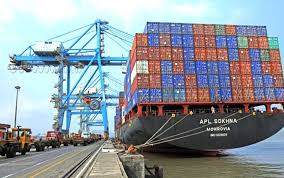
Customs revenue at Ghana's Tema Port has more than doubled following the implementation of the Integrated Customs Management System (ICUMS). Monthly collections surged from approximately GHS 500 million to GHS 1.2 billion, according to a recent World Bank report. This substantial increase highlights the system's effectiveness in boosting government income.
The sharp improvement stems from stronger compliance and reduced opportunities for revenue leakage and evasion. The digital transformation of Ghana’s principal seaport has also led to greater efficiency in customs administration. The World Bank's 10th Ghana Economic Update, titled 'Reset for Growth,' detailed these findings.
This revenue surge is crucial for Ghana's broader economic stability and public finance management. Increased customs collections provide the government with more resources for development projects and debt servicing. The shift from manual processes to a unified digital platform aligns with Ghana's ongoing efforts to modernise its economy. This move also supports the government's fiscal consolidation agenda.
The World Bank specifically credited ICUMS for this revenue surge, faster clearance times, and reduced customs leakages. The multilateral institution stated that government data showed monthly customs revenue supported by ICUMS remained around GHS 1.2 billion. Cumulative collections surpassed GHS 120 billion during the system's first five years of operation through 2025.
The successful deployment of ICUMS has significant implications for Ghana's fiscal outlook and trade competitiveness. Decision-makers will likely consider expanding similar digital solutions to other revenue-generating sectors. This success story could also encourage further investment in technology to enhance transparency and efficiency across government operations. Markets will observe how this improved revenue collection impacts Ghana's budget deficit and overall economic health.
Before ICUMS, monthly customs revenue at Tema Port generally ranged between GHS 500 million and GHS 600 million. Collections then rose sharply to about GHS 1.2 billion in April 2020, the first month of ICUMS operations. Between April and December 2020, monthly revenue remained substantially above pre-ICUMS levels. It fluctuated between approximately GHS 1.2 billion and GHS 1.4 billion, demonstrating consistent performance.
ICUMS, operated by Ghana Link Network Services Ltd, digitised and integrated processes previously conducted manually. This reduced human intervention and strengthened transparency and administrative efficiency. The system combines customs administration with trade facilitation and security functions within a single digital environment. This improves the ability of Customs to scrutinise declarations, verify documentation, and process consignments more effectively.
The World Bank confirmed that ICUMS has made document falsification more difficult. It has also reduced delays and improved transparency within the clearance process. Technology-driven inspection has become another important component of this reform. Customs operations at the ports increasingly use non-intrusive inspection technologies, including X-ray systems and GAMA systems. These technologies allow officers to examine consignments without opening containers, speeding up legitimate goods' clearance.
The growing use of non-intrusive inspection technology serves two critical objectives. It protects government revenue and strengthens security at Ghana’s borders. ICUMS has also created a digital platform for multiple state institutions involved in the clearance process to collaborate. Relevant regulatory agencies are connected, allowing them to participate in joint inspections and exchange information in real time. This integrated approach enhances overall port efficiency and security.
The system also uses traders’ compliance history to determine the level of scrutiny applied to consignments. This allows authorities to direct greater enforcement resources towards higher-risk transactions. Under this tiered risk-management arrangement, traders are placed into different channels based on their compliance profile. Importers assigned to the Red Channel face stringent checks, while Yellow Channel traders undergo moderate scrutiny. Highly compliant traders are placed in the Green Channel, experiencing faster processing.