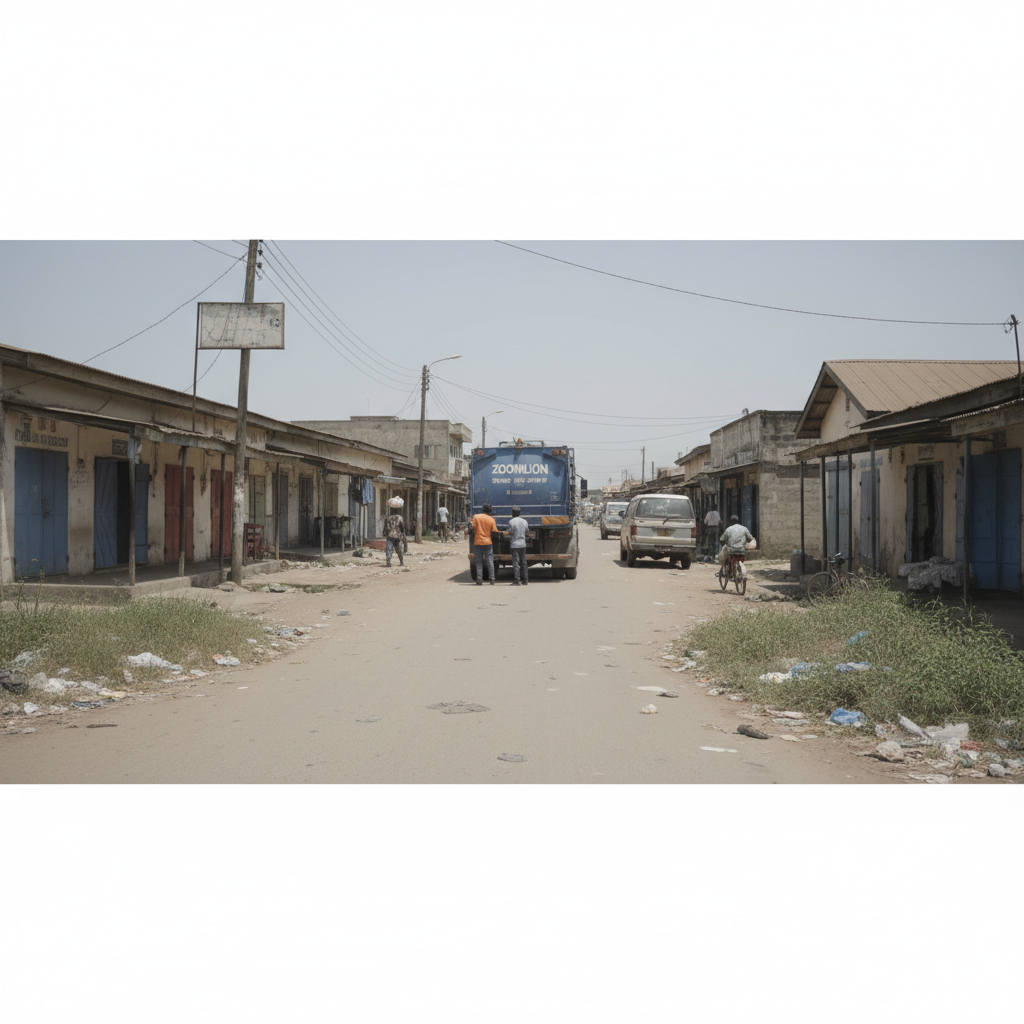
Zoomlion Ghana Limited has ceased its daily street cleaning operations across the country. The company's contract with the Ghanaian government for public cleansing expired and has not been renewed.
This shift means the responsibility for daily street cleaning now falls to Ghana's Metropolitan, Municipal, and District Assemblies (MMDAs). Zoomlion continues to execute its separate government contract for solid waste collection. The company emphasized that any recent street cleaning by its staff is on humanitarian grounds and not under a formal government agreement.
This development comes as Ghana grapples with persistent sanitation challenges, particularly during the rainy season. The cessation of routine sweeping raises concerns about waste accumulation, which can exacerbate flooding. Accra, the capital city, has experienced significant flooding in recent years, highlighting the critical role of effective waste management.
Ernest Morgan Acquah, Government Affairs Manager for Zoomlion, clarified the company's position. He stated, “ZoomLion is a private entity. We have contracts with the government for solid waste collection. We previously had the contract for public cleansing, but that contract ended and has not been renewed.” Mr. Acquah further explained that recent clean-up efforts by Zoomlion personnel were part of their corporate social responsibility, not contractual obligations.
The expiration of this contract implies increased pressure on MMDAs to manage urban sanitation effectively. Previously, daily sweeping contributed to reducing flood impacts, notably after the 2015 Accra floods. Without this routine service, there is a risk of increased debris in drains, worsening potential flood scenarios as more rains are anticipated. This situation also brings to light broader issues within Ghana's waste management infrastructure, including financial support for transfer stations and recycling plants.
Decision-makers will need to address how MMDAs will absorb this new responsibility and secure adequate funding. The public and local authorities must monitor sanitation levels and the impact on urban flooding. A swift and sustainable solution for daily street cleaning is crucial to prevent further deterioration of public health and environmental conditions in Ghanaian cities.
Zoomlion also highlighted operational challenges affecting waste management infrastructure. Inadequate financial support has hampered transfer stations and recycling plants. The strain on the system was visible with long queues of tricycle waste collectors, known as Aboboyaa operators, near the Malam area. These issues underline the need for a comprehensive review of Ghana's waste management strategies.
The company acknowledged that no system is perfect but maintained its overall approach had been effective with sustained support. The current interruption in the system contributes to the sanitation challenges observed today. Future actions will determine how Ghana navigates these complex waste management responsibilities.