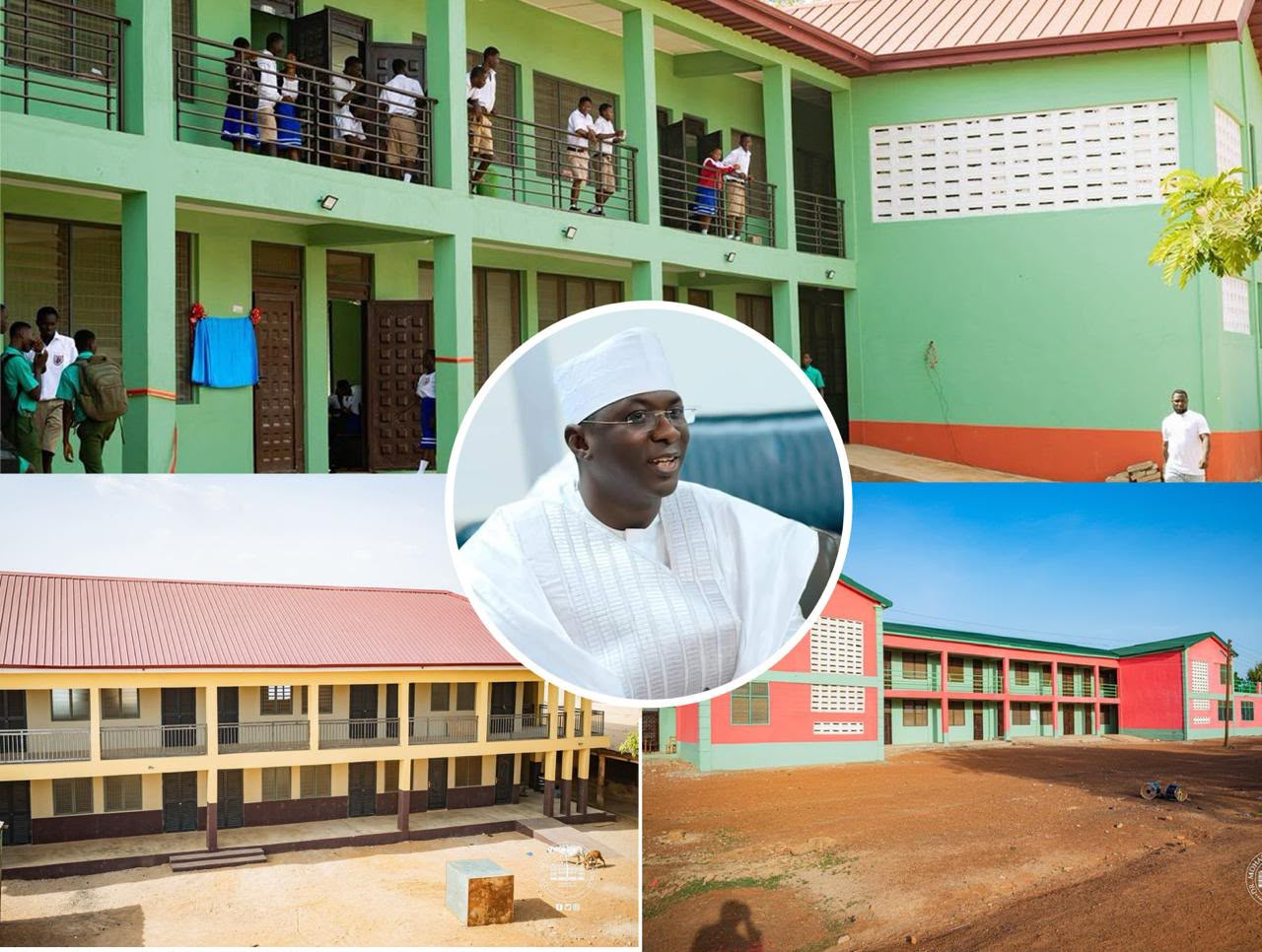
Former Finance Minister Dr. Mohammed Amin Adam has announced substantial investments in education across the Northern Region. He confirmed a significant portion of these funds supported new classroom blocks and technical institutes. This effort aims to boost educational infrastructure and opportunities for young people in the area.
These educational projects include a 12-unit classroom block at Northern School of Business in Tamale (NOBISCO) and another at Tamale Senior High School (TAMASCO). Dr. Amin Adam also cited a block at Markaziyya Islamic School in Zogbeli and a dormitory block at Ambariyya Islamic Institute in Tamale. Furthermore, Pishigu Senior High School received a 12-unit classroom block, and a new Nyong Technical Institute was established. He stated that outside of government funding, private companies provided financial support for Pishigu Senior High School and Nyong Technical Institute. The former Minister also mentioned setting up scholarship schemes for students in Karaga, Aboabo, Zogbeli, and Tamale.
These investments align with Ghana's broader strategy to improve human capital through education, especially in underserved regions. The government has consistently highlighted education as critical for economic development and poverty reduction. Data from the Ghana Statistical Service shows educational disparities persist between the north and south, making targeted interventions crucial. Dr. Amin Adam's efforts contribute to bridging this gap, providing essential facilities for learning and skill development. This initiative also resonates with the government's Free Senior High School policy, requiring adequate infrastructure to accommodate increasing student enrollment.
Dr. Amin Adam, also the Member of Parliament for Karaga, explained his motivation. “I hold education as a major pivot for development,” he stated in an interview. He further added, “Both Pishigu Senior High School and Nyong Technical Institute were not built by the government. I sourced financial support from companies to build them.” This approach emphasizes private sector involvement in public welfare projects. He also addressed concerns about the newly commissioned 6,000-capacity Masjid Al-Noor mosque, noting it includes a school and a research centre. “I have always been an Islamic educationist long before I went into politics,” he clarified.
The successful completion of these educational facilities is expected to enhance access to quality education in the Northern Region. Increased access could lead to improved literacy rates and a more skilled workforce in the long term. This development might attract further private sector investment in similar social projects, setting a precedent for public-private partnerships. The sustained impact on youth development and local economies will be a key area for observation. Policymakers will likely monitor the effectiveness of such community-driven educational initiatives.