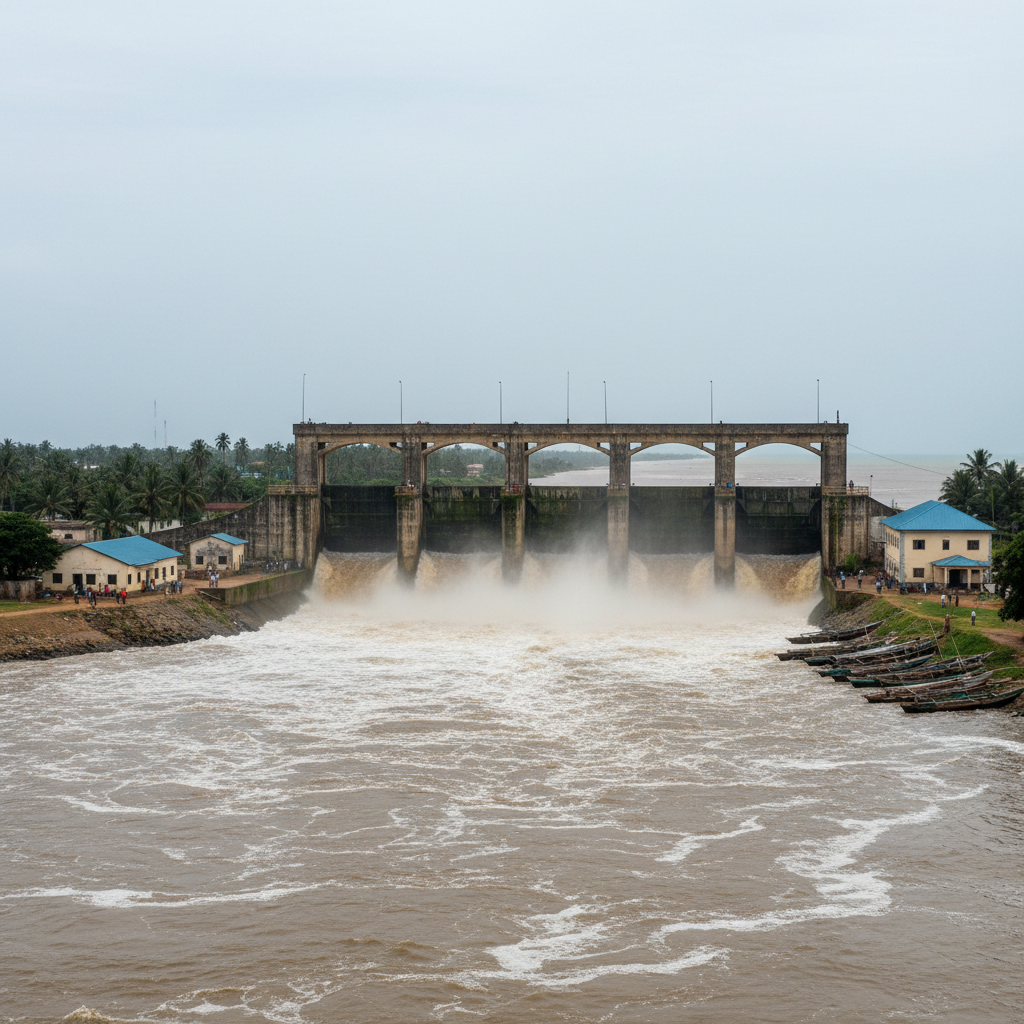
Keta Lagoon floodgates have opened to discharge an estimated 96 million cubic metres of excess water, addressing severe flooding in the Keta Municipality. This urgent measure aims to alleviate the impact on several communities experiencing high water levels.
Heavy rainfall primarily caused the current flooding, not the Akosombo Dam spillage that led to similar issues in 2023. The Keta Lagoon’s water level rose by 1.5 metres above its natural level. Engineers are closely monitoring the outflow to prevent the drought conditions experienced during a previous late closure.
This intervention is crucial for the affected communities within the Keta Municipality, a region frequently battling the effects of extreme weather. The recurring flood events highlight the ongoing challenges in water management and infrastructure resilience in Ghana's coastal areas. The affected areas include Anlo-Afiadenyigba, Seva, Atiavi, Anyako, Atiavi-Glime, Fiaxor, and Shime, among others.
Togbi Tenge Dzokoto Gligui VII, Paramount Chief of the Amugo-Vego Traditional Area, urged residents to remain calm. He commended the swift action by the Keta Municipal Chief Executive, Wisdom Seade, and the engineering teams. Togbi Dzokoto emphasised the importance of careful monitoring by engineers and technical staff from the Volta River Authority (VRA) to ensure the gates close at the appropriate time.
Engineer Rex Edeckor, leading the technical team, confirmed that the opening of the floodgates has already shown positive results, with water levels receding in many areas. Engineer Edeckor explained that the Keta Lagoon spans approximately 40 kilometres by 80 kilometres. He anticipates floodwaters will fully recede within one to two weeks. This timeline will allow impacted communities to begin recovery efforts.
The successful management of this flood situation is vital for the local economy and residents' livelihoods. Decision-makers and local authorities will closely watch the receding water levels and the long-term effectiveness of the floodgate operations. Future infrastructure planning must consider these recurring events to minimise economic disruption and protect communities in the Keta Municipality.
The prompt response helps mitigate further damage and potential displacement. Lessons learned from previous incidents, such as the 2023 Akosombo Dam spillage, are informing current operational strategies. Continued collaboration between traditional leaders, local government, and technical experts remains essential for managing future environmental challenges in the region.