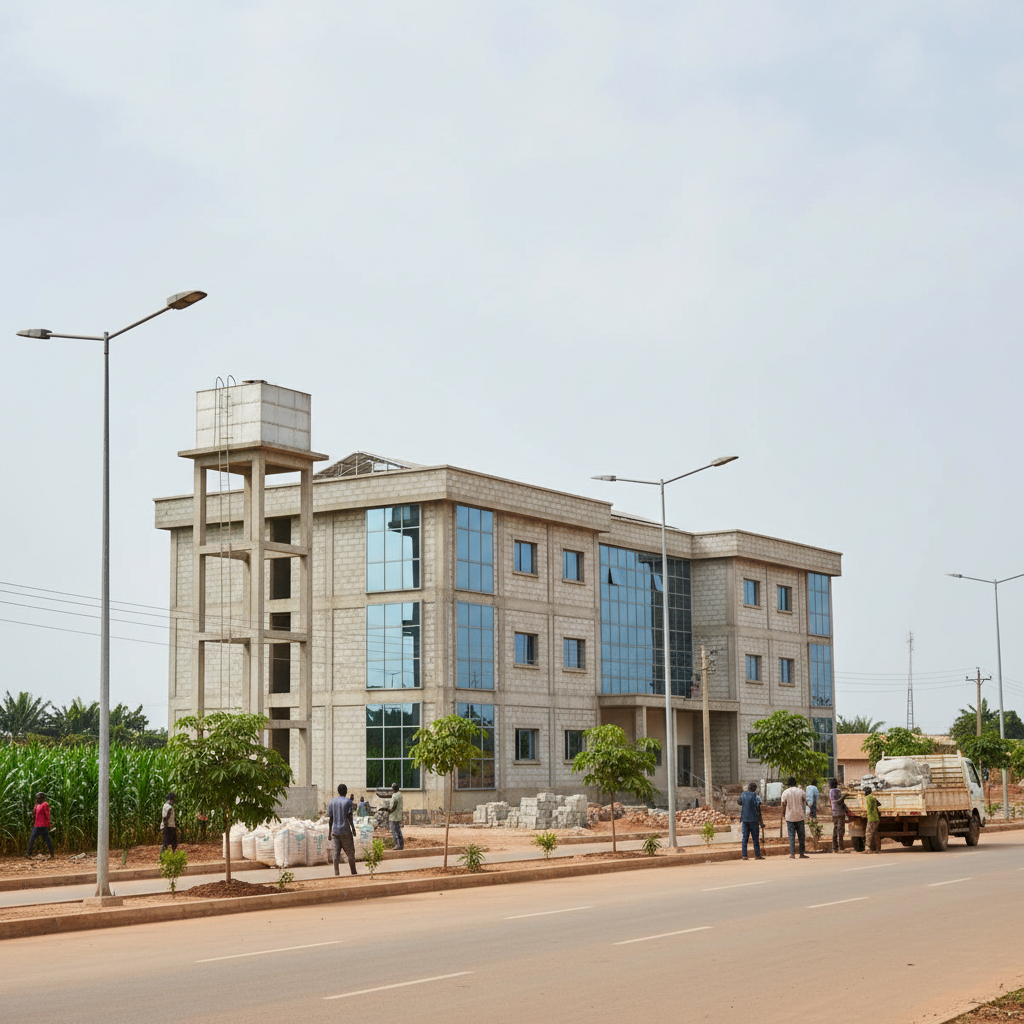
The Mamprugu Moagduri District Assembly has announced the completion of 23 major development projects across key sectors. The assembly implemented these projects between January 2025 and June 2026. This initiative showcases a significant investment in local development.
District Chief Executive Abdul Aziz Abdul Rahman stated that the assembly received GHS 13.7 million from the District Assemblies Common Fund (DACF). This amount represents 72.3 per cent of its approved 2025 budget of GHS 18.96 million. The funds, along with support from development partners, were invested in education, health, and water and sanitation.
This development underscores the ongoing drive for decentralized development across Ghana. Local assemblies play a crucial role in bringing government services closer to citizens. These projects align with national goals of improving basic infrastructure and social services. Data shows consistent efforts by district assemblies to utilize allocated funds for tangible community benefits.
District Chief Executive Abdul Aziz Abdul Rahman presented these achievements at the assembly's maiden Public Accountability Series. He described the accomplishments as clear evidence of the assembly's commitment to transparency, accountability, and inclusive development. This progress occurred despite existing funding constraints.
Looking ahead, the assembly plans to tackle several challenges that hinder further development. These include delays in DACF releases, persistent funding shortfalls, and limited access to potable water. Decision-makers will monitor how effectively the assembly addresses these issues to sustain momentum. Further investment in infrastructure and social welfare is expected.
Education received the largest share of projects, with nine interventions. Health and water and sanitation each saw four projects implemented. Other initiatives covered governance, security, and trade, bringing the total to 23. This diversified approach aims to address multiple community needs simultaneously.
Key projects included the construction and furnishing of CHPS compounds at Zukpeni and Zanloo. The Yagaba CHPS Compound was also completed. Several communities benefited from new or renovated classroom blocks and dormitories. Borehole drilling and water system rehabilitation improved access to clean water. A modern 24-hour market commenced operations in Yagaba, boosting local commerce.
The assembly also reported gains in agriculture through support from the World Bank and other partners. Over 50,000 cashew seedlings were distributed to farmers. Furthermore, 3,456 smallholder farmers received agricultural inputs. Some 600 farmers were trained in climate-smart farming practices. These interventions aim to enhance food security and farmer incomes.
On social protection, the assembly allocated over GHS 520,000 under the Disability Common Fund. These funds supported persons with disabilities through various initiatives. These included distributing deep freezers, small ruminants, and providing financial aid for income-generating activities. Educational support and NHIS registration were also part of the package.
The assembly has outlined its 2026 priorities to address identified challenges. Plans include extending electricity to underserved communities and drilling more boreholes. Construction of office facilities for the Ghana National Fire Service and National Ambulance Service is also planned. Intensified enforcement of sanitation by-laws is another key priority. These steps aim to improve living conditions further.