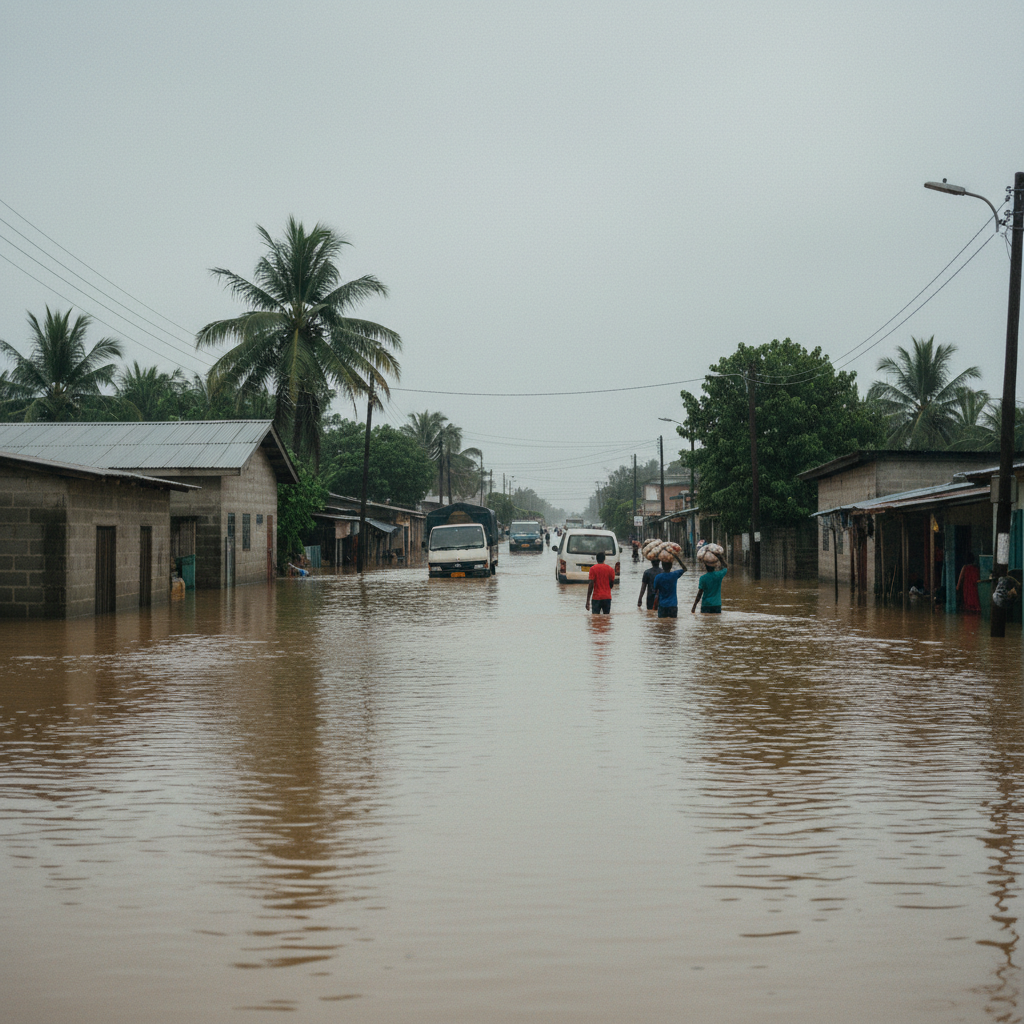
Ghana’s annual flooding crisis, causing millions of Ghana Cedis in property damage and loss of life, stems primarily from human actions, not natural disasters. Irresponsible disposal of solid waste into drainage systems is the leading cause, transforming streets into raging rivers during the rainy season. This consistent pattern forces the Ghana National Fire Service (GNFS) to routinely rescue citizens trapped by rising waters across the nation.
Alex King Nartey, a Health, Safety, and Disaster Communication Specialist, emphasizes that these devastating floods are direct consequences of human indiscretion. Many citizens treat gutters and open drains as trash cans, believing authorities will clean them. This dangerous mindset perpetuates the problem, despite the clear function of gutters to channel water, not waste. The lack of accountability insulates citizens from the immediate realities of their actions.
This ongoing crisis significantly impacts Ghana’s economic stability by damaging infrastructure and displacing communities. Annually, businesses and households suffer considerable financial losses due to destroyed property. The repeated expenditure on emergency response and reconstruction diverts critical public funds from other development projects. Data consistently shows that urban areas, particularly Accra, bear the brunt of these preventable disasters, hindering economic growth and increasing poverty in affected regions.
Nartey argues that moral persuasion alone has proven insufficient to change behaviour. He proposes a concerted, nationwide push for aggressive legal and financial deterrents. He advocates for hefty, non-negotiable fines for anyone caught dumping refuse in unauthorized areas. Offenders unable to pay should perform mandatory community service, specifically clearing the drains they blocked. Additionally, Nartey suggests establishing dedicated sanitation courts to swiftly try offenders, ensuring visible justice.
The implications of this inaction are severe, risking continued property destruction, loss of lives, and enormous economic costs. Decision-makers must consider integrating these proposed punitive measures with broader institutional and technological solutions. This includes re-engineering urban drainage systems by transitioning to subterranean, covered drains that prevent waste disposal. Leveraging technology through CCTV cameras at dumping hotspots and a mobile-friendly “Sanitation Reporting App” would empower citizens and enhance enforcement. Reliable, decentralized door-to-door waste collection services are also critical to provide a viable alternative to indiscriminate dumping. Fundamentally, treating flooding as a national security threat requires equipping bodies like the GNFS and the National Disaster Management Organization (NADMO) with advanced logistical tools. Without radical changes, Ghana risks persistent submergence of its cities and communities.