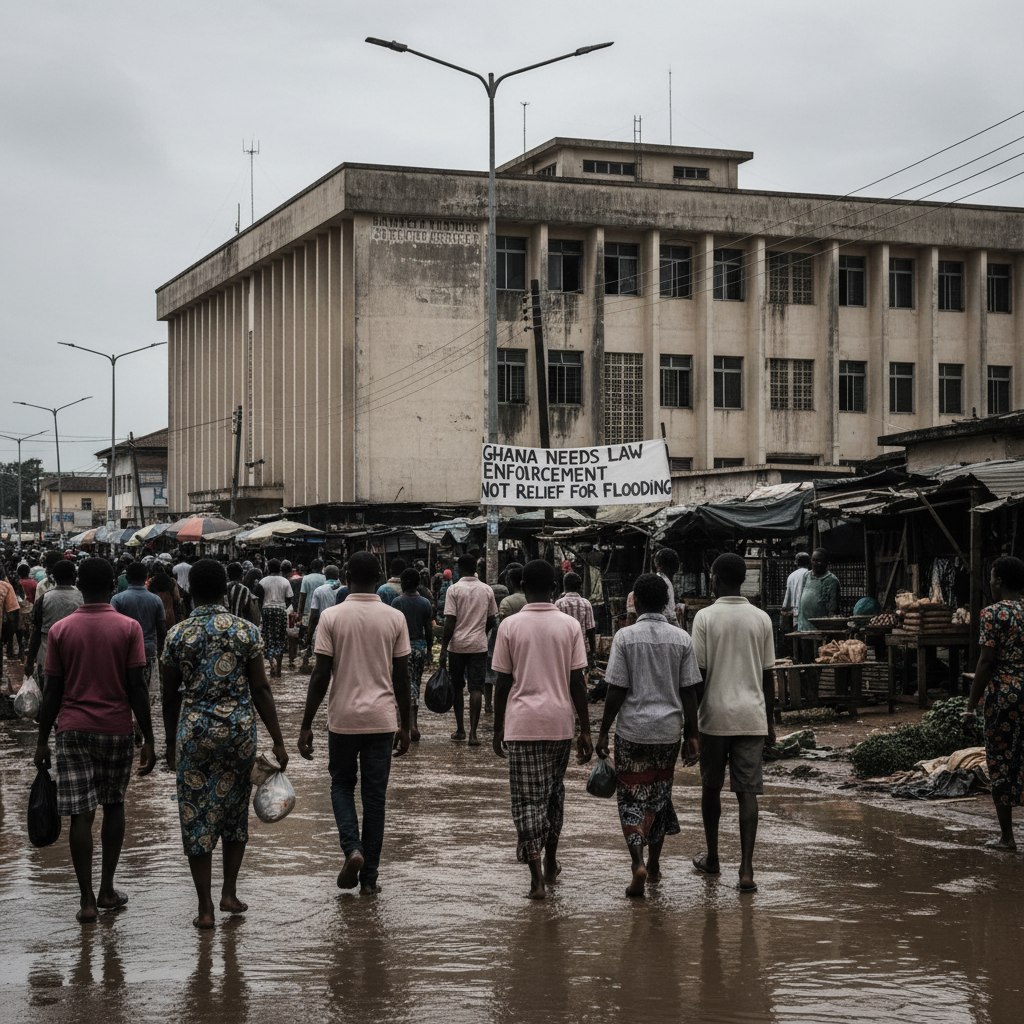
Samson Lardy Anyenini, host of JoyNews' Newsfile, stated that Ghanaians are no longer interested in political promises or the distribution of relief items after recurring floods. He emphasized that authorities must enforce laws to prevent future disasters, rather than offer temporary solutions. This declaration was made during his 'Samson's Take' segment on Saturday, July 4, 2026.
Anyenini argued that citizens expect decisive leadership and sustainable solutions from their government. He highlighted that past interventions have repeatedly failed to tackle persistent flooding in Accra and other areas effectively. The legal expert blamed the authorities for avoidable deaths, ruined livelihoods, and disease outbreaks stemming from uncollected waste during floods.
This statement underscores a significant public frustration with the economic and social costs of annual flooding in Ghana. The country faces an estimated GHS 4.2 billion in annual losses from flood damage. These losses include damage to infrastructure, homes, and businesses. Floods disrupt economic activity, affect agricultural output, and displace thousands of people each year. The National Disaster Management Organisation (NADMO) often distributes relief items, but critics argue this approach neglects long-term prevention.
Samson Lardy Anyenini directly challenged decision-makers. He stated, “Today, every avoidable death, every ruined livelihood, every disease that breeds in these uncollected heaps is on you.” He added, “We don’t need your prayers, we don’t need your post-disaster warehouse distributions, we need you to enforce the law.” Anyenini concluded that until leaders demonstrate political backbone, they bear responsibility for the consequences of persistent flooding.
The call for law enforcement implies stricter adherence to building codes, improved waste management, and protection of natural waterways. Ghana’s urban planning laws often go unenforced, leading to construction in flood-prone areas. This lax enforcement exacerbates flood risks and increases the economic burden on the state and its citizens. Decision-makers must now consider a paradigm shift from reactive relief to proactive prevention and legal accountability.
The sentiment from Anyenini is not isolated. Other public figures and institutions have echoed similar concerns. The Ghana Medical Association (GMA) has warned of growing public health risks from floods. Professor Peter Quartey of the Institute of Statistical, Social and Economic Research (ISSER) has also stated that Ghana is wasting billions on failed prevention efforts. These voices suggest a growing consensus that current approaches are unsustainable. The government's actions, or lack thereof, in enforcing existing laws will be closely monitored. This could become a critical issue for public trust and economic stability as the country approaches future rainy seasons.