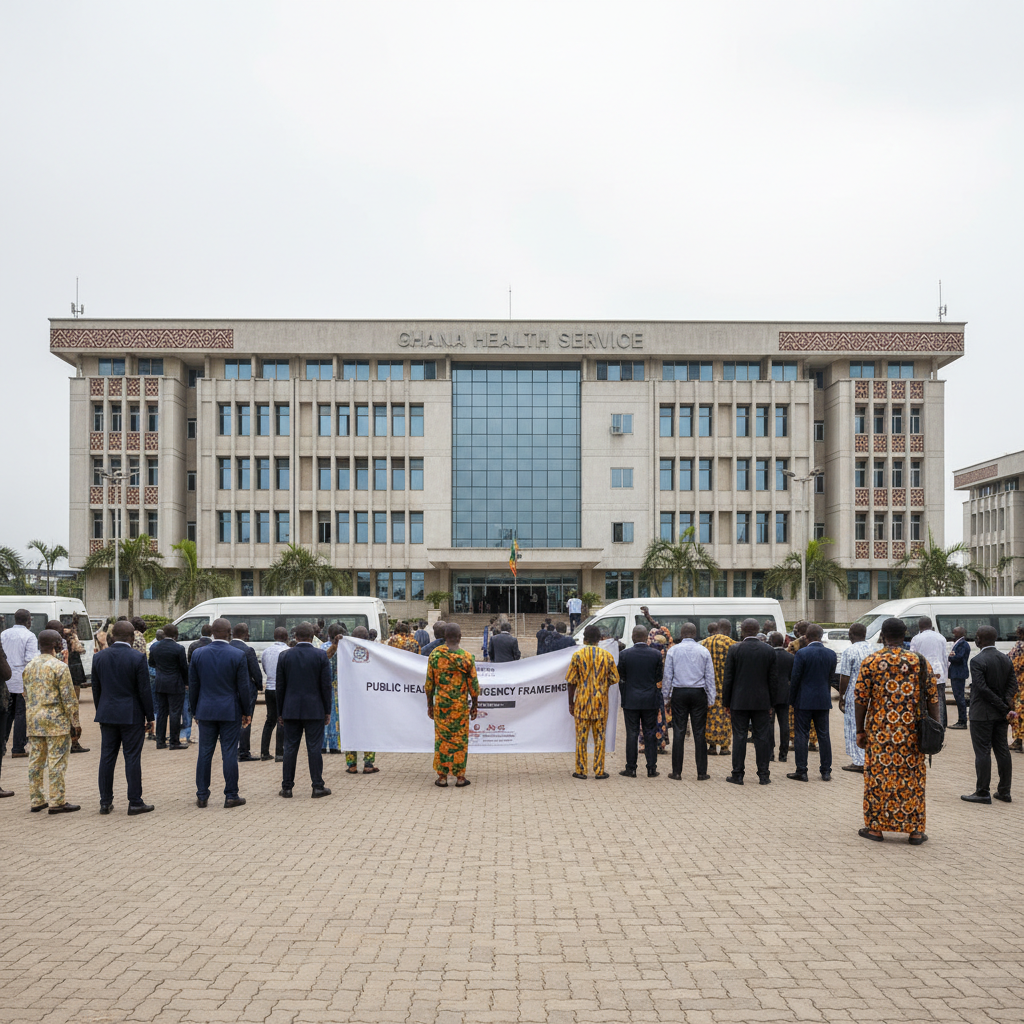
The Ghana Health Service (GHS) has unveiled a new Public Health Emergency Operations Centre (PHEOC) framework. This initiative aims to strengthen Ghana’s preparedness and response to disease outbreaks and other public health emergencies.
This framework brings together institutions, information, expertise, and resources. It creates a platform for more coordinated action when health emergencies occur. The GHS Director-General, Professor Samuel Kaba Akoriyea, stated the PHEOC system would facilitate unified action. It does not, however, replace the statutory responsibilities of other institutions.
This development fits into Ghana’s broader health security agenda. It supports the country’s implementation of the International Health Regulations 2005. The framework also addresses gaps identified through the Joint External Evaluation. This strategic move aims to build a more resilient national health system capable of handling future crises effectively. The initiative reflects a proactive approach to public health management, learning from global and regional health challenges.
Professor Akoriyea highlighted the importance of this framework. He noted that the PHEOC provides a platform for institutions to combine their mandates, capabilities, and resources. This collaboration supports coordinated public health emergency action. He stressed that the framework’s effectiveness depends on practical implementation, not just the documents themselves.
The new framework comes after significant global health crises. The Ebola outbreak in West Africa and the COVID-19 pandemic demonstrated the critical need for preparedness. Professor Akoriyea recalled the isolation of Liberia and Sierra Leone during the 2014 Ebola outbreak. He also mentioned the widespread disruption caused by COVID-19. These events led to travel limitations, numerous lockdowns, and reduced economic activities. Ghana must learn from these experiences to prevent future emergencies from overwhelming its response systems. The GHS believes this initiative will enhance Ghana's ability to detect, coordinate, and respond to future health emergencies.
Five strategic and operational documents were launched as part of this initiative. These include the National PHEOC Strategic Plan 2026–2030 and the National PHEOC Handbook 2026. Also launched were the National PHEOC Standard Operating Procedures, Volume One. The National Health Workforce Surge Strategic Plan 2026 and National Public Health Workforce Surge Management Standard Operating Procedures, Volume Two, complete the set. These documents provide a comprehensive guide for managing public health emergencies. They outline clear procedures and strategies for various stakeholders.
Professor Akoriyea cautioned that the launch of these documents is not the end. It marks the beginning of the crucial implementation phase. He urged stakeholders to ensure emergency operations centres remain functional, connected, and sustainable. He emphasized moving from documents to action and from structures to functionality. The goal is to achieve readiness in practice, not just on paper. Success will be measured by Ghana's ability to coordinate seamlessly during an emergency.
The GHS Director-General also stressed that public health emergency preparedness must extend beyond the health sector. He called for stronger collaboration among various entities. These include government institutions, security and emergency services, academia, and research institutions. Civil society, the private sector, and development partners are also crucial. He stated that public health emergency response requires connected leadership and strong multisectoral coordination. Timely information sharing, clear accountability, and collective action are essential for success. This broad approach ensures a robust and integrated national response.
The development of this framework involved many key players. The Ministry of Health, GHS, and regional health directorates participated. Other ministries, departments, and agencies were also involved. Security and emergency services, academia, professional bodies, and civil society organizations contributed. Private-sector stakeholders also played a role. Development partners provided crucial support. These partners include the United States Centers for Disease Control and Prevention, the World Health Organization, Africa Centres for Disease Control and Prevention, and the Korea International Cooperation Agency. This wide collaboration underscores the national importance of the initiative.
Professor Akoriyea acknowledged that the new documents would require continuous improvement. He noted that future editions would be necessary as Ghana gains more experience. He declared the national PHEOC documents officially launched. He urged all stakeholders to translate the framework into practical action. This ongoing commitment ensures the system remains adaptable and effective over time.