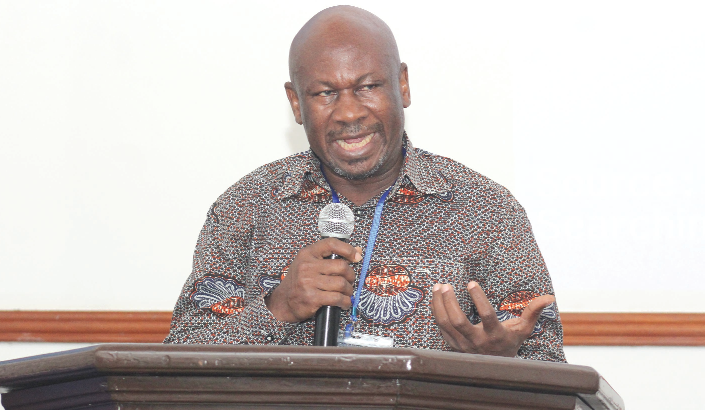
Alhaji Ibrahim-Tanko Amidu, Executive Director of STAR-Ghana Foundation, has called for formalising dialogue between government and civil society organisations (CSOs). This institutionalisation is crucial for strengthening democracy and achieving sustainable national development in Ghana.
This appeal came during the 4th Ghana Civil Society Forum 2026, held at the University of Ghana in Accra. Alhaji Amidu stressed the need for permanent mechanisms for constructive engagement both nationally and locally. Such mechanisms would ensure that citizens' voices genuinely influence governance and development processes.
This initiative arises as Ghana seeks to deepen its democratic achievements beyond peaceful elections and constitutional rule. The current framework limits substantial citizen participation in policy-making. This lack of engagement contributes to a widespread feeling of disconnection among citizens, especially young people, from governmental processes.
According to the Ghana Statistical Service Governance Wave Report 2025, only 12% of Ghanaians believe the political system provides adequate opportunities for citizen participation. This low figure indicates a significant gap in democratic inclusion, which experts like Alhaji Amidu highlight as a major challenge. He noted that the task is to make democracy truly work for all citizens.
Alhaji Amidu emphasised that neither government nor civil society can tackle the nation's governance and development issues alone. Meaningful partnerships are essential, involving government, civil society, the private sector, traditional authorities, development partners, and citizens. CSOs play a critical role in identifying new challenges, mobilising communities, and providing evidence for policy decisions.
He urged the government to view collaboration with civil society as a strategic investment, not as patronage. This strategic investment can lead to better governance and more effective development outcomes for Ghanaians. Recognizing CSOs as domestic development partners would allow their inclusion in national policy discussions, akin to other development partners.
Furthermore, Alhaji Amidu highlighted the need to mobilise domestic resources for development. Ghana can no longer heavily depend on international donor funding. Such reliance is unsustainable for long-term growth and self-sufficiency. Working together, government, civil society, and the private sector can foster a more sustainable financial future for the nation.
The push for institutionalised dialogue reflects a broader trend of Ghanaian civil society advocating for greater accountability and inclusive governance. Previous advocacy efforts have focused on corruption, human rights, and electoral reforms. This current call builds on these past actions, aiming to embed citizen participation into the very fabric of governance. Ghana’s economic well-being is intrinsically linked to stable governance and broad public support for development initiatives. Therefore, enhancing dialogue could lead to more effective policy implementation and improved public finance management.
The next steps will involve monitoring how government responds to these calls for structured engagement. Decision-makers face pressure to demonstrate commitment to inclusive governance and respond to citizens' dissatisfaction with participation opportunities. This could influence public trust, investor confidence, and the overall trajectory of Ghana’s democratic development. Political leaders will need to consider formalising these channels to ensure that diverse voices are heard, potentially leading to more robust and widely accepted national policies.