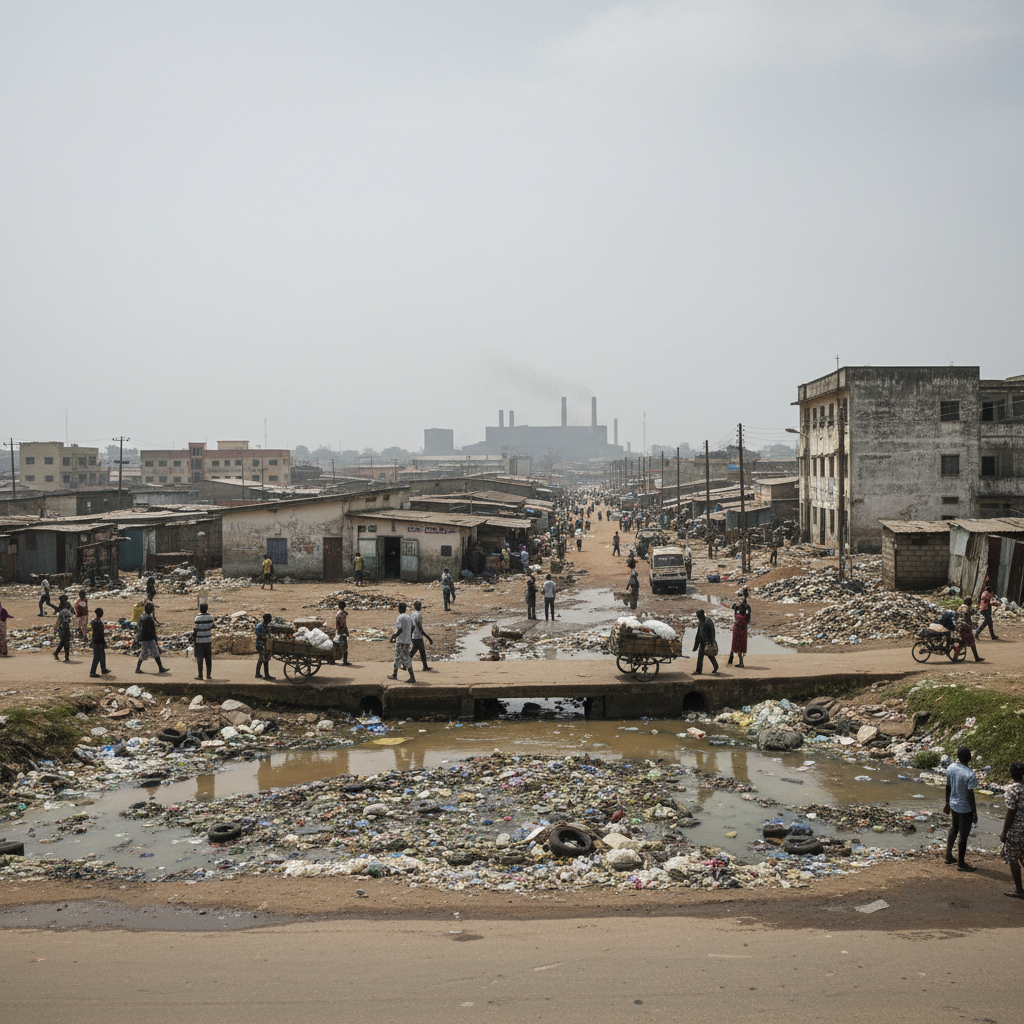
Ghana requires a complete overhaul of its waste management governance framework to effectively combat the perennial flooding in Accra, according to an economist from the Institute of Statistical, Social and Economic Research (ISSER). Dr. Kwame Adjei-Mantey, an ISSER Research Fellow, stated that significant reforms are essential to address the structural and governance deficiencies undermining current flood prevention efforts. These issues are particularly evident during periods of heavy rainfall in the capital.
The core problem stems from an inefficient and uncoordinated waste management system. Dr. Adjei-Mantey emphasized that while drainage infrastructure is important, policymakers must prioritize improving waste management governance. This system is a major contributor to Accra's annual floods. The existing institutional framework suffers from inefficiencies and a lack of coordination among agencies responsible for sanitation and waste disposal.
This call for reform aligns with broader concerns about public finance and infrastructure development in Ghana. Poor sanitation already costs Ghana over GHS 6.2 billion annually, according to a previous ISSER study. Addressing waste management inadequacies could unlock significant economic benefits, with potential annual gains of GHS 47.9 billion by 2032 through adequate investment in the sector. The recurring floods disrupt economic activity, damage property, and strain public finances, highlighting the urgent need for a sustainable solution.
Dr. Adjei-Mantey highlighted specific shortcomings in the current system. He told Citi FM, "Currently, there is a governance structure around waste management that needs an overhaul or improvement.” He added, "There are overlapping responsibilities and, if you look at the structure of waste management, we do not have a regulator in the space. That is a gap that restructuring could address." He also pointed out that waste collection services nationwide are largely inconsistent and inequitable.
The absence of a dedicated regulator creates significant accountability gaps within the waste management sector. This makes it difficult to coordinate sanitation efforts across the nation effectively. Dr. Adjei-Mantey observed that waste collection remains uneven, with some communities receiving regular services while others lack adequate provisions. This disparity often leads to residents indiscriminately dumping refuse into drains and waterways. This practice then exacerbates flooding during heavy rains.
The proposed reforms will have far-reaching implications for urban planning and public health in Ghana. Decision-makers will need to establish a clear regulatory body and streamline the responsibilities of various agencies. Investors and public works departments will monitor these developments closely. Effective implementation of these reforms could lead to a more resilient urban environment and significant improvements in public welfare. This would ultimately mitigate the economic damage caused by annual flood disasters.