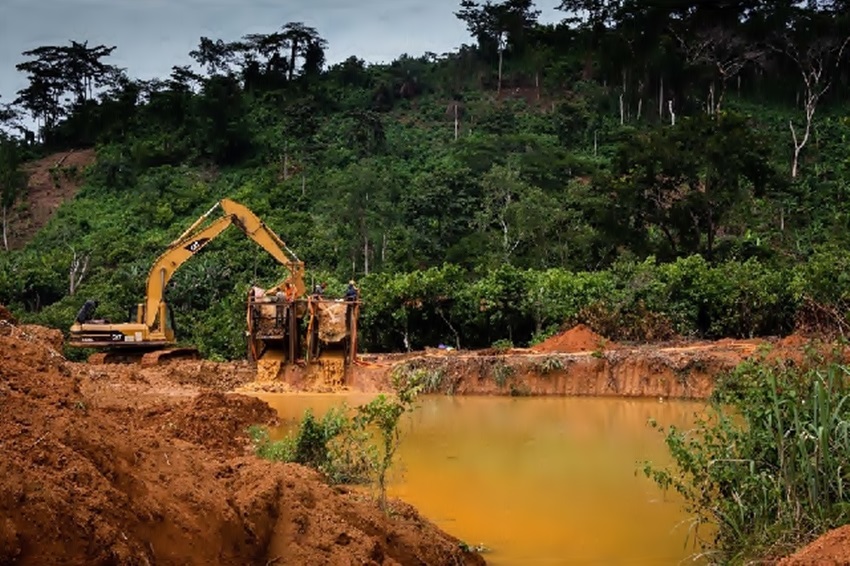
Ghana has lost an estimated 8,900 hectares of its vital forest reserves to illegal mining activities. This significant land area is equivalent to approximately 12,500 football fields. The government acknowledges that prosecuting suspects remains a major challenge in its fight against illegal mining, locally known as galamsey.
Emmanuel Armah-Kofi Buah, the Minister for Lands and Natural Resources, disclosed this alarming figure. He shared the data during a policy dialogue with the IMANI Centre for Policy and Education in Accra. Nine of Ghana’s 288 forest reserves have been severely impacted by these illicit operations. Forestry Commission personnel face significant pressure protecting these affected areas.
This environmental degradation directly impacts Ghana's natural capital, a key economic asset. The loss of forest cover contributes to climate change, soil erosion, and water pollution. It also threatens biodiversity and the livelihoods of communities dependent on forest resources. The ongoing struggle against galamsey has significant implications for Ghana's sustainable development goals and its broader economic stability.
Minister Buah stated, “The challenge we are having is not the arrest. It is the prosecution.” This highlights a critical bottleneck in the government's efforts to curb illegal mining. Data from the Ministry, covering operations up to July 2026, shows 258 arrests related to illegal mining in forest reserves. Operations also led to the seizure or immobilisation of 234 excavators, 2,728 pumping machines, and 1,724 changfan machines. Additionally, 461 motorbikes and tricycles were seized or immobilised.
The government is actively engaging the Attorney-General’s Department to address these prosecution bottlenecks. This collaboration aims to strengthen the legal framework and ensure more successful convictions. Tighter documentation and clearance requirements for excavators have also been introduced to prevent illegal equipment entry. More than 4,000 excavators are currently held at Ghana’s ports awaiting compliance with these new regulations.
Proposed reforms to the mining licensing regime form part of a broader strategy to tackle abuses. The maximum initial duration of large-scale mining leases would be reduced from 30 years to 20 years. Holders of exploration and prospecting licences must demonstrate actual work on their concessions within specified periods. This aims to prevent companies from holding concessions without meaningful development, which the Minister criticised as an obstacle to efficient resource use.
Furthermore, the government has recruited and trained about 2,000 Blue Water Guards. These guards provide intelligence and support efforts to protect Ghana’s water bodies from illegal mining. While acknowledging disciplinary concerns, including bribery allegations within the programme, the Minister maintained its contribution to the galamsey fight. This multi-faceted approach combines tighter controls, stronger enforcement, licensing reforms, and community participation. These measures are crucial for protecting Ghana's natural resources and ensuring long-term economic prosperity.