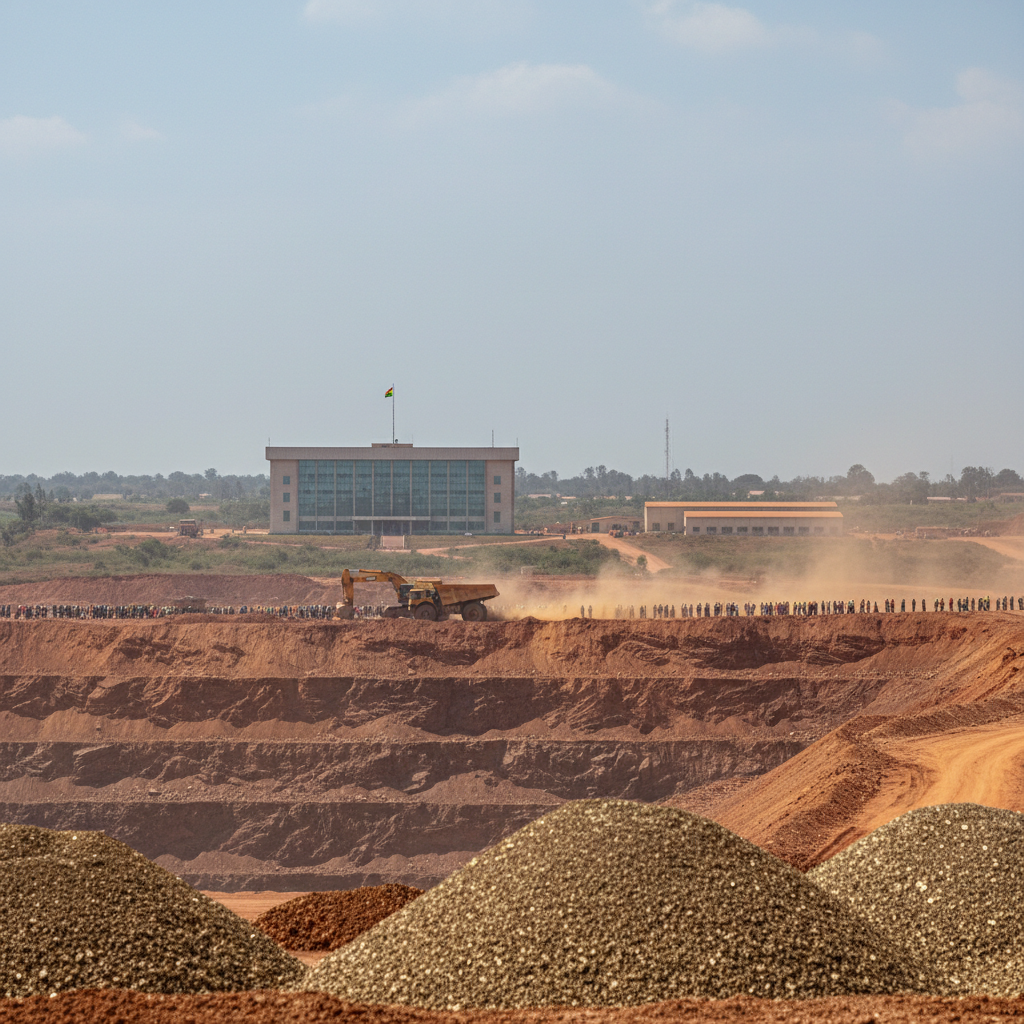
Ghana's mining sector faces a proposed overhaul, seeking to address widespread issues like illegal mining and environmental damage. The reforms include a new revenue distribution model. This model directs 70% of all mining revenue to national coffers for general development. This significant share aims to bolster national finances.
These detailed proposals also allocate specific percentages to other key areas. Mining communities would receive 18% for local development and investment. District administrations would get 2% of the revenue. A further 5% is earmarked for environmental reclamation, replanting, and restoration efforts. Another 5% is allocated for royalty payments, ensuring a clear distribution of mining wealth.
The proposed changes aim to make mining more sustainable and responsible. They seek to bring more miners into the formal sector. These reforms could strengthen Ghana's position as a gold producer. The Ashanti Regional Minister, Kwabena Okyere Darko-Mensah, presented these ideas. They focus on improving governance and public benefit from mineral resources.
Large-scale mining companies contribute about 26% of their gross revenues to the state. This contribution comes through various payments. These include Pay As You Earn (PAYE), royalties, corporate taxes, and Corporate Social Responsibility (CSR). Small-scale miners, with proper regulation, could match or exceed this contribution. Their operating costs are generally lower compared to larger firms.
A critical component of the proposal is the decentralization of mining licensing. Traditional authorities would play a role in this process. District Mining Committees, already established by law, would become fully operational. All mining license applications would begin and end at the district level. This aims to improve local oversight and accountability.
Additionally, the plan proposes a mobile licensing regime. This regime would encourage more miners to formalize their operations. The initial phase could target rock miners, who cause less environmental harm. Every mining license would have a designated mining engineer for supervision. This would ensure professionalism, safety, and environmental compliance, thus creating jobs.
Further reforms include establishing processing centres and tailings dams for alluvial miners. Centralized processing would reduce water pollution. A transportation support mechanism, similar to those in the fuel and cocoa sectors, is also suggested. This would make these centers accessible, promoting sustainable mining practices.
The ownership structure of GoldBod, a state-owned entity, would also change. The current 100% government ownership would shift to a diverse model. This new structure would include 40% government, 25% miners, 20% traders, and 15% traditional authorities. This ensures broader stakeholder participation in policy and environmental protection.
The reforms also call for strengthening reclamation and reforestation efforts. Local licensing committees would oversee these programs. Global studies show that every dollar invested in land reclamation can yield significant returns. A dedicated Mining Bank is also proposed. This bank would provide financial support to legitimate miners. This would reduce their reliance on illicit funding sources.
Abandoned mines would be converted into community mining projects. This would create jobs for young people. It would also reduce unsupervised illegal mining activities. Mining towns would undergo redevelopment and upgrading. This would ensure that communities visibly benefit from the wealth generated in their areas. These investments would improve living conditions and attract quality investment.