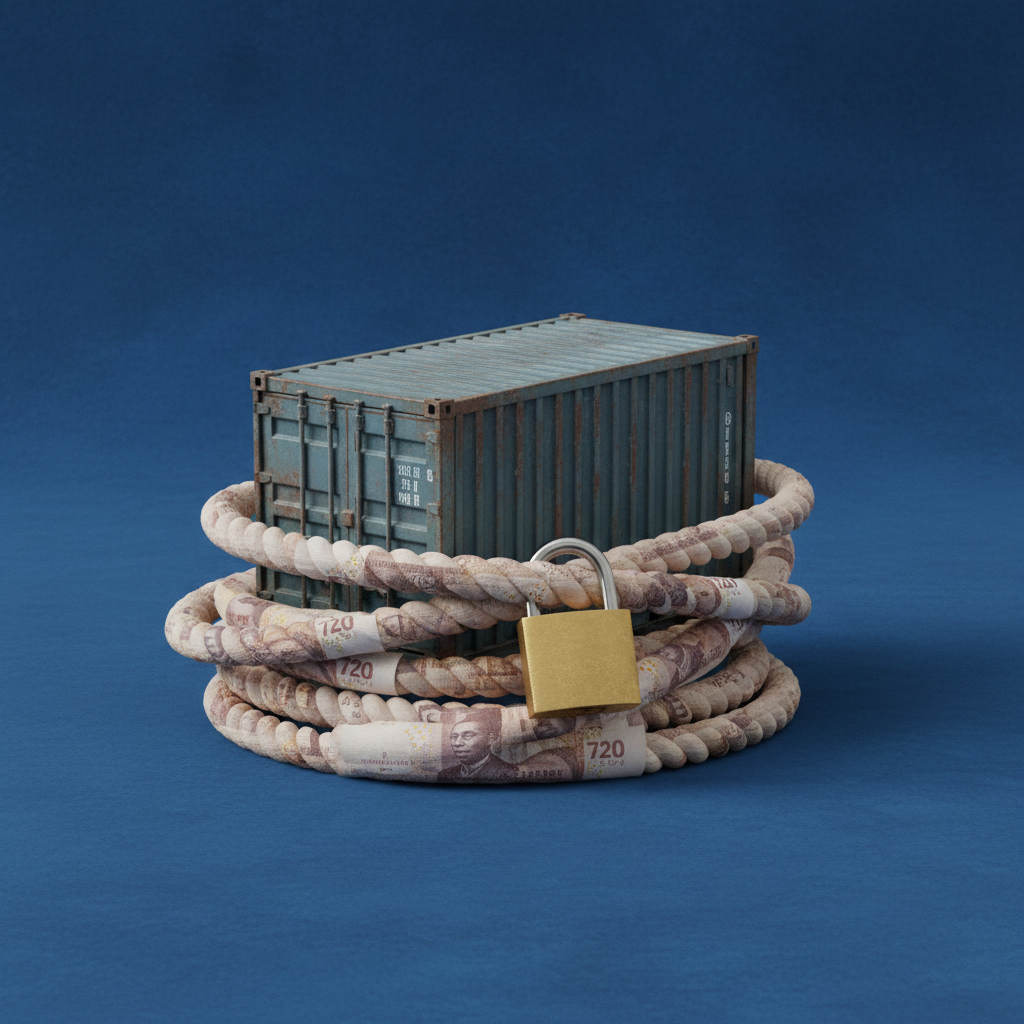
Ghana's government will only resume negotiations with shipping companies and their agents if they first implement the approved GHS720 Container Administrative Charge. Transport Minister Joseph Bukari Nikpe confirmed this stance, stating compliance is a prerequisite for further discussions. This decision follows a High Court ruling on July 10, 2026, which dismissed an application by affected companies seeking to halt the charge's implementation.
The GHS720 charge represents the regulatory maximum for the Container Administrative Charge, also known as the local handling charge. This fee applies to import and export containers measured in Twenty-Foot Equivalent Units (TEUs). The Ghana Shippers’ Authority (GSA) introduced this cap to reduce the high cost of doing business at Ghana's ports, a long-standing concern for traders.
This issue fits into Ghana's broader economic strategy to enhance port efficiency and reduce trade costs. High port charges have historically made Ghanaian ports less competitive, impacting importers and exporters. The government's firm position, backed by a court ruling, signals a commitment to regulatory enforcement in the maritime sector. This move aligns with efforts to streamline trade logistics and support local businesses.
Transport Minister Joseph Bukari Nikpe stated that representatives of the shipping companies approached the government to restart out-of-court discussions. However, they were informed that adherence to the approved charge was a mandatory condition for any further engagement. This highlights the government's resolve to ensure regulatory compliance across the shipping industry.
The GSA initially reviewed port charges as part of broader efforts to address the high cost of doing business. An initial charge of $165 per container was proposed. The GSA then recommended a $115 reduction, bringing the charge to $50, which was equivalent to about GHS550 at the time. Freight forwarders and importers raised concerns about this proposed implementation, citing inadequate education and stakeholder engagement. The government held approximately seven meetings with various stakeholders to address these issues. Some stakeholders later expressed worries that the $50 charge could lead to job losses among Ghanaian workers. Consequently, the government and the GSA agreed on an interim charge of $65, equivalent to about GHS720, for one month while consultations continued. The affected shipping companies and agents subsequently sought a court injunction against the charge's implementation. The High Court's dismissal of their application on July 10, 2026, cleared the path for the GSA to enforce its May 11, 2026, Regulatory Directive. This directive caps the Container Administrative Charge at GHS720 per TEU. The ruling has intensified calls from industry players for action against shipping lines and agents accused of charging above this approved ceiling. They argue that charges exceeding the regulatory limit increase operational costs for businesses and create uncertainty for importers and exporters. The government maintains its openness to discussions with affected companies, provided they first comply with the approved GHS720 ceiling. This ongoing dispute underscores the tension between regulatory oversight and industry operational practices in Ghana's vital port sector.
The government's insistence on compliance will likely pressure shipping companies to adopt the GHS720 charge. This could lead to reduced costs for importers and exporters, potentially boosting trade volumes. Decision-makers will closely monitor the industry's response and any subsequent impact on port operations and pricing structures. The market will watch for signs of increased efficiency or continued resistance from shipping lines, which could affect Ghana's trade competitiveness.