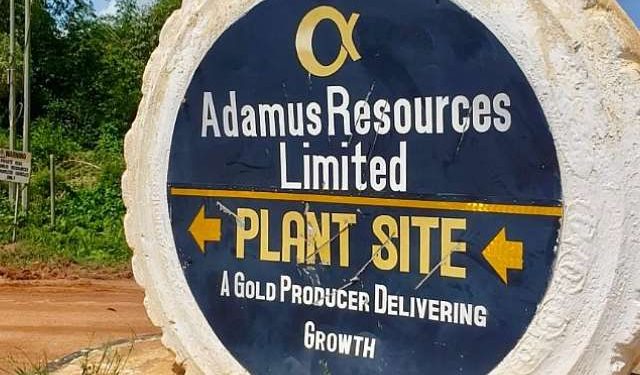
The Ghanaian government has established a 12-month roadmap to turn around Adamus Resources, a gold mining company. This significant development follows policy dialogue initiated by the IMANI think tank with the Ministry of Lands and Natural Resources. The government’s decision aims to resolve a dispute surrounding the mining company’s operations and regulatory compliance.
This roadmap, announced on Friday, August 21, 2026, will see the Ministry, the Minerals Commission, and Adamus Resources collaborate. A six-member management team will oversee the process. This team will comprise three representatives from the government and three from Adamus, ensuring shared responsibility and oversight. The initiative seeks to address Adamus’ liabilities to key institutions and explore new capital injection.
This intervention fits into Ghana's broader economic narrative of balancing regulatory enforcement with investor confidence. The government has consistently emphasized adherence to mining laws while also attracting foreign direct investment. This structured approach to Adamus Resources demonstrates a commitment to resolving disputes constructively. It also highlights the role of independent policy engagement in shaping national economic decisions.
Lands and Natural Resources Minister, Hon. Emmanuel Armah-Kofi Buah, defended regulatory actions against Adamus. He stressed that no mining company should operate outside Ghana’s laws. Franklin Cudjoe, Founding President of IMANI, proposed a structured pathway for Adamus to address concerns. The Minister responded positively, indicating willingness to engage if the company showed genuine commitment to corrections. This dialogue led to the current concrete institutional arrangement.
The roadmap will specifically address Adamus’ outstanding liabilities. These include debts owed to the Ghana Revenue Authority and the Minerals Income Investment Fund. The company also has obligations to various financial institutions and suppliers. Furthermore, the plan includes exploring the injection of fresh capital. This will be achieved through additional equity partners, aiming to stabilize the company’s financial health.
The implications of this development extend beyond Adamus Resources itself. It sets a precedent for how Ghana handles regulatory breaches in the mining sector. The structured resolution process could encourage other companies to address compliance issues proactively. It also signals to investors that Ghana prioritizes both legal adherence and fair pathways for remediation. This balanced approach is crucial for maintaining a stable investment climate.
The success of this 12-month roadmap will depend on effective implementation and accountability. IMANI has stated its intention to monitor the process closely. This ongoing oversight will ensure that the agreed-upon steps are taken and that measurable results are achieved. The resolution of this dispute could serve as a model for future engagements between the government, industry, and civil society organizations.
This collaborative effort underscores the value of independent policy engagement. IMANI’s role demonstrates how constructive criticism and alternative solutions can lead to positive government action. It reinforces the principle that Ghana can enforce its laws firmly while providing a predictable pathway for legitimate investments. This approach allows companies to correct deficiencies and continue creating economic value for the nation.
The government’s decision reflects a meaningful movement towards a more structured resolution of complex economic disputes. It reinforces the importance of dialogue in Ghana’s policy environment. This engagement shows that independence does not mean opposing government for its own sake. It means challenging when necessary, proposing better alternatives, and acknowledging progress when policymakers respond constructively. This outcome is a testament to effective collaboration.
The Adamus engagement shows what happens when independent analysis meets open policy dialogue. A difficult dispute can move from confrontation towards a structured pathway for resolution. This approach benefits all stakeholders. It ensures that Ghana’s natural resources are managed responsibly. It also protects the interests of the state and investors alike. The coming months will be critical for the execution of this comprehensive plan.