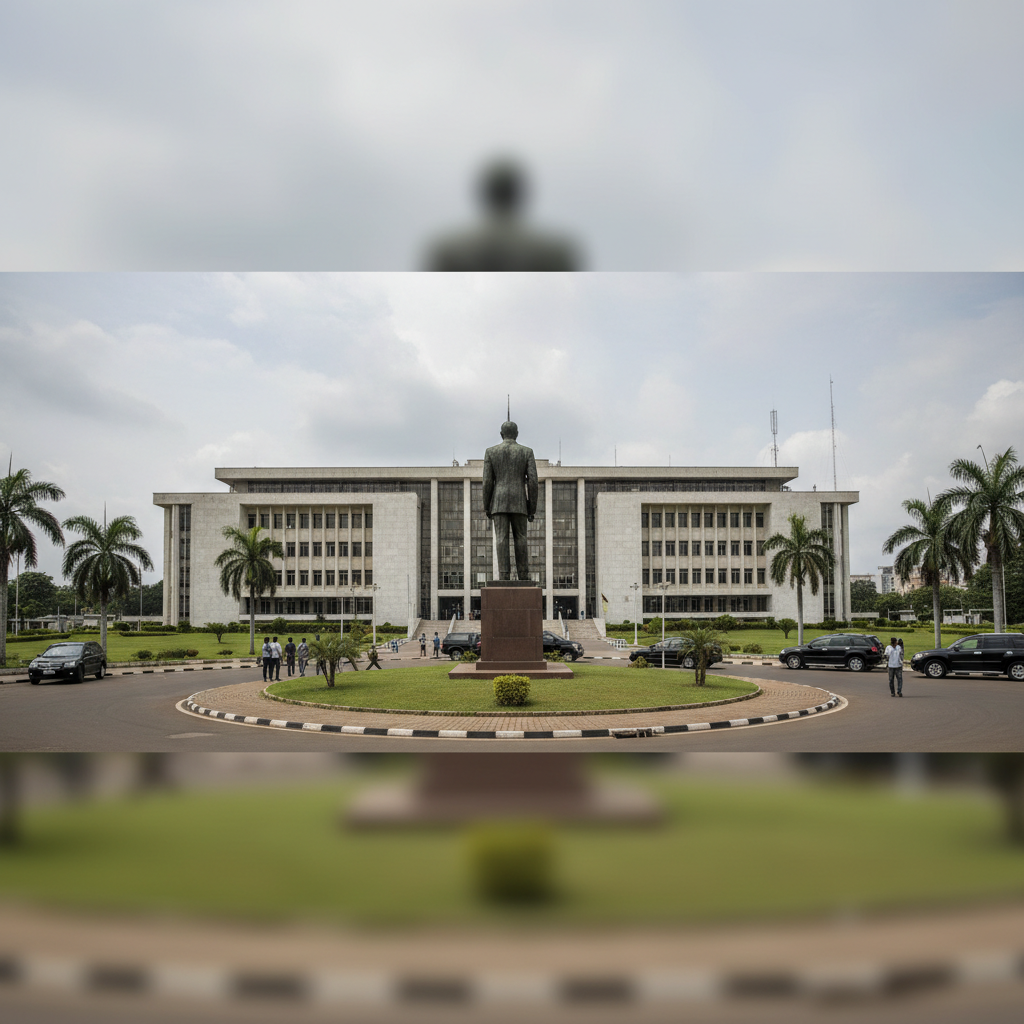
Ghana’s Parliament faces a deepening crisis of public confidence, with new allegations involving political actors threatening to further erode trust. Dr. John Osae-Kwapong, a Democracy and Development Fellow at CDD-Ghana, issued this stark warning, emphasizing the potential for long-term damage to the nation’s democratic institutions. This concern arises as the legislative body already struggles with low public approval and high perceptions of corruption.
The current controversy stems from a public dispute between Minority Leader Alexander Afenyo-Markin and GoldBod Chief Executive Officer Sammy Gyamfi. Mr. Gyamfi accused critics of GoldBod, including Mr. Afenyo-Markin, of extortion. Mr. Afenyo-Markin has vehemently denied these claims, threatening legal action over what he described as defamatory statements. This high-profile disagreement has ignited a broader national debate concerning accountability, political scrutiny, and the ethical conduct of public officials.
This situation fits into a broader narrative of declining public trust in key state institutions across Ghana. Recent Afrobarometer survey findings, referenced by Dr. Osae-Kwapong, indicate Parliament occupies a difficult position in citizens' eyes. Such allegations risk reinforcing existing public perceptions of corruption and self-interest within the political class. This trend is particularly worrying for a nation striving to strengthen its democratic governance and economic stability.
“When an institution like Parliament is facing what I call a crisis of confidence, very low trust and high perceptions of corruption, when these things come out, and they are alleged, right? Because at this point they are allegations,” Dr. Osae-Kwapong stated. He further explained that these allegations, even if unproven, reinforce already held perceptions about Ghana’s key democratic representative institution. This continuous erosion of public faith could lead to citizens losing total belief in the institution, which does not bode well for Ghana’s democracy.
The implications of this declining trust are significant for Ghana’s economic and political landscape. A Parliament with diminished credibility struggles to effectively perform its constitutional duties, including holding the Executive accountable and providing robust oversight. This weakness can lead to reduced investor confidence and hinder the implementation of critical economic policies. Decision-makers must address these concerns to safeguard the integrity of Ghana’s democratic framework and ensure stable governance. The public will closely watch how Parliament responds to these challenges and works to rebuild its image.
Parliament plays a central role in Ghana’s democratic system, responsible for law-making and ensuring transparency in government operations. When public trust falters, the ability of Parliament to effectively scrutinize public finance and national projects is compromised. This can lead to increased risks of mismanagement and corruption, directly impacting the national budget and economic development. The current allegations, therefore, warrant serious attention due to their potential to undermine the very foundations of good governance and economic progress.
The ongoing debate highlights the urgent need for greater transparency and accountability from public officials. Without a strong, trusted Parliament, the checks and balances essential for a healthy democracy weaken. This could deter foreign investment and negatively affect Ghana’s credit ratings, impacting the nation’s ability to secure favorable loans and manage its GHS 4.2 billion public debt effectively. Restoring public confidence is crucial for both democratic health and economic stability.