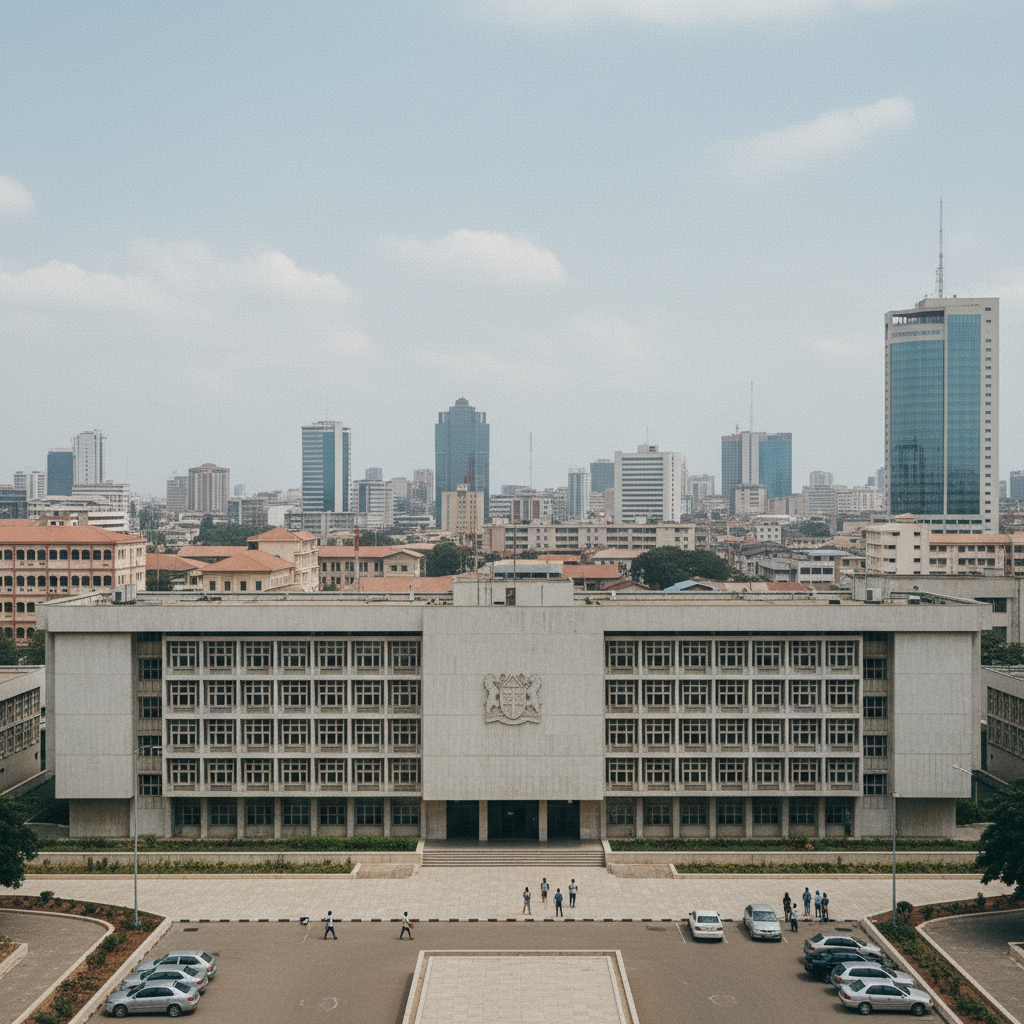
Supreme Court Justice Kweku Tawiah Ackah-Boafo has called for live broadcasts of some Supreme Court proceedings in Ghana. He stated this initiative would significantly improve public access and confidence in the judiciary.
This proposal comes as part of discussions marking the Supreme Court's 150th anniversary. Justice Ackah-Boafo highlighted the need for greater transparency through technology. He acknowledged that financial and operational challenges must first be resolved.
Ghana's courts already operate as public forums, allowing anyone to attend proceedings. The call for live streaming builds on past public interest in broadcasts, such as the 2012 presidential election petition. This event was widely seen as a positive example of judicial openness.
Justice Ackah-Boafo noted that different countries balance transparency and court dignity in varied ways. He cited the United States Supreme Court, which offers live audio and publishes transcripts, but not live video. He also mentioned Canada and the United Kingdom, which stream proceedings on court websites rather than national television.
Drawing from these international examples, Justice Ackah-Boafo believes Ghana should adopt a similar approach. He stated that the time has come for live broadcasts of some oral arguments. This move, however, requires investment in necessary technology and infrastructure.
Achieving this would involve developing a dedicated website and installing webcams capable of live streaming. This would directly address the financial and technical requirements. The cost implications for such an upgrade would be substantial, representing a new line item in the judiciary's budget.
Justice Ackah-Boafo also stressed the need to consider the Supreme Court's current operational demands. Unlike some foreign courts with fewer cases, Ghana's Supreme Court handles a heavy caseload. This often leaves limited time for lengthy oral arguments from lawyers.
For instance, while Canada's Supreme Court might hear three cases daily, with lawyers receiving up to 45 minutes for arguments, Ghana's court hears far more matters. This high volume could impact how live streaming is implemented without disrupting efficiency. Managing a balance between transparency and judicial workflow remains crucial.
Concerns also exist that live broadcasts might encourage lawyers to 'play to the gallery'. This means focusing on public performance rather than substantive legal arguments. Justice Ackah-Boafo recalled instances where lawyers appeared more interested in impressing clients than addressing the court directly.
Despite these potential drawbacks, Justice Ackah-Boafo reiterated the benefits of live-streaming selected proceedings. He believes the increased transparency would be beneficial if the necessary resources become available. This would ultimately strengthen public confidence in the judicial system.
The move would involve significant public finance implications, requiring budget allocations for equipment and personnel. It would also impact how legal professionals prepare for court, potentially shifting advocacy styles. Public discourse on legal matters could also increase, affecting how citizens engage with the judiciary.