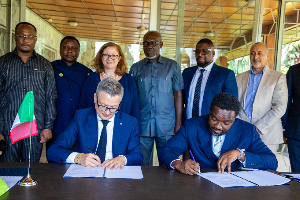
Ghana’s ambition to transform its bauxite resources into a competitive aluminium industry has received a fresh boost. The Ghana Integrated Aluminium Development Corporation (GIADEC) signed a memorandum of understanding with Italian engineering group DANIELI. This agreement will develop a €300 million aluminium foil rolling plant in Tema.
This proposed investment is one of the country’s most significant downstream manufacturing initiatives in the aluminium value chain. It signals a renewed push to move beyond raw material exports into higher-value industrial production. The facility will also include an Aluminium Centre of Excellence. This centre will support technical training, research, skills development, and industrial knowledge transfer.
This project fits into Ghana’s broader economic plan to diversify exports and industrialize. Successive governments have identified aluminium as a strategic industrial pillar. Ghana has significant bauxite reserves and aims to create jobs, expand exports, and attract investment. The Tema project seeks to convert mineral endowments into industrial capacity and position Ghana as a regional hub for aluminium products.
For GIADEC, the agreement is part of its long-term strategy. This strategy aims to build an integrated aluminium industry. It covers bauxite mining, alumina refining, aluminium smelting, and downstream manufacturing. The plant is expected to produce aluminium foil for both domestic consumption and export markets. This will deepen Ghana’s manufacturing base and cut dependence on imported aluminium products.
These products are crucial for industries like food processing, packaging, pharmaceuticals, and consumer goods. The Centre of Excellence will provide Ghanaian workers and engineers with expertise. This expertise is needed to support a more advanced aluminium manufacturing ecosystem.
The partnership with DANIELI also reflects Ghana’s wider effort to attract foreign direct investment into strategic manufacturing sectors. Policymakers are actively seeking investments that support domestic processing, technology transfer, and value addition. This aluminium foil plant aligns perfectly with that broader economic shift.
If implemented successfully, the plant could strengthen domestic supply chains. It would also reduce import exposure for companies that rely on aluminium foil and related packaging inputs. The project could give Ghana a stronger foothold in regional markets, where demand for packaging materials is expected to grow. This growth is driven by food processing, retail, pharmaceuticals, and light manufacturing.
For the aluminium sector, this investment could become a key downstream anchor. It would support demand for smelted aluminium and help justify further investment across the wider value chain. The successful delivery of this project could establish Ghana as a hub for advanced aluminium manufacturing, creating numerous skilled jobs.
However, the project’s success depends on more than just the agreement. Ghana will need a reliable power supply and competitive industrial tariffs. Efficient logistics, access to raw material inputs, and financing are also critical. A skilled workforce is essential to make downstream aluminium production viable at scale.
The country must also ensure the broader integrated aluminium agenda progresses in sequence. This includes areas like alumina refining and smelting, which require large capital investments and infrastructure. Still, the proposed €300 million Tema facility marks an important step in Ghana’s long-running effort to build a modern aluminium industry from its bauxite base.