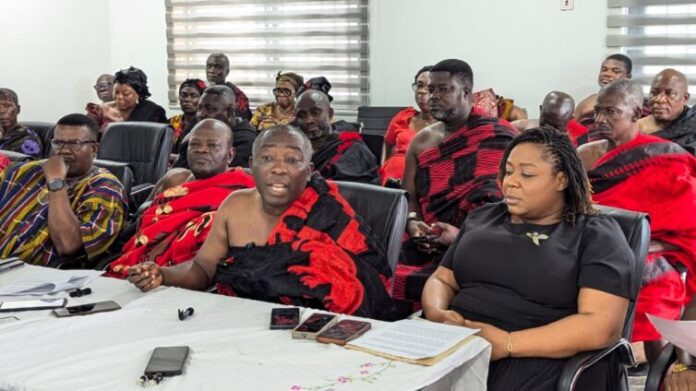
The Apinto Divisional Council has formally called on the government to make host communities equity partners in Gold Fields Ghana Limited’s Tarkwa Mine. This demand comes as the government considers Gold Fields’ application for a 20-year renewal of its Tarkwa mining leases, which are due to expire in April 2027.
The Council argues that the ongoing lease renewal process presents a crucial opportunity to create a more inclusive model of mining ownership. They believe communities that have hosted mining operations for decades deserve a direct stake in the wealth generated from mineral resources extracted from their lands.
This initiative reflects a growing sentiment in Ghana for local communities to benefit more directly from natural resource extraction. The country's mining sector is a significant contributor to its Gross Domestic Product (GDP) and export earnings, but the distribution of these benefits often faces scrutiny. Calls for greater local participation and ownership are becoming more frequent, aligning with broader national development goals.
Addressing a press conference in Tarkwa, the Council unveiled an “Apinto Shared Prosperity Proposal.” This framework aims to give host communities and traditional authorities a direct role in the ownership, governance, and benefits of mining operations. The Council plans to submit this proposal to the government for consideration.
The chiefs stated that decades of mining have contributed significantly to national revenue but have delivered limited development to the communities. These communities continue to bear the environmental and social impacts of mining activities. They highlighted that an assessment of the Tarkwa Mine area found more than 4,000 hectares of land within the Apinto Traditional Area had been degraded, directly affecting farming activities and the livelihoods of residents.
The Council also cited poor road infrastructure, inadequate health and educational facilities, and high youth unemployment as evidence. These issues, they argue, demonstrate that mining benefits have not been equitably shared among local populations. “A mine that generates wealth from the lands of Apinto must also create lasting prosperity and sustainable development for the people of Apinto,” the Council stated emphatically.
The chiefs argue that Ghana’s mining framework should evolve beyond traditional royalties and corporate social responsibility programmes. They advocate for a system that provides host communities with a direct economic interest in mining operations. This shift could potentially redefine the relationship between mining companies, the government, and local communities.
The government's decision on the lease renewal and the Apinto Council's proposal will be closely watched by other mining communities and industry stakeholders. A positive response could set a precedent for future mining agreements across Ghana, potentially leading to more equitable wealth distribution and sustainable development in mining regions. This development could influence investor confidence and the operational landscape for other major mining companies in the country.