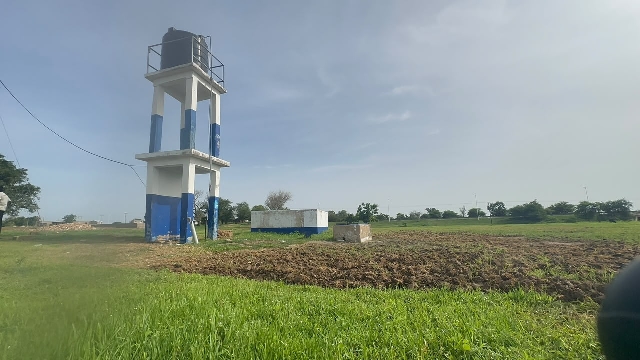
The Bolgatanga Municipal Assembly spent GHS 201,599 on two World Bank-funded irrigation projects that failed to provide water to farmers. These projects, intended for Amogrebisi and Danwoe communities, are largely non-functional. Farmers in these areas continue to face severe water shortages for their crops.
The projects were part of Phase One of the $150 million World Bank-funded SOCO Project. They aimed to support between 30 and 40 farmers directly in each community. The goal was to boost agricultural production and improve household incomes by addressing water scarcity. However, the facilities have not delivered on their promise, leaving farmers reliant on other, often insufficient, water sources.
This situation highlights broader challenges in Ghana's agricultural development and public expenditure. The failure of these projects impacts food security and rural livelihoods in the Upper East Region. It also raises questions about the effectiveness of foreign-funded development initiatives. Ghana's economy relies heavily on agriculture, making such project failures particularly damaging to local economies.
Farmers expressed deep disappointment regarding the project's failure. Atubiga Ernest, a 45-year-old farmer in Amogrebisi, stated, “We used to cultivate rice on this land but now it lies idle because the project is not giving us the water we need.” Another farmer, Abisibo Akolgo, noted, “The water from this project cannot even reach where we farm.”
The lack of consultation with local farmers during the planning stage contributed to the project's shortcomings. Afedo Asoria, a vegetable farmer, believes farmer involvement could have ensured a more effective design. He said, “Nobody consulted us. They only informed us that they were bringing a SOCO irrigation project.” This suggests a disconnect between project implementers and the beneficiaries.
In Danwoe, farmer Akolgo George reported the mechanised borehole facility stands largely unused. Alagemah James, another farmer, observed design flaws from the start. He noted the outlet pipe was only three-quarter inch, insufficient for irrigation. James recalled the commissioning ceremony, where it took eight to nine hours to fill a 350-litre tank, proving its inadequacy for commercial farming.
The Bolgatanga Municipal Assembly's contract documents specified each system should include a 1.5 horsepower pumping machine and a 10,000-litre elevated water tank. These components were meant to support dry season farming. However, the installed infrastructure has not met these operational requirements, leading to the current predicament for farmers.
The failure of these projects could lead to increased poverty among affected farming communities. It may also deter future investment in similar agricultural initiatives if accountability is not established. Decision-makers must review project implementation strategies and ensure community input for future development efforts. The World Bank, as a funding partner, will likely scrutinize the project's outcomes and the use of its funds. This incident underscores the critical need for robust oversight and transparent execution of public works.