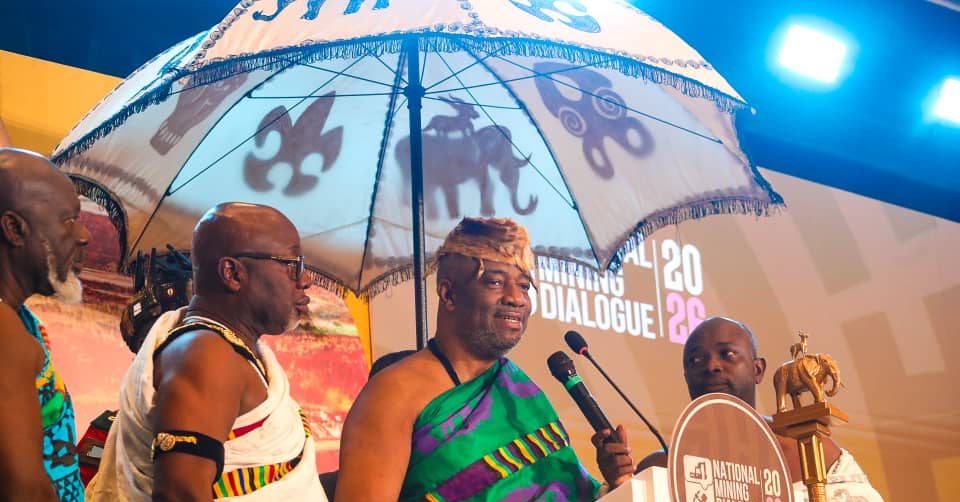
The Ga Mantse, King Tackie Teiko Tsuru II, has called for Ghana’s mineral resources to be managed as a generational trust. He stated that mining must be treated as a long-term responsibility, not merely a commercial venture. This declaration came during the National Mining Dialogue 2026 held in Accra on Tuesday, August 18.
King Tackie Teiko Tsuru II emphasized that traditional authorities hold land in trust for past, present, and future generations. He warned that granting mining concessions and exploiting mineral resources carry significant consequences. These impacts extend far beyond immediate financial benefits, affecting the environment and local communities for decades. The Ga Mantse stressed the need for a balanced approach to resource extraction.
This call for responsible mining fits into Ghana's broader economic narrative concerning natural resources. Ghana is a major producer of gold, bauxite, and other minerals, which contribute significantly to its Gross Domestic Product (GDP). However, the sector also faces challenges like illegal mining (galamsey), environmental degradation, and conflicts with local communities. Recent discussions have focused on maximizing local content and ensuring equitable distribution of mining revenues. The government has been implementing policies to formalize small-scale mining and improve environmental compliance. This includes efforts to reclaim degraded lands and enforce stricter regulations on mining operations. The dialogue around mining’s long-term impact is crucial for sustainable economic development.
“We are temporal custodians of something that will outlive us,” the Ga Mantse stated directly. He urged mining companies operating in Ghana to take full responsibility for protecting the environment. He also called on them to actively support the host communities where they operate. This includes investing in social infrastructure and providing opportunities for local residents. His statement underscores the importance of corporate social responsibility in the mining sector.
The implications of such high-level advocacy are significant for Ghana’s mining sector and its economic future. Decision-makers and mining companies will likely face increased pressure to adopt more sustainable practices. This could lead to stricter environmental regulations and greater demands for community development initiatives. Investors will also monitor how these calls translate into policy changes and operational requirements. The focus will shift towards ensuring that mining benefits all Ghanaians, not just a select few. Future policy frameworks may prioritize environmental protection and community welfare alongside economic gains.
Properly managed mining can contribute substantially to national development, King Tackie Teiko Tsuru II noted. He highlighted potential investments in critical infrastructure such as roads, hospitals, and schools. He also mentioned the importance of providing potable water, scholarships, and skills training for local populations. These investments can create lasting positive impacts on communities. They can also help diversify local economies beyond direct mining activities. The Ga Mantse's vision aligns with a broader national strategy for inclusive growth.
He advocated for a mining regime that effectively balances economic development with environmental protection. This regime must also safeguard the interests of future generations. Such a framework would ensure that Ghana’s mineral wealth provides sustained benefits. It would also prevent irreversible damage to the environment and social fabric. The National Mining Dialogue 2026 serves as a critical platform for these discussions. It brings together traditional leaders, government officials, industry players, and civil society organizations. Their collective input is vital for shaping a sustainable mining future. The ongoing conversation reflects a national commitment to responsible resource management. This commitment aims to secure Ghana's economic prosperity for many years to come.