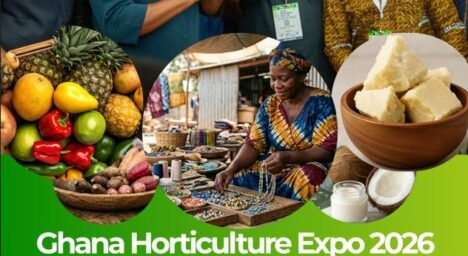
Ghana aims to achieve US$5.006 billion (approximately GHS 60 billion) in Non-Traditional Exports by 2025. This ambitious target highlights the nation's strategic focus on its burgeoning horticulture sector.
The Ghana International Horticulture Expo 2026 will be a key event in this drive. Scheduled for September 3-5, 2026, at the Palms Convention Centre in Accra, it aims to connect producers with investors. The expo seeks to foster innovation, expand market access, and create significant employment opportunities across the value chain. It represents a concerted effort to transform Ghana's agricultural potential into tangible economic growth.
This initiative fits into Ghana's broader economic strategy to diversify its export base beyond traditional commodities. The nation's Non-Traditional Exports already reached 152 countries, demonstrating existing global reach. Shifting from raw material export to value-added processing is crucial for sustained economic development. This approach aligns with national goals for job creation and increased foreign exchange earnings.
The Ghana International Horticulture Expo 2026 is organized by the Federation of Associations of Ghanaian Exporters (FAGE). They collaborate with the Ghana Export Promotion Authority (GEPA) and Ghana EXIM Bank. His Excellency John Dramani Mahama, President of the Republic of Ghana, will serve as the Special Guest of Honour. This high-level involvement underscores the government's commitment to the sector's success.
The horticulture sector's expansion promises significant implications for Ghana's economy. It will create productive pathways for young people into agribusiness and technology. Investors will find opportunities beyond farming, including irrigation, cold storage, and logistics. Policymakers will engage directly with the private sector to remove barriers and foster growth. This integrated approach is vital for Ghana to achieve economic sovereignty and compete effectively in global markets.
Ghana already possesses the natural and human resources necessary to become a major horticultural force. The current export figures, reaching 152 countries, show a strong foundation. However, the focus is now on adding value to products like mango, pineapple, and vegetables. This involves improving planting materials, mechanization, and cold-chain systems. Effective processing, packaging, and branding are also critical steps.
The Expo's theme, “From Soil to Sovereignty,” emphasizes the national importance of this transformation. Economic sovereignty means a country can produce, add value, and create jobs domestically. It also means competing successfully in international markets. Ghana must move from basic production to advanced processing and global branding. This shift will generate wealth and improve livelihoods across the country.
The horticulture sector offers diverse opportunities for investment and entrepreneurship. These range from developing irrigation systems to establishing processing plants. Packaging facilities, logistics networks, and certification services are also in high demand. Each link in the value chain presents a chance for economic growth. This comprehensive development strategy aims to maximize the sector's impact.
For farmers and exporters, the Expo provides direct access to new markets and technologies. These connections are essential for making Ghanaian horticulture more competitive globally. Financial institutions will identify bankable opportunities, supporting sector growth. Technology companies can demonstrate innovative solutions, improving efficiency and productivity. This collaborative environment is designed to propel the industry forward.
The success of this horticulture revolution requires a collective effort. Farmers, exporters, investors, and policymakers must all participate actively. Researchers, technology providers, and financial institutions also play crucial roles. The Ghana International Horticulture Expo 2026 aims to bring all these stakeholders together. It is a platform not just for showcasing products, but for building Ghana's future economic prosperity.