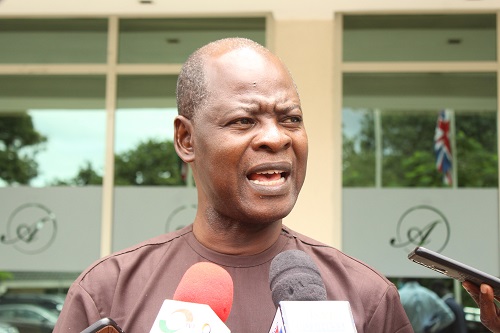
The Ghana Extractive Industries Transparency Initiative (GHEITI) has issued a stark warning: mining activities are encroaching on productive farmland, threatening Ghana's food security. Dr. Steve Manteaw, Co-Chair of GHEITI, stated that the Land Use and Spatial Planning Authority has failed to adequately protect agricultural land from competing uses, particularly mining. This situation raises fresh concerns about Ghana's ability to balance mineral extraction with long-term food self-sufficiency.
This intervention highlights a difficult policy conflict. Ghana aims to extract greater economic value from its mineral resources, but expanding mining activity places pressure on agricultural land. This creates a trade-off between immediate mineral revenues and the productive capacity needed to feed a growing population. The criticism is significant because land-use planning should determine how competing economic activities are organized geographically.
This issue fits into Ghana's broader economic story concerning sustainable development and resource management. The country's reliance on mineral exports for foreign exchange often competes with the need to develop a robust agricultural sector. Unchecked land conversion could undermine efforts to reduce food imports and strengthen rural economies. The Land Use and Spatial Planning Authority itself has acknowledged challenges in enforcing existing spatial-planning regulations.
Dr. Manteaw's statement underscores that Ghana's problem may not be a lack of planning rules but rather the institutional capacity to enforce them. He emphasized that commercially stronger activities, like mining, can displace land uses whose economic value, such as agriculture, may be less immediately visible. The Lands Ministry has previously stated that reclaiming land degraded by illegal mining can cost approximately US$48,000 per hectare, illustrating the significant fiscal burden of restoration.
The implications are substantial for Ghana's economic future and food independence. If high-quality farmland is progressively lost to mining, Ghana could find itself earning foreign exchange from minerals while simultaneously spending more of that foreign exchange importing food. This would weaken the overall economic gain from the extractive sector. Policymakers must consider lost agricultural production, environmental damage, and rehabilitation costs when evaluating mining projects.
The government has recognized the scale of the problem. It announced in July that it targets restoring over 2,000 acres of degraded mining land during 2026. This effort highlights the fiscal cost of correcting land degradation after the fact, rather than preventing inappropriate land-use conflicts before mining begins. The cost of reclaiming one hectare, approximately GHS 576,000 at current exchange rates, demonstrates the economic impact of such degradation.
Preserving productive agricultural land is crucial for Ghana's food security, alongside investments in irrigation, storage, mechanization, and processing. The challenge is not that mining and agriculture are inherently incompatible. Instead, it requires establishing clear land-use priorities and identifying areas that must remain protected for agriculture. Mineral development should be subject to credible environmental and spatial assessments.
Stronger coordination among institutions is also vital. Mining licenses, environmental permits, land-use plans, and local development decisions cannot operate as separate administrative processes. One agency approving an activity without adequately considering the responsibilities of another creates systemic vulnerabilities. GHEITI has consistently argued that Ghana must evaluate mining more broadly than just the revenues received by the state, considering its full economic and social impact.