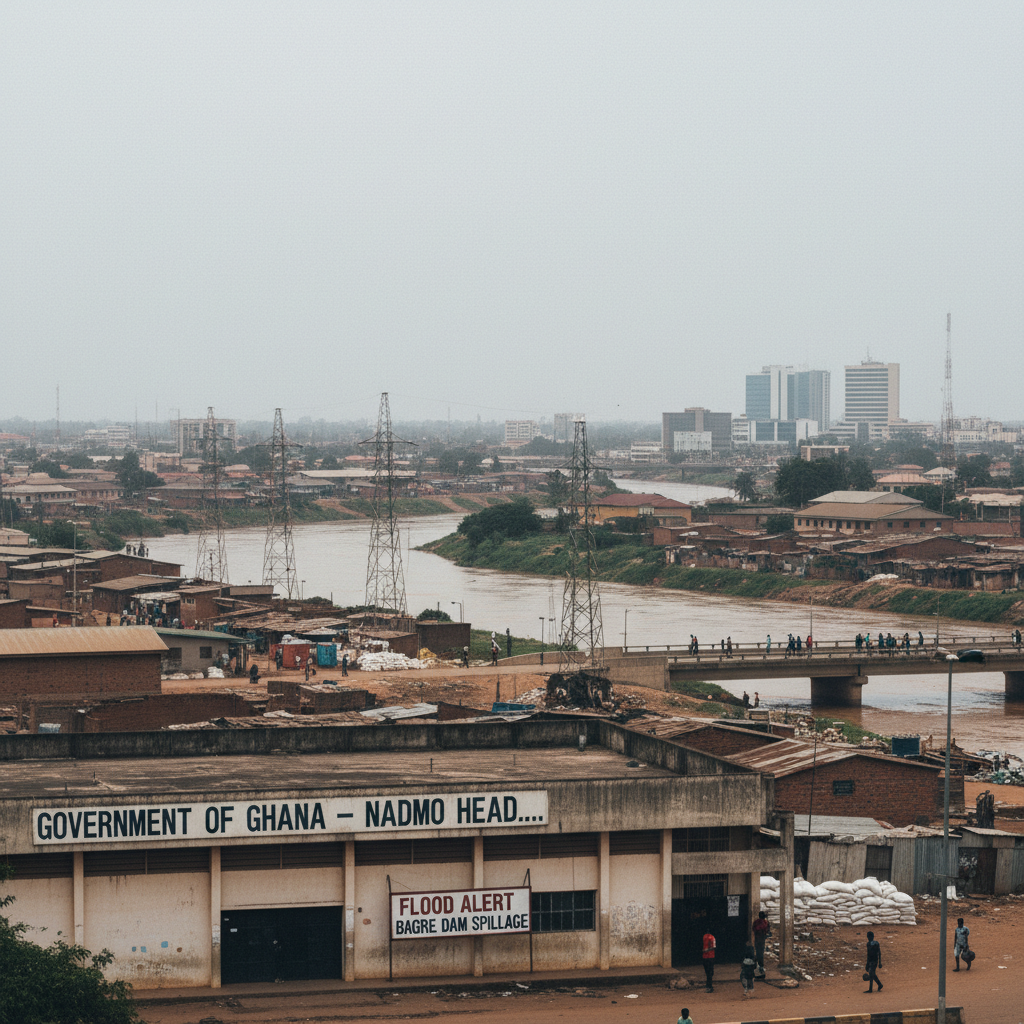
The National Disaster Management Organisation (NADMO) has issued a flood alert for Ghana's North East Region. This follows notification from Burkina Faso that the Bagre Dam will be opened from Tuesday, August 11, 2026. The planned spillage is expected to significantly increase the volume of water entering Ghana through the White Volta River and its tributaries, posing a flood risk to communities.
NADMO's North East Regional Office urged residents, farmers, fishermen, and herdsmen to take immediate precautionary measures. These actions are crucial to safeguard lives and property in areas along riverbanks and other flood-prone locations. The increased downstream flow could lead to rising water levels and widespread flooding, particularly affecting communities situated along the White Volta and its associated waterways.
This annual event underscores Ghana's vulnerability to transboundary water management decisions and climate-related impacts. The Bagre Dam spillage frequently causes displacement, destroys crops, and disrupts livelihoods in northern Ghana. It highlights the need for robust disaster preparedness and long-term adaptation strategies to mitigate the recurring economic and social costs.
NADMO specifically advised people living in vulnerable locations to relocate to safer areas before the situation worsens. The organisation cautioned against entering river channels and floodplains for farming, fishing, or animal grazing. Farmers with land along riverbanks received particular encouragement to harvest their crops early to minimise potential losses from the impending floods.
The organisation further urged residents to move valuables, foodstuffs, livestock, and farm equipment away from areas considered vulnerable. NADMO also warned the public against attempting to cross flooded roads, rivers, streams, or bridges. They called for strict compliance with safety directives issued by NADMO, security agencies, and district assemblies.
NADMO's district offices across the North East Region have been directed to intensify public education and sensitisation efforts. These efforts focus particularly on communities located along the White Volta and other vulnerable waterways. The organisation stated it will continue to monitor the situation and provide updates to the public as developments unfold. This proactive communication is vital for ensuring community safety and preparedness.
The recurring nature of these floods necessitates a comprehensive approach involving regional cooperation and national investment in resilient infrastructure. Ghana's agricultural sector, a significant contributor to GDP, is particularly susceptible to such environmental shocks. Protecting these communities and their economic activities remains a critical challenge for national development.