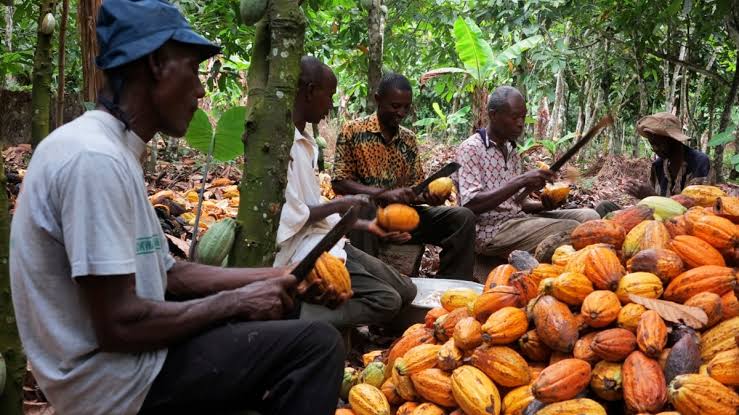
Ghana's Parliament has passed the Ghana Cocoa Board Bill, 2026, ensuring cocoa farmers receive a minimum of 70% of the Free on Board (FOB) export price. This landmark legislation aims to significantly strengthen the nation's vital cocoa sector and improve farmer livelihoods.
The new law establishes the Ghana Cocoa Board (COCOBOD) as the primary statutory body. It will regulate, oversee, and monitor all activities across the cocoa value chain. This includes supporting production, managing purchases and exports, and promoting value addition within Ghana.
This move is part of Ghana's broader economic strategy to enhance agricultural productivity and ensure equitable distribution of wealth from its key exports. Cocoa remains a cornerstone of the Ghanaian economy, contributing significantly to foreign exchange earnings and rural employment. The guaranteed price aims to stabilize farmer incomes and incentivize higher quality production, addressing long-standing concerns about farmer compensation.
Deputy Finance Minister Thomas Nyarko Ampem presented the Bill to Parliament. He stated the new law provides a robust legal framework for COCOBOD's operations. Mr. Ampem highlighted that the legislation formalizes the Producer Price Review Committee, strengthening the process for setting cocoa producer prices. This ensures transparency and fairness in price determination for farmers.
The Bill introduces a new funding model, allowing COCOBOD to raise funds locally. This will facilitate the purchase of cocoa beans directly from farmers. This model also ensures a sufficient supply of beans for local processing companies, fostering domestic industrial growth. Mr. Ampem emphasized, "This bill is bringing out new arrangements where the beans will be available for our local processing companies. Seventy per cent of the FOB price of cocoa will go to the farmers."
Furthermore, the legislation provides statutory backing for critical regulatory functions. These include quality inspections, certification requirements, and disinfestation procedures. It also covers service charges and cocoa take-over processes, giving these functions stronger legal enforcement. This will help maintain Ghana's reputation for high-quality cocoa on the international market.
The new law also places COCOBOD under the direct supervision of the Ministry of Finance. This formalizes a government decision made in March 2025 to transfer oversight from the Ministry of Food and Agriculture. This shift aims to align COCOBOD's financial management more closely with national economic policies and fiscal discipline.
The Bill actively promotes public-private partnerships and local value addition. It encourages collaboration with both local and international partners. Measures are also introduced to support small-scale chocolatiers and manufacturers of cocoa by-products. This initiative seeks to diversify Ghana's cocoa economy beyond raw bean exports, creating more jobs and higher value products domestically.
The guaranteed 70% FOB price for farmers is expected to boost their income significantly. This could lead to increased investment in cocoa farms and improved farming practices. Observers will watch how this new funding model impacts COCOBOD's financial health and its ability to raise capital. The success of local processing initiatives will also be a key indicator of the Bill's long-term impact on Ghana's economic diversification goals.