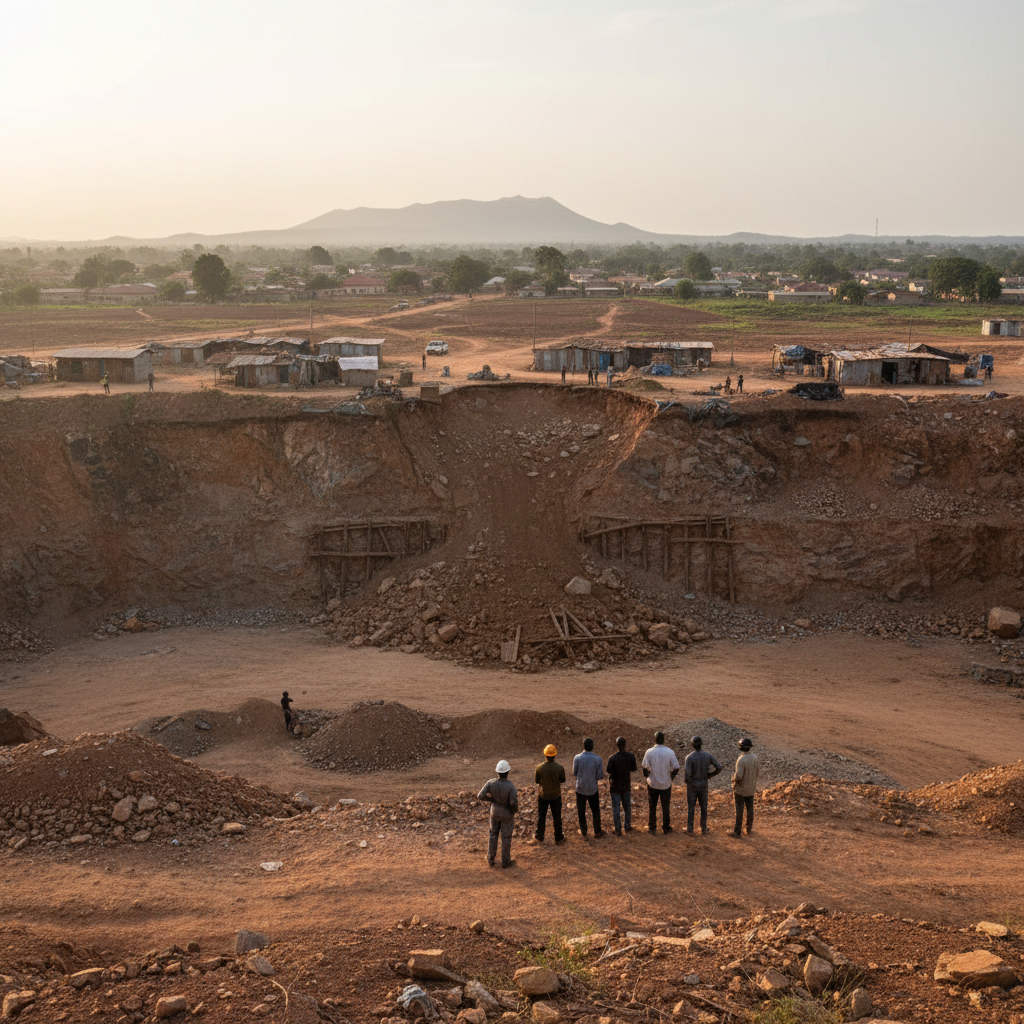
Three individuals have died after a mining pit collapsed on them in Odumase-Santenso, located within the Asante Akyem Central Municipality of the Ashanti Region. The victims, identified as two women and one man, were reportedly between 21 and 25 years old. This tragic incident occurred around 4:00 p.m. on Friday, August 7.
The collapse happened during what is locally known as “one-man” mining, an illegal form of small-scale gold extraction. This method involves individuals digging deep pits with rudimentary equipment, often leading to unstable ground conditions and high risks. The incident highlights the severe dangers associated with unregulated mining activities and the increasing loss of young lives in such operations across the municipality.
This event fits into a broader narrative of Ghana's ongoing struggle with illegal mining, or 'galamsey', which has significant economic and environmental consequences. Despite government efforts to curb these activities, including military operations and policy reforms, the lure of quick gold profits continues to draw many, particularly young people, into dangerous practices. The economic impact includes lost tax revenue, environmental degradation affecting agriculture and water bodies, and a negative perception of Ghana's mining sector among legitimate investors.
Isaac Kyei Andoh, the Caretaker Assembly Member for the area and Assembly Member for the Bomeriso Electoral Area, confirmed the details of the incident. He stated that residents alerted him shortly after the pit caved in, prompting an immediate attempt to rescue those trapped. Mr. Andoh informed the Municipal Chief Executive (MCE), and arrangements were made to bring in a backhoe for retrieval. However, the initial equipment developed a fault, delaying the rescue. A private backhoe was eventually arranged, but by the time it arrived, residents had already managed to dig through the collapsed pit and recover the bodies between 6:30 p.m. and 7:00 p.m. Traditional rites were performed at the scene before the remains were conveyed to the mortuary.
The implications of this incident are far-reaching, demanding renewed attention from policymakers and law enforcement. The persistent nature of illegal mining suggests that current strategies may not be sufficient to deter individuals from engaging in such hazardous work. Decision-makers will need to consider not only stricter enforcement but also the provision of viable economic alternatives for communities reliant on mining. The incident will likely intensify calls for more effective regulation and community engagement to prevent future fatalities and protect Ghana's natural resources. Markets and investors in Ghana's formal mining sector will also watch how the government responds to these ongoing challenges, as illegal mining can impact the overall stability and reputation of the industry.