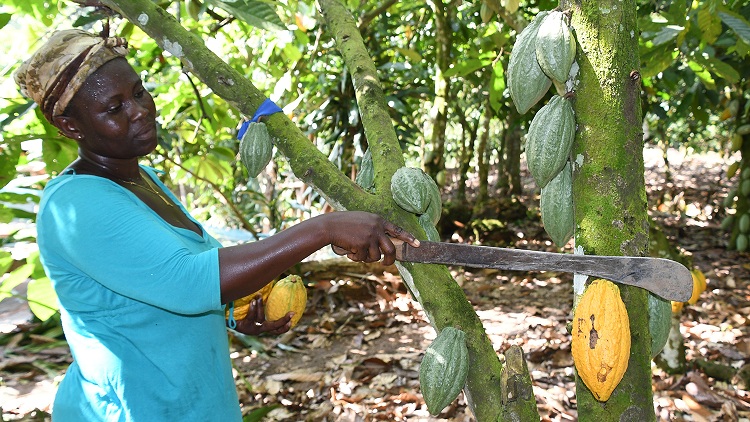
West African cocoa producers face significant challenges meeting new European Union anti-deforestation regulations. This situation threatens to disrupt cocoa exports to the EU, which purchases 60% of the world's cocoa.
The EU Deforestation Regulation (EUDR) requires importers to prove their products were not grown on recently deforested land. This involves tracing raw materials back to their original plots. Farmers must also show compliance with local laws, including those against child labour. The regulation is set to take effect at the end of December.
This new law impacts Ghana, Ivory Coast, and Nigeria, which collectively produce about 70% of the world's cocoa beans. Approximately two-thirds of these beans are shipped to the EU. The compliance burden is particularly heavy for the hundreds of thousands of small-scale farmers in remote areas. Many lack the resources to map their farms and maintain digital traceability records.
Sustainability consultant Nicko Debenham, a former global cocoa trader, warns of potential disruptions. He states that EU importers may struggle to source enough compliant cocoa from indirect shippers. This could lead to a supply squeeze for about two years. Exporters who invest in compliance may command a premium for their beans during this period.
The cost of compliance is substantial for exporters. Major Nigerian cocoa exporter Sunbeth Global spent three years mapping 124,000 hectares of farmland. This covered 60,000 metric tons of cocoa in its supply chain. The cost ranged from $30 to $70 per metric ton. Sunbeth also deployed field agents to train farmers and hired a 35-person sustainability team. Another major exporter, Starlink Global and Ideal, spent $40 to $80 per ton mapping its supply chain since 2023. These costs have not yet been recovered from European buyers.
Nzubechukwu Anisiobi, Sunbeth's Chief Operating Officer, confirmed the high expenses. He noted pushback from buyers regarding who will bear the EUDR compliance costs. This situation is currently eating into profit margins for exporters. The regulation's complexity has already caused two delays in its implementation.
The struggle to meet these rules could significantly impact Ghana's cocoa sector. Ghana is the world's second-largest cocoa producer. Its economy relies heavily on cocoa exports. Failure to comply could reduce access to the crucial European market. This would affect farmer incomes and national revenue. The Ghana Cocoa Board (COCOBOD) and other stakeholders must accelerate efforts to support farmers. They need to ensure traceability and sustainable practices. This is vital for maintaining market access and farmer livelihoods.
The long-term implications include potential shifts in global cocoa sourcing. Chocolate makers may seek compliant beans from other regions if West African supply becomes too difficult or expensive. This could reshape the entire cocoa industry. Stakeholders must watch how compliance costs are distributed across the supply chain. The ability of small-scale farmers to adapt will be critical. Their livelihoods depend on continued access to international markets.