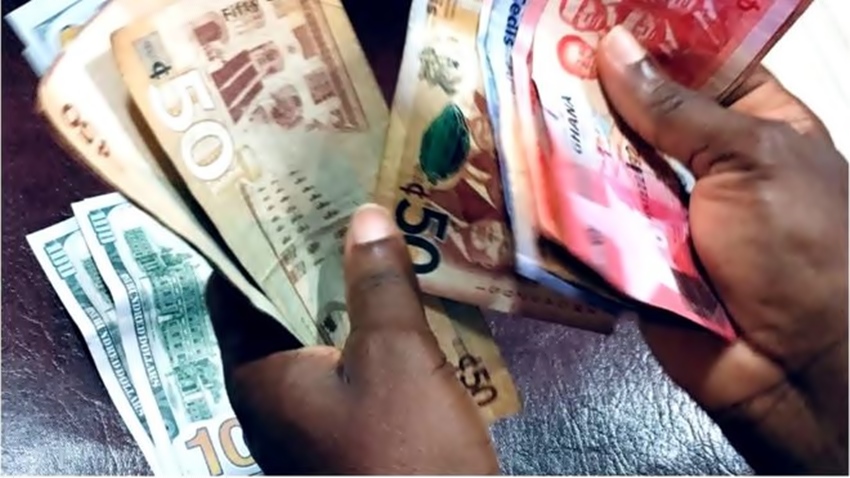
Former President John Dramani Mahama has declared Ghana’s currency, the cedi, is “long overdue for refreshing.” He highlighted the critical need to periodically upgrade the cedi’s security features to outmaneuver counterfeiters. This statement underscores a significant concern for the integrity of Ghana’s financial system.
Mr. Mahama explained that currencies require regular updates, typically every ten years, to prevent criminals from easily reproducing them. He stressed that security features on banknotes must evolve with new counterfeiting techniques. The former President made these remarks during his Resetting Ghana Tour in the Upper East Region, drawing attention to a pressing issue for the nation’s economic stability.
This call for a currency refresh fits into Ghana’s ongoing efforts to maintain economic stability and public confidence in its financial instruments. The cedi’s performance and security are vital for daily transactions and broader economic health. Previous currency redenomination exercises, such as in 2007, aimed to simplify transactions and improve public perception, though a security refresh is distinct from redenomination.
President Mahama confirmed his awareness of plans by the Governor of the Bank of Ghana to refresh the currency. He expects the central bank to announce details to the public at the appropriate time. “I know the governor has plans to refresh the currency,” Mr. Mahama stated, indicating official consideration of the matter.
The immediate implication of a currency refresh would be enhanced protection against counterfeit notes for consumers and businesses. This would bolster confidence in cash transactions. However, Mr. Mahama clearly distinguished between currency security and its economic value. He asserted that the cedi’s strength is fundamentally tied to the nation’s economic management.
A currency refresh primarily involves updating security elements on banknotes. It does not inherently change the cedi’s value or constitute a redenomination. Such an update would make it significantly harder for criminals to produce fake currency. This measure is a standard practice globally to protect national currencies.
Mr. Mahama emphasized that the cedi’s value and performance are ultimately linked to the wider economy’s management. He attributed the cedi’s recent stronger performance to “good economic management.” He pointed to government economic policies as a key factor supporting the cedi against major international currencies. “Your currency is as strong as your economic management,” he added, linking policy to currency strength.
The timing and scope of any cedi refresh remain solely with the Bank of Ghana. The central bank is responsible for currency issuance and management. While the government continues to implement policies to support the cedi’s strength, the Bank of Ghana will determine the specifics of any security upgrade. This division of responsibility is crucial for monetary policy independence.
A currency refresh could help Ghana combat increasingly sophisticated counterfeiting methods. However, it will not, by itself, strengthen the cedi’s economic value. The currency’s broader performance will continue to depend on fundamental economic factors. These include inflation rates, foreign exchange supply, fiscal management, and the central bank’s monetary policy decisions. These elements collectively dictate the cedi’s market standing.
The former President reiterated that the government will continue to implement policies to bolster the cedi’s strength. He expects the Governor of the Bank of Ghana to provide updates on any plans for refreshing the currency. This ongoing commitment highlights the importance of both currency security and economic fundamentals for Ghana’s financial health.