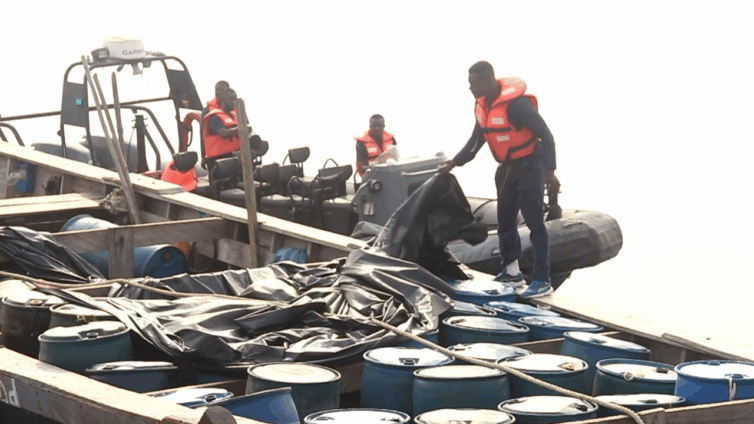
Ghana's government will enforce statutory bank guarantees for companies lifting refined petroleum products. This measure aims to combat fuel smuggling and prevent significant revenue leakages. Finance Minister Dr. Cassiel Ato Forson announced these reforms during the 2026 Mid-Year Budget Review in Parliament.
The new policy addresses existing weaknesses in the fuel distribution chain. These vulnerabilities have led to the diversion, under-declaration, and smuggling of petroleum products. Dr. Forson stated that the economy can no longer afford these substantial leakages.
These reforms are crucial for Ghana's broader economic stability and revenue mobilization efforts. Fuel smuggling not only deprives the government of much-needed tax revenue but also distorts market prices. This creates an uneven playing field for legitimate businesses and impacts the national budget.
Dr. Forson emphasized the government's commitment to strengthening compliance in the downstream petroleum sector. He noted that the enforcement of bank guarantees is a direct response to persistent challenges. The government will also restrict the transportation of petroleum products to approved pipelines. These pipelines will feature electronically tracked distribution systems to improve accountability.
Additionally, the government will remove tax exemptions on bunkering services. This move aligns with international practices and aims to curb smuggling and protect revenue. Bunkering services, which supply fuel to ships, have been identified as an area prone to abuse under the current exemption regime.
These measures are part of a comprehensive strategy outlined in the 2026 Mid-Year Budget Review. The government seeks to plug revenue leakages and enhance oversight within the petroleum sector. This strategy is vital for bolstering domestic revenue mobilization, a key objective for the country's fiscal health.
The reforms are expected to increase transparency in the movement of petroleum products. Stricter monitoring and enhanced regulatory enforcement will safeguard government revenue. This proactive approach aims to create a more robust and accountable petroleum distribution system.
Decision-makers and market participants will closely monitor the implementation of these new regulations. The effectiveness of these measures in reducing smuggling and increasing revenue will be a key indicator. Successful implementation could significantly improve Ghana's fiscal position and investor confidence.
The government's focus on tightening controls reflects a broader commitment to fiscal discipline. This commitment is essential for sustainable economic growth and development. The petroleum sector remains a critical component of Ghana's economy, making these reforms particularly impactful.