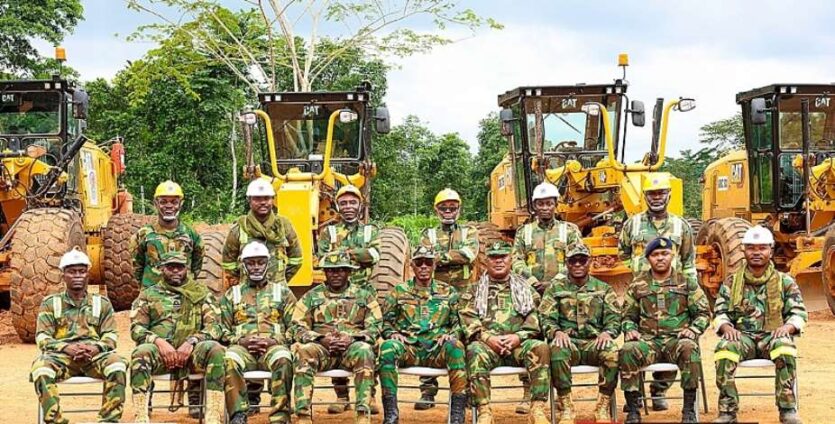
Ghana is significantly underutilising the engineering capabilities of its Armed Forces and local welders. This oversight leaves thousands of children without safe access to education due to a lack of basic infrastructure. The 48 Engineers Regiment of the Ghana Armed Forces possesses the skills to construct essential schools and bridges. Deploying these national assets could address critical development challenges across the country.
Heartbreaking videos show children wading through water or climbing trees to reach school in the Volta Region. Many schools operate under trees or in unsafe structures, especially during the rainy season. Education Minister Haruna Iddrisu stated that about 5,000 schools still operate under trees. Another 759 schools require urgent infrastructure intervention. These issues highlight a failure in local government's ability to meet basic community needs.
This situation fits into Ghana's broader challenge of equitable development and resource allocation. While large-scale projects often receive significant attention, smaller, vital community needs remain unmet. The District Assembly Common Fund, intended for local development, could be better directed to these projects. Ensuring proper monitoring of these funds is crucial to prevent misuse. This would ensure resources reach the communities most in need.
The Ghana Armed Forces already recognises its Engineers Corps as a key contributor to national development. The Corps includes the 48, 49, 50, and 51 Engineer Regiments. These units operate under the 14 Engineer Brigade. Their capabilities include construction, bridging, and field engineering. Their expertise should extend beyond military tasks to solve pressing civilian problems. This approach would keep their technical skills sharp while delivering public value.
A dedicated Military Community Infrastructure Programme could address these gaps. This program would focus on basic schools and essential rural infrastructure. Standard classroom designs could be replicated across districts. This would reduce procurement delays and construction costs. Local welders could fabricate steel components for modular footbridges, creating jobs. District Assemblies would provide materials and identify priority sites. Communities would contribute labour and maintain the structures. This model offers a low-cost, efficient solution for durable infrastructure.
This initiative would not replace private contractors, who remain vital to Ghana's construction industry. Instead, military engineers would fill gaps where projects are too small, too remote, or too urgent for commercial interest. The Engineers Regiment has repeatedly demonstrated its technical capability through various military and emergency operations. The question is not their ability to build, but the country's willingness to deploy this capacity effectively. Success should not only be measured by large, multi-million-cedi flagship projects. Sometimes, the most important infrastructure is a simple bridge. This bridge allows a six-year-old to reach school safely. Ghana possesses the engineers, welders, and disciplined personnel to deliver quality public works. A deliberate policy is needed to bring these assets together for national development. Business magnates could also fund civil engineering students to adopt these projects. Technical university students could undertake such ventures as part of their project work. This collaborative approach would secure the future of Ghana's children.