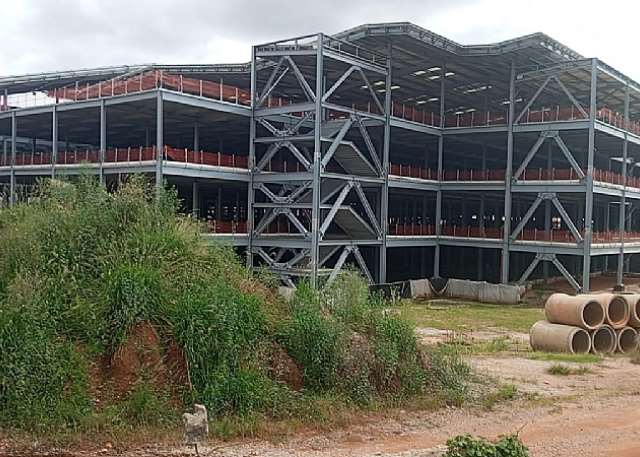
Traders at Kumasi Central Market are preparing to demonstrate against the prolonged stalling of the second phase of the market's redevelopment project. This delay has left many vendors without designated trading spaces, severely impacting their ability to earn a living.
The stalled project directly affects over 1,000 traders who were relocated to make way for the redevelopment. These individuals now face significant financial hardship due to the lack of progress and the absence of suitable alternative trading facilities. The situation has created considerable uncertainty and frustration among the market community.
This issue fits into a broader narrative of infrastructure project management challenges in Ghana. Large-scale public works, while essential for economic growth, often encounter delays, cost overruns, and logistical hurdles. The Kumasi Central Market, a vital economic hub in the Ashanti Region, contributes significantly to the regional economy through trade and employment. Its incomplete modernization hinders local commerce and affects numerous supply chains.
While no specific official statement was available in the source, the planned demonstration underscores the urgent need for government intervention. Such protests typically aim to draw attention to unfulfilled promises and demand accountability from project implementers. The traders' actions reflect a growing impatience with the pace of development.
The immediate implication is increased pressure on local and national authorities to expedite the project. Decision-makers will need to address the traders' grievances to prevent further disruption to market activities and potential social unrest. The outcome of these protests will be closely watched by other communities facing similar infrastructure development challenges across Ghana.
The Kumasi Central Market redevelopment project, initially valued at GHS 290 million, aims to transform one of West Africa's largest open-air markets into a modern trading facility. The first phase, completed in 2018, provided modern stalls and improved sanitation. However, the second phase, which commenced shortly after, has seen minimal progress, leading to the current impasse. This project is crucial for enhancing trade efficiency and improving working conditions for thousands of vendors.
The market serves as a critical node for agricultural produce and manufactured goods, connecting producers from various parts of Ghana to consumers. Its efficient operation is vital for food security and price stability in the Ashanti Region. The ongoing delays not only affect individual traders but also have ripple effects on the broader regional economy, potentially leading to higher prices for consumers due to disrupted supply chains and increased operational costs for vendors.
The government's commitment to urban renewal and infrastructure development is often highlighted in its economic plans. However, the situation in Kumasi Central Market demonstrates the gap between policy pronouncements and on-the-ground implementation. Resolving this issue will require a concerted effort from the Kumasi Metropolitan Assembly, the Ministry of Local Government, Decentralisation and Rural Development, and other relevant stakeholders. Ensuring transparency and regular communication with affected traders will be key to rebuilding trust and facilitating the project's completion.