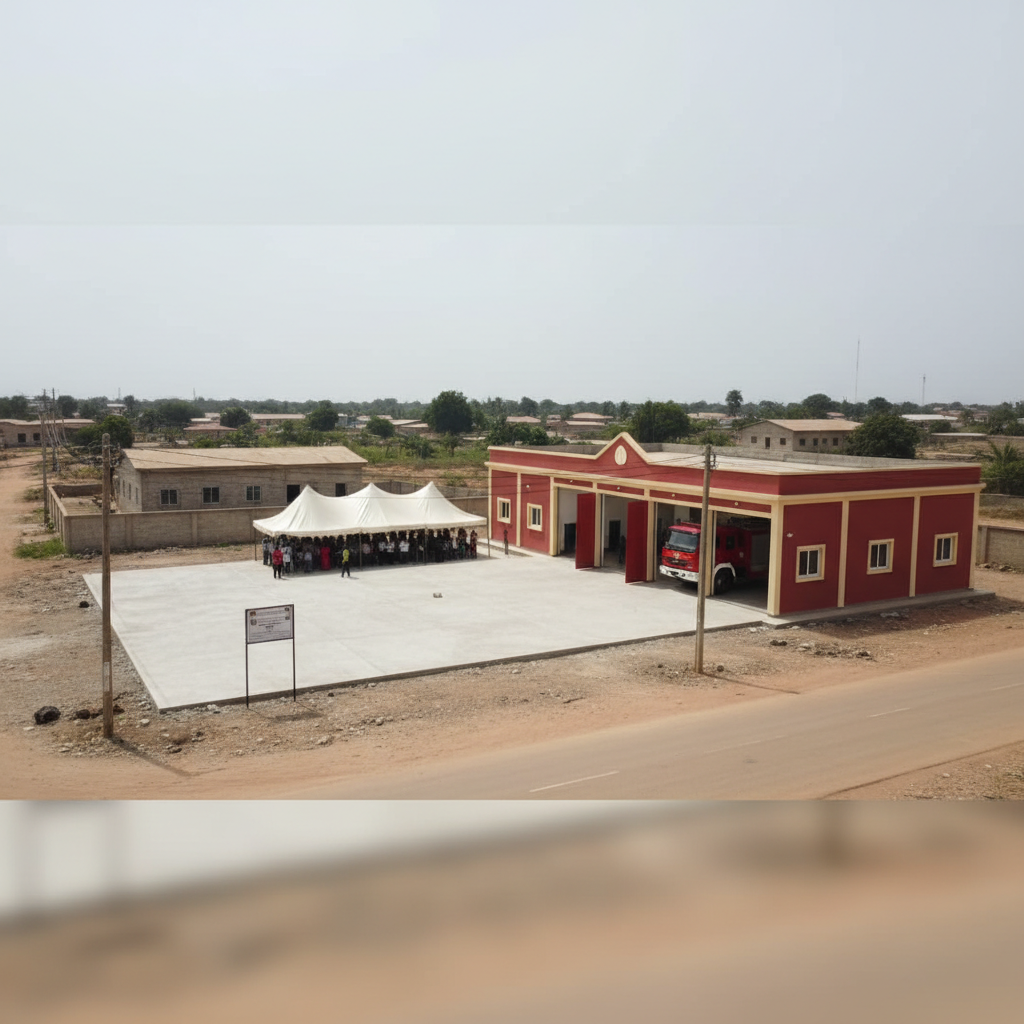
The University of Mines and Technology (UMaT) has commissioned a Ghana National Fire Service station on its Tarkwa campus. This new facility aims to improve emergency response and strengthen safety for its growing university community and surrounding settlements.
This strategic move comes as the Tarkwa Nsuaem Municipality recorded 12 fire incidents within the first half of 2026. These incidents included five domestic fires, three commercial fires, a vehicular fire, an institutional fire, an industrial fire, and one other outbreak. The UMaT enclave alone experienced four major fires from January to June 2026, highlighting the urgent need for enhanced fire safety measures.
The establishment of this fire station is a critical development for the region's safety infrastructure. Ghana's rapid urbanization and industrial growth often strain existing emergency services, leading to slower response times. This initiative by UMaT addresses a specific local need while setting a precedent for other institutions to invest in community safety. It aligns with national efforts to improve disaster preparedness and resilience across the country, particularly in areas with increasing population density and economic activity.
Deputy Chief Fire Officer Roberta Aggrey Ghanson, Director of Operations for the Ghana National Fire Service, expressed satisfaction with the project. She stated, "My heart is filled with joy for having this project strategically located in Tarkwa because it is actually going to reduce our response time." This reduction in response time is crucial for containing incidents before they escalate, minimizing damage, and saving lives.
The new facility is part of UMaT’s strategic expansion plans, which anticipate an increasing student population. With over 14,000 students currently on its Tarkwa campus, the university recognizes the importance of expanding safety infrastructure alongside its growth. Professor Richard Kwesi Amankwah, Vice Chancellor of UMaT, emphasized that the project aims to improve the safety resilience of both the university and the wider Tarkwa community. He noted that the existing fire station at Aritreso, several kilometers away, often faced traffic congestion, hindering rapid response during emergencies.
The implications of this new fire station are significant for public safety and economic stability in Tarkwa. Faster response times will reduce property losses from fires, which can have substantial economic impacts on businesses and households. It also enhances the safety and well-being of the large student population, making UMaT a more secure environment for education and research. This investment in emergency services will likely encourage further development and investment in the area, knowing that critical infrastructure is in place to mitigate risks. Decision-makers and local businesses will be watching to see the tangible impact of this improved emergency preparedness on the community's overall resilience.