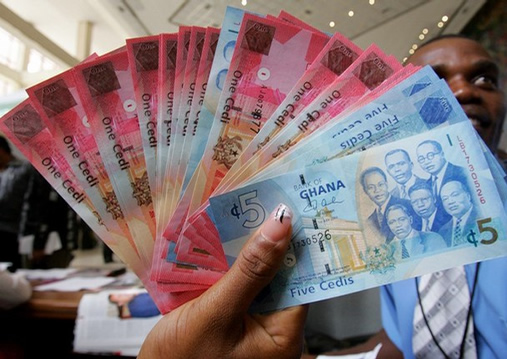
Ghana’s strong cedi, currently at GHS 10.94 to the US dollar, is inadvertently destroying local jobs by making imported products drastically cheaper than locally manufactured goods. This economic paradox emerges despite significant macroeconomic achievements by the current administration.
The government has orchestrated a historic economic turnaround following the 2022 to 2023 crisis. Inflation has plummeted to 4.6%, and the economy is growing robustly at 5.5%. The Bank of Ghana aggressively slashed its monetary policy rate to 14.0% from a 30% peak, providing massive relief to businesses.
These successes fit into Ghana's broader economic story of recovery and stabilization. The State is also rebuilding gross international reserves, which now stand at $13.8 billion. Furthermore, the Value Added Tax Act, 2025 (Act 1151), abolished the 1% COVID-19 Health Recovery Levy and raised the VAT registration threshold to GHS 750,000, shielding small enterprises.
Ghana Business News highlights that these macroeconomic victories have created a complex “Strong Currency Paradox.” The aggressive accumulation of reserves caused the cedi to appreciate significantly, stabilizing around GHS 10.99 per dollar. This dynamic effectively curbs imported inflation but also creates a massive subsidy for imports, harming local production.
This situation has critical implications for Ghana's industrial base and future employment prospects. The strong cedi, without a globally competitive industrial base, makes local production uncompetitive. Decision-makers must now address this import subsidy trap to protect domestic industries and foster job creation.
The claim that a strong cedi destroys local jobs holds undeniable empirical weight. Local entrepreneurs face significant challenges. For example, Ghana's national demand for poultry meat is 400,000 metric tonnes annually. Local farmers produce only about 57,871 metric tonnes, constrained by high feed costs and infrastructure deficits.
Foreign producers benefit from massive agricultural subsidies in their home countries. Local importers now enjoy immense purchasing power due to the stronger cedi. This allows imported frozen chicken to land in Ghana 30% to 40% cheaper than locally raised chicken. This price difference makes local poultry farming unsustainable for many.
The government has tried to stimulate local production, for instance, by zero-rating VAT on locally manufactured textiles until December 2028. However, other policies show a tension between modernization and local job creation. The 2026 budget introduced zero import duty on pure electric vehicles, which is environmentally progressive.
This policy hands the market entirely to cheap, imported Chinese EVs. It removes any incentive for prospective domestic assembly plants to build a local automotive value chain. This decision could stifle the development of a crucial industrial sector in Ghana.
The real killer of local industrial jobs is not just the exchange rate. It is also the unyielding domestic cost of production. A strong cedi makes importing easy. However, local factories remain trapped by structural deficits, making their goods more expensive to produce.
Following a major 2026 tariff adjustment, industrial electricity costs in Ghana sit at approximately $0.16 per kilowatt-hour (kWh). A Ghanaian manufacturer paying $0.16/kWh cannot price their goods below an imported equivalent. Manufacturers in Vietnam or China pay roughly $0.07/kWh for industrial power, giving them a significant cost advantage.
Despite commendable VAT reforms, formal manufacturing businesses still navigate a unified 20% effective VAT rate. This includes a flat 15% VAT alongside a 2.5% NHIL and 2.5% GETFund levy. These taxes add to the cost burden for local producers, further widening the price gap with imports.
The youth are analytically correct in their assessment of the situation. When an entrepreneur conducts a feasibility study today, the high cost of electricity and local overheads make importing a finished good vastly more profitable. Establishing a local factory becomes a less attractive investment.
This rational reallocation of capital could destroy high-yield industrial job creation. It risks trapping the workforce in an informal, retail-based economy. This shift would hinder Ghana's long-term industrialization goals and economic diversification efforts.
However, it is crucial to disaggregate the import data to understand the full jobs narrative. Not all imports are finished consumer goods actively displacing local businesses. A significant portion consists of capital goods and intermediate materials essential for industrialization, which are necessary for growth.
Ghana's top import categories historically include heavy machinery, self-propelled bulldozers, cement clinker, and industrial energy inputs like automotive gas oil (diesel). These are fundamental building blocks for infrastructure, construction, and manufacturing. Ghana currently lacks the domestic capacity to manufacture such heavy industrial machinery.
Local factories must rely entirely on imported assembly lines, agricultural tractors, and production technology. In this context, a strong cedi is a lifeline for ambitious local entrepreneurs. It makes importing essential industrial machinery and raw commodities far more affordable, supporting future industrial growth.