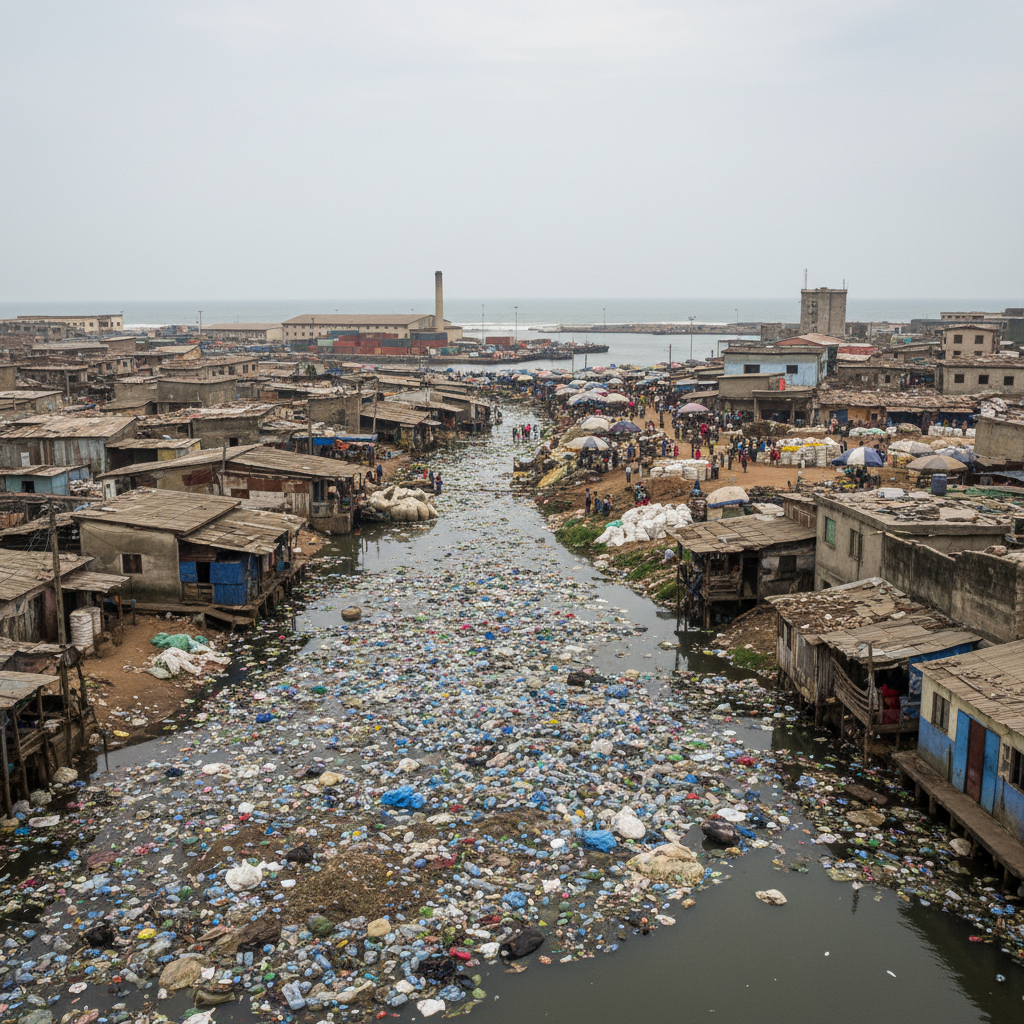
Ghana's recurring flood disasters, particularly in Accra, are significantly worsened by the country's struggle with solid waste management. The nation generates approximately 840,000 tonnes of plastic waste each year. A mere 9.5% of this plastic is collected for recycling, according to the World Economic Forum's Global Plastic Action Partnership.
This uncollected waste often clogs drains and waterways, turning heavy rainfall into devastating floods. The economic cost of mishandled plastic waste is substantial, estimated at $100 million annually. Analysts project plastic leakage into Ghana's water bodies could nearly triple between 2020 and 2040 without intervention.
Accra has experienced flooding almost every year since 1935. The city still remembers the June 2015 disaster, which killed at least 150 people. On June 29, 2026, 140 millimetres of rain fell on Accra in a single day. This downpour, more than double the heaviest of the previous year, resulted in at least 12 deaths. Rescue teams pulled over 400 people from submerged homes in areas like Kaneshie, Alajo, and Odawna.
The World Bank's Greater Accra Resilient and Integrated Development Project (GARID) acknowledges this critical link. This $150 million initiative aims to improve drainage and solid waste management simultaneously. It covers over 2.5 million residents in the Odaw River Basin. GARID's design treats silted channels and clogged gutters as interconnected problems.
Experts emphasize that Ghana cannot solve its flooding issues solely with larger drains or annual desilting. The continuous flow of waste into these systems negates such efforts. A circular economy approach offers a viable solution. This model focuses on designing out waste and pollution, keeping products and materials in use, and regenerating natural systems.
For Ghana, this means reducing single-use packaging and promoting reusable alternatives. It also involves requiring manufacturers to design products for collection, repair, or recycling. Producers should share responsibility for their product packaging after it leaves the shelf. When materials retain value, there is an incentive to retrieve them rather than discard them.
For example, a used plastic bottle can become raw material for a new one. Fabric offcuts can be repurposed into bags or household items. Organic waste can be converted into compost, animal feed, or biogas. Construction rubble can be recovered instead of being dumped. These practices not only boost recycling rates but also significantly reduce the volume of material entering drains. Implementing effective collection systems is crucial for this circular model to succeed.