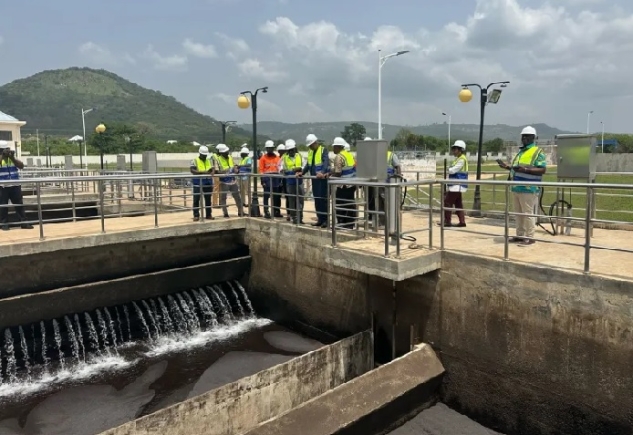
The Ghana Gold Board (GoldBod) is fully funding the rehabilitation of six water treatment plants. These plants, operated by Ghana Water Limited, were shut down due to poor water quality linked to irresponsible mining activities.
GoldBod’s Chief Executive Officer, Sammy Gyamfi, announced this intervention at the National Mining Dialogue in Accra on Tuesday, August 18. The affected facilities include the Daboase, Sekyere Hemang, and Bonsa water treatment plants. These plants serve over 76 communities and approximately 100,000 people in Ghana’s Western and Central regions.
This initiative addresses a critical public health and environmental crisis caused by illegal mining, locally known as galamsey. Galamsey has severely polluted Ghana’s rivers and water bodies, disrupting essential services and endangering communities. The government has intensified efforts to combat this menace, recognizing its devastating impact on natural resources and livelihoods.
Mr. Gyamfi stated, “The GoldBod is fully-funding the rehabilitation of three of the six water treatment plants of the Ghana Water Limited shut down as a result of poor water quality linked to irresponsible mining and other activities.” He added that GoldBod would fully fund the remaining three plants next year. These include the Kwanyako, Baifikrom, and Essagyir water treatment plants.
This significant investment underscores the urgent need to protect Ghana’s vital water resources. The rehabilitation efforts will restore access to clean water for thousands of citizens. It also signals a stronger commitment from state institutions to mitigate the environmental damage caused by unregulated mining practices. Decision-makers will watch for the timely completion of these projects and their impact on water quality. The intervention also sets a precedent for corporate responsibility within the mining sector.
GoldBod’s commitment extends beyond plant rehabilitation. The organization views protecting water bodies, forests, and farmlands as central to Ghana’s mining policy. Mr. Gyamfi emphasized that mining’s social license cannot coexist with poisoned rivers and devastated forest reserves. This holistic approach aims to ensure sustainable resource management.
The rehabilitation project forms part of GoldBod’s broader environmental commitments. These include an ongoing land reclamation programme. GoldBod has already reclaimed 50 hectares of degraded land in the Tano Nimri Forest Reserve. The board plans to extend this programme to another 100 hectares of degraded forest land next year. These efforts aim to restore ecological balance in mining-affected areas.
Furthermore, GoldBod actively supports the government’s fight against illegal mining. The board aids the National Anti-Illegal Mining Operations Secretariat (NAIMOS). GoldBod previously donated pick-up vehicles and GHS 5 million to NAIMOS. It is now procuring high-specification speed boats to strengthen operations against illegal mining, particularly around water bodies. These measures demonstrate a multi-faceted strategy to curb galamsey.
Mr. Gyamfi stressed that Ghana’s mining sector must deliver economic benefits without imposing environmental and social costs on communities. The ultimate goal is to protect resources and communities while maximizing value from the country’s mineral wealth. This intervention by GoldBod represents a crucial step towards achieving that balance. It highlights the economic and social imperative of responsible mining practices in Ghana.