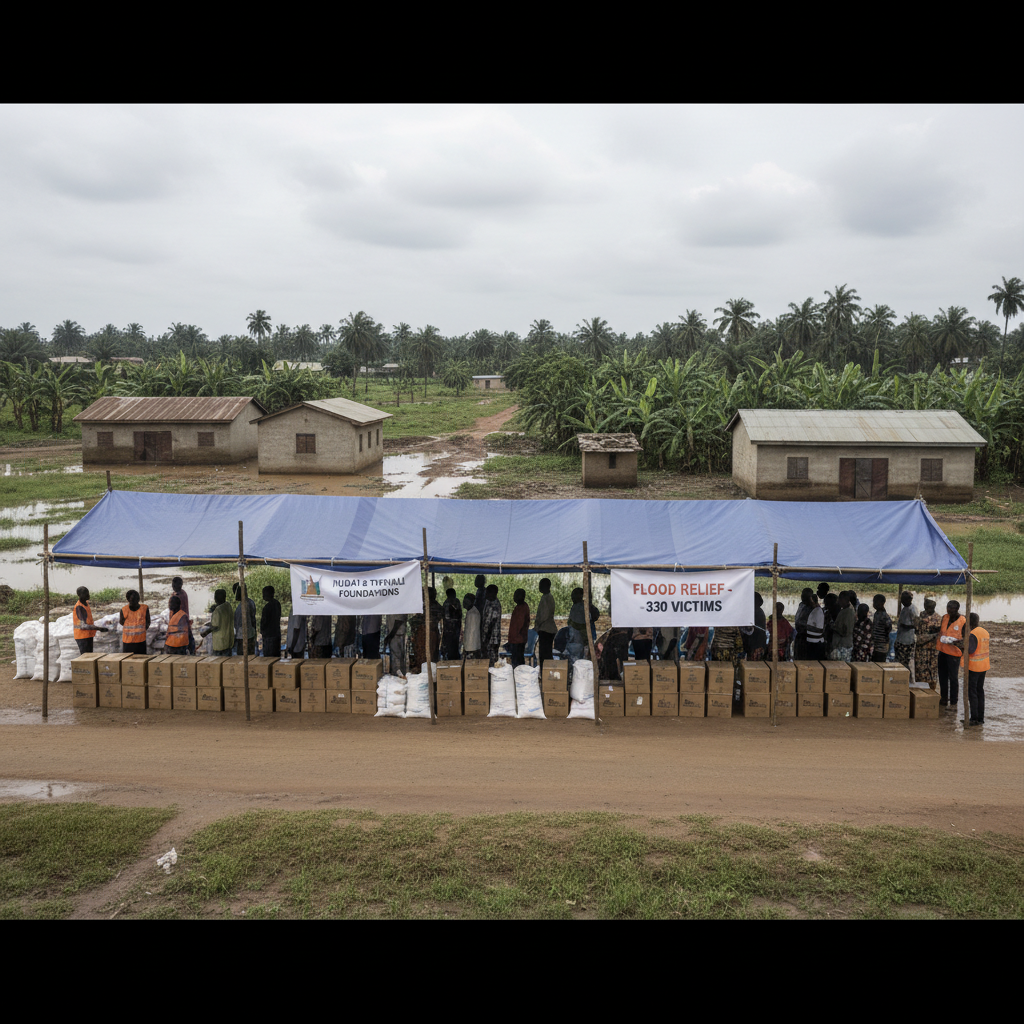
The HUDAI Foundation, in partnership with the Türkiye-based Tivnikli Foundation, has provided emergency relief and financial assistance to 330 victims affected by devastating floods in Ghana. This humanitarian intervention follows severe flooding on June 29, 2026, which displaced numerous families across various communities. The foundations aim to support these families and help them recover from the disaster's impact.
The initial phase of the intervention saw the distribution of 150 relief packages. These packages contained essential items such as food, clean water, and sanitary supplies. Each package also included cash support, enabling beneficiaries to address their immediate needs. The second phase of the initiative involves direct financial assistance for an additional 180 victims, providing flexibility for families to purchase necessities and begin rebuilding their lives.
This international support comes at a crucial time for Ghana, as the nation frequently grapples with the economic and social consequences of natural disasters. Flooding, particularly during the rainy season, often leads to significant property damage, displacement, and disruption of economic activities. The government and various non-governmental organizations consistently work to mitigate these impacts, but external aid remains vital for comprehensive recovery efforts.
In a joint statement, the HUDAI Foundation and Tivnikli Foundation expressed solidarity with Ghana. They described their support as part of a broader commitment to assist communities during crises. The foundations stated, "We stand shoulder to shoulder with Ghana during this trial." They further conveyed prayers for fortitude for affected families and the restoration of what was lost.
The National Mosque Complex and Tinasco School management are supporting this initiative. These organizations have pledged continued collaboration with local authorities to aid long-term recovery efforts. The foundations will monitor the situation closely and explore further interventions to strengthen community resilience in flood-affected areas. This ongoing commitment highlights the need for sustained support beyond immediate relief.
The economic implications of such disasters are substantial, often leading to increased public spending on relief and reconstruction. This diverts resources from other developmental projects. The timely provision of financial aid, like the cash support offered by these foundations, can help stabilize local economies by allowing affected individuals to inject funds directly into local markets. This approach empowers victims to make choices that best suit their specific recovery needs.
Ghana's economy, while resilient, faces challenges from climate change impacts such as increased frequency of extreme weather events. The government's disaster management agencies, like the National Disaster Management Organization (NADMO), often rely on partnerships with international bodies and local organizations. This collaboration ensures a more coordinated and effective response to emergencies. The involvement of organizations like HUDAI and Tivnikli Foundations complements national efforts significantly.
Looking ahead, the focus will shift from immediate relief to long-term resilience building. This includes investing in better infrastructure, improving early warning systems, and educating communities on disaster preparedness. The continued engagement of international partners will be crucial in supporting these broader objectives. Decision-makers will observe how these interventions contribute to the overall recovery and future preparedness of the affected regions.