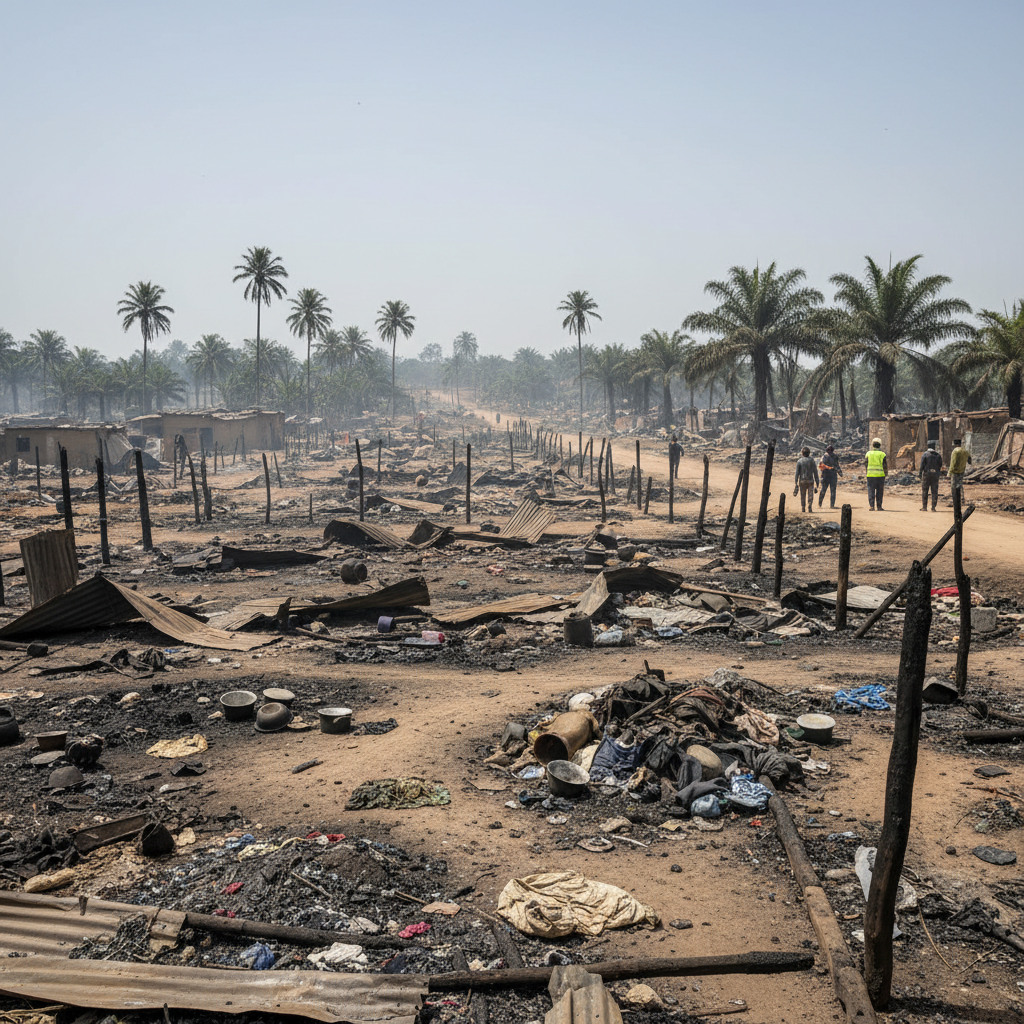
A fire has destroyed or damaged at least 10 wooden structures in the Golden Door area of Tantra Hill, Accra. The affected structures served both residential and commercial purposes. The incident occurred on Monday, August 17, 2026, triggering an immediate response from emergency services.
Personnel from the Ghana National Fire Service (GNFS) were deployed to the scene. Firefighters from the Amasaman Fire Station worked to control the blaze. Their efforts prevented the fire from spreading to nearby properties. The fire has since been brought under control, but the cause remains unknown.
This incident adds to a pattern of fire outbreaks in Accra’s informal settlements. Such fires frequently cause significant property damage and economic losses. These areas often feature densely packed wooden structures, increasing fire risk. Data from the GNFS consistently shows a high number of fire incidents in urban areas. These events disproportionately affect low-income households and small businesses. The economic impact includes loss of homes, livelihoods, and goods.
Assistant Divisional Officer Alex King Nartey of the GNFS confirmed the incident on Facebook. He did not provide details on the fire's origin. Officials are currently assessing the affected area. This assessment will determine the full extent of property damage and financial losses. Such evaluations are crucial for understanding the economic fallout.
The immediate implication is the displacement of residents and disruption of small businesses. Affected individuals will face significant challenges in rebuilding their lives and livelihoods. Decision-makers must consider improved urban planning and fire safety measures. The government and local authorities will need to address the vulnerability of informal settlements. This includes providing safer housing alternatives and enforcing building codes. Markets for building materials and local services may see temporary demand shifts. The long-term economic recovery for those affected will depend on support mechanisms.
This event underscores the need for robust disaster preparedness. It also highlights the importance of community-level fire prevention education. The financial burden of such disasters often falls on the most vulnerable. Future policies must aim to reduce these risks. This will protect both lives and economic assets in similar communities across Ghana. The ongoing assessment will provide clearer figures on the total economic cost.