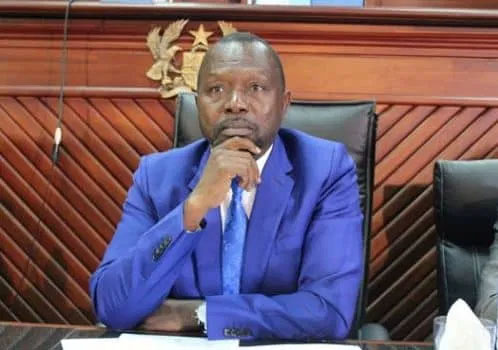
Eric Angel Carbonu, President of the National Association of Graduate Teachers (NAGRAT), has issued a stern warning to Attorneys General: halting corruption prosecutions for political reasons will cost their political parties public trust and electoral support. Speaking in a video post on Facebook, Mr. Carbonu stated that any Attorney General who intervenes to discontinue a corruption case sends a detrimental message to Ghanaians.
Such an intervention risks the perception that the government is protecting wrongdoing rather than actively combating it. Mr. Carbonu explained that if the Office of the Special Prosecutor is pursuing a corruption case and the Attorney General truncates it, this action directly conflicts with the aspirations of the Ghanaian people. He emphasized that discontinuing a prosecution creates the impression that the government endorses corruption and opposes the efforts of anti-corruption bodies.
This issue fits into Ghana's broader political landscape, where public confidence in governance and the fight against corruption remains a critical concern. Recent surveys and public discourse consistently highlight corruption as a major impediment to national development and a source of public dissatisfaction. The perception of political interference in legal processes, particularly those involving high-profile corruption, can significantly undermine democratic institutions and the rule of law. This sentiment is particularly strong among the electorate, who increasingly demand accountability from public officials.
Mr. Carbonu argued that Ghanaians are becoming increasingly intolerant of political interference in corruption-related cases. He warned that citizens would hold governments accountable at the ballot box for such actions. "Any Attorney General who does this, that political party will suffer in the elections because the people of this country will not tolerate such a situation," he stated unequivocally.
The implications of such actions are far-reaching, potentially impacting future election outcomes and the stability of political parties. Decision-makers in government and the legal sector will need to carefully consider public sentiment and the long-term consequences of their actions on judicial independence. Public confidence in the justice system hinges on the perception that no individual, regardless of their political affiliation or influence, is shielded from accountability. This ongoing scrutiny will likely shape political discourse and voter behavior in upcoming elections.
The warning from a prominent civil society leader like Mr. Carbonu underscores the growing demand for transparency and integrity in public office. His comments reflect a widespread public desire for an impartial justice system, free from political manipulation. This pressure from civil society groups and the electorate will continue to be a significant factor in how corruption cases are handled in Ghana.