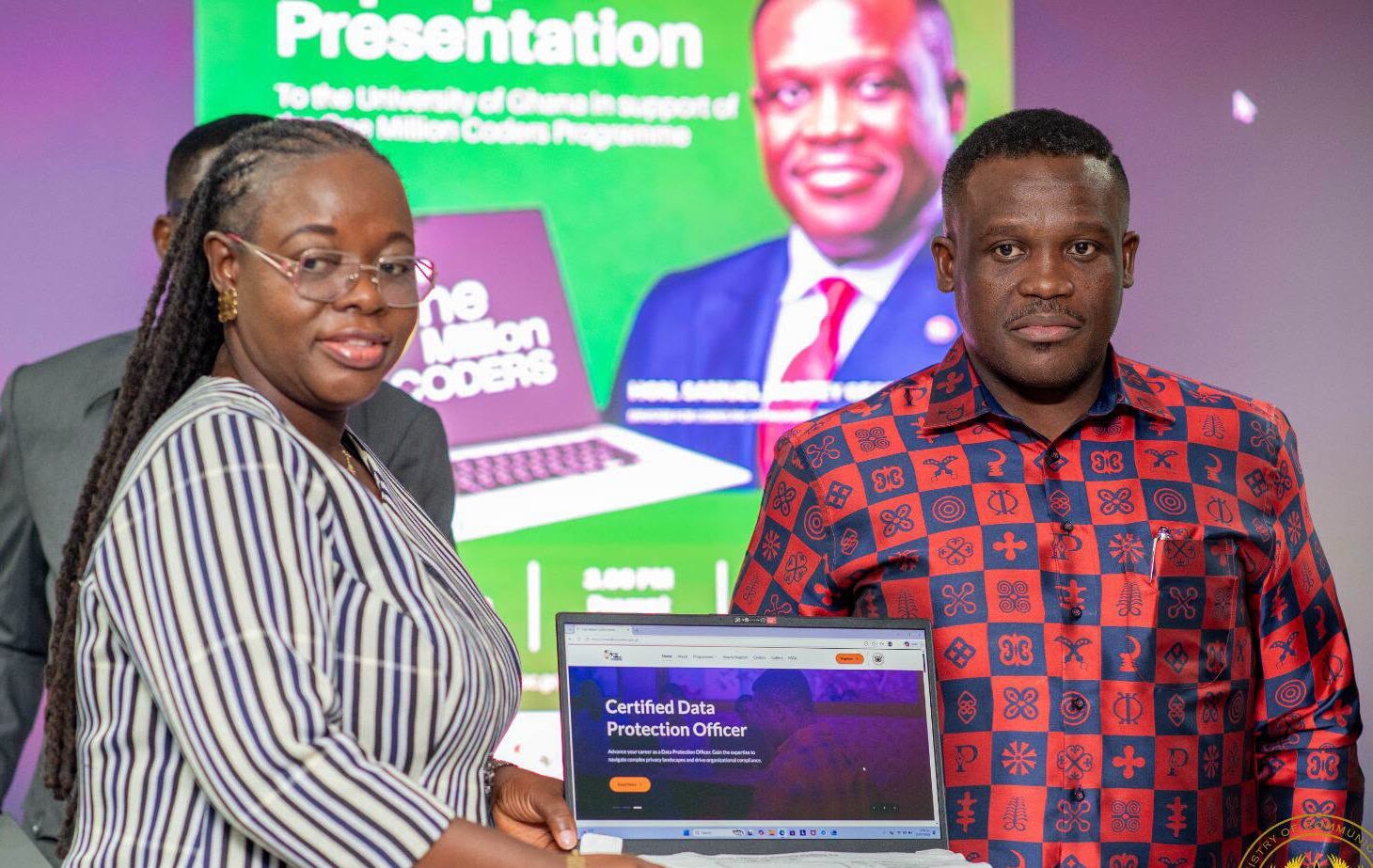
The Government of Ghana has delivered an additional 2,000 laptops to the University of Ghana. This donation supports the ongoing implementation of the One Million Coders Programme (OMCP). This latest delivery increases the total number of laptops supplied to the university under this initiative to 2,500 units.
This significant handover ceremony took place at the West African Centre for Cell Biology of Infectious Pathogens (WACCBIP). The OMCP is a key government initiative designed to equip a large segment of the Ghanaian population with critical digital skills. The programme focuses on areas such as coding, artificial intelligence (AI), cybersecurity, data analytics, and software development.
Samuel Nartey George, the Minister for Communication, Digital Technology and Innovations, spoke at the event. He described the initiative as a major investment in Ghana’s digital future. The Minister emphasized that these laptops will enable students to acquire practical skills. These skills are vital for the modern job market and for fostering innovation.
Minister George stressed the importance of using these tools for productive purposes. He stated, “These tools are not for consumption alone. We expect to see solutions, applications, and businesses coming out of this.” This statement underscores the government's expectation for tangible economic outcomes from the programme.
The One Million Coders Programme aims to equip one million Ghanaians with industry-relevant digital skills. This ambitious goal seeks to improve employability across the country. It also intends to drive innovation and support the broader national economic transformation agenda. The government views this programme as a cornerstone for positioning Ghana as a leading digital hub in Africa.
The initiative aligns with Ghana's long-term vision to prepare its youth for future job markets. By investing in digital literacy and advanced technical skills, the government hopes to create a skilled workforce. This workforce will be capable of contributing to a knowledge-based economy. The programme also seeks to reduce youth unemployment by providing in-demand skills.
This investment in digital infrastructure and education reflects a growing trend in Ghana. The nation is increasingly focusing on technology as a driver of economic growth. Similar initiatives have seen government and private sector collaboration to expand internet access and digital literacy. This particular programme targets higher education institutions to ensure a high level of skill acquisition.
The successful implementation of the OMCP could significantly boost Ghana's technology sector. It could lead to the creation of new startups and digital services. The Minister's call for beneficiaries to build innovative solutions highlights this potential. The programme is expected to foster a culture of entrepreneurship among young Ghanaians.
Going forward, the focus will be on monitoring the programme's effectiveness. This includes tracking the number of students trained and the solutions developed. The government will also assess the impact on job creation and economic growth. The continued supply of resources, like these laptops, will be crucial for the programme's sustained success and expansion.