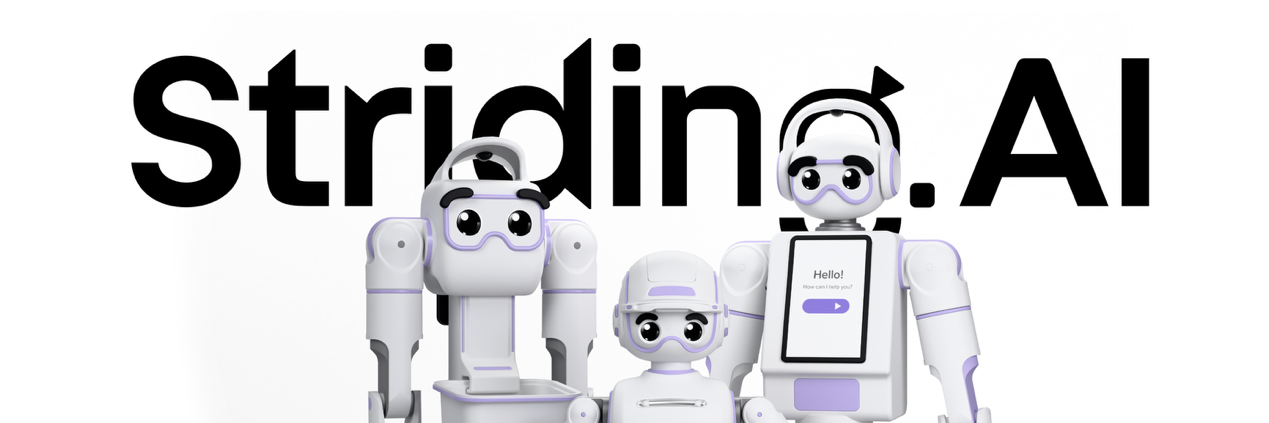
Striding AI announced its plan to develop next-generation robotic foundation systems. These systems will accelerate the deployment of Physical AI in real-world environments. The company aims to enable intelligent machines to perform useful tasks across various settings.
Striding AI's approach focuses on building foundational technologies. These technologies allow robots to perceive, reason, act, and continuously improve. They integrate advanced foundation models with robotic perception and control systems. The systems also use real-world action data and deployment infrastructure. This initiative will first target structured environments like retail, supporting tasks such as shelf restocking and inventory counting.
This development aligns with Ghana's increasing focus on technology and digital transformation. Reports have previously urged Ghana to leverage AI shifts for youth digital employment. The country is also expanding its digital infrastructure, as seen with Telecel Ghana's nationwide network expansion. These technological advancements are crucial for Ghana's economic growth and competitiveness in the global digital economy.
Song Yao, founder and CEO of Striding AI, emphasized the company's belief. He stated, "We believe that breakthroughs in Physical AI emerge from the continuous co-evolution of data, models, and infrastructure." The company adopts a systems-first approach. This integrates foundation models, robot hardware, software, data infrastructure, and control systems. It also includes deployment engineering to build scalable services.
The company's leadership team brings expertise from AI chips, autonomous driving, and robotics research. Their experience in bringing complex technologies to production environments is key. Initial deployments will focus on retail to support tasks like product organization and checkout assistance. These environments offer frequent human interaction and repeatable workflows. They also provide rich operational data, making them ideal for developing scalable Physical AI systems.
Striding AI expects its robotic foundation systems to support broader applications over time. These sectors include retail, food, agriculture, logistics, healthcare, and telecommunications. The capabilities developed will range from handling diverse objects to planning and executing complex tasks. These form part of an integrated system designed for wider robotic applications.
Internal testing showed significant improvements. Striding AI's human-in-the-loop Reinforcement Learning (RL) method improved task success rates by up to three times. To scale this, Striding AI is building comprehensive infrastructure. This includes robot pretraining, distributed reinforcement learning, and edge-to-cloud orchestration. This platform is designed to improve as more robots operate in real-world environments.