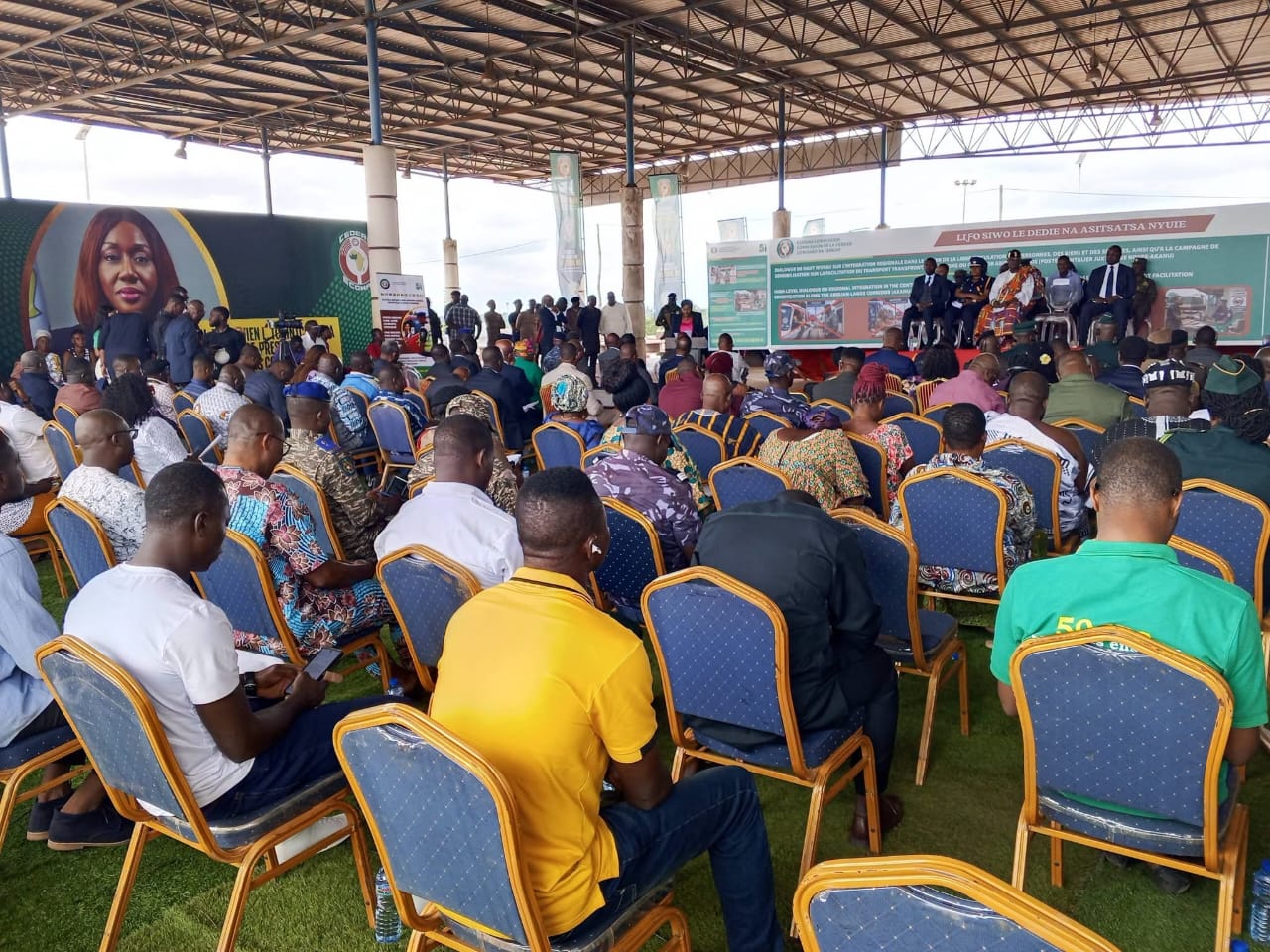
The ECOWAS Commission has engaged stakeholders at the Akanu-Noepe Joint Border Post to sensitise communities on the ECOWAS Protocol on the Free Movement of Persons, Goods, and Services. This engagement, held in the Ketu North Municipality of the Volta Region, aims to deepen public understanding of the protocol.
The initiative specifically targets communities along the Abidjan-Lagos Corridor, a vital economic artery. It seeks to address challenges faced by traders and travellers, thereby enhancing regional trade, investment, and tourism. The engagement brought together representatives from Ghana, Togo, Benin, and Nigeria.
This effort aligns with Ghana's broader commitment to regional integration and economic development within West Africa. Improved movement of goods and people can significantly boost cross-border commerce, contributing to national GDP. Ghana's economy stands to benefit from increased trade volumes and reduced logistical costs.
Mrs. Damtien L. Tchintchibidja, Vice President of the ECOWAS Commission, urged residents to utilise the free movement protocol's opportunities. She highlighted its importance for achieving regional integration and improving economic activities among border communities. The Vice President encouraged residents to learn the protocol's provisions and use established channels for addressing movement challenges.
The engagement also revealed plans for a proposed six-lane highway linking Côte d’Ivoire, Ghana, Togo, Benin, and Nigeria. This major infrastructure project aims to significantly boost trade and reduce travel time along the corridor. Improved connectivity will facilitate the movement of goods and people, strengthening economic activities across the region.
Mr. Samuel Basintale Amadu, Comptroller-General of the Ghana Immigration Service, advised travellers to remain security-conscious. He stressed that effective border management requires cooperation between security agencies and communities. Identifying and reporting suspicious activities is crucial for sub-regional security.
Madam Nana Birago Owusu-Ansah, Deputy Commissioner for Suspense Regime, Free Zones, Warehousing, and Transit at the Ghana Revenue Authority, urged traders to possess requisite documents. Proper documentation ensures smooth movement and reduces delays at international borders. This compliance is essential for efficient cross-border trade.
Discussions on the proposed six-lane highway have already taken place, with the proposal now before the ECOWAS Parliament for consideration. This project represents a substantial investment in regional infrastructure. It promises long-term economic benefits for all participating member states.
Stakeholders also called for continuous sensitisation of border communities, traders, and transport operators. Sustained education will help reduce misunderstandings at border points. It will also enable residents to fully benefit from regional integration initiatives, fostering greater economic prosperity.
The Akanu-Noepe Joint Border Post is a critical crossing point between Ghana and Togo. It forms part of the Abidjan-Lagos Corridor, which connects several West African countries. This corridor serves as a major route for regional trade and movement, underscoring the importance of these initiatives.