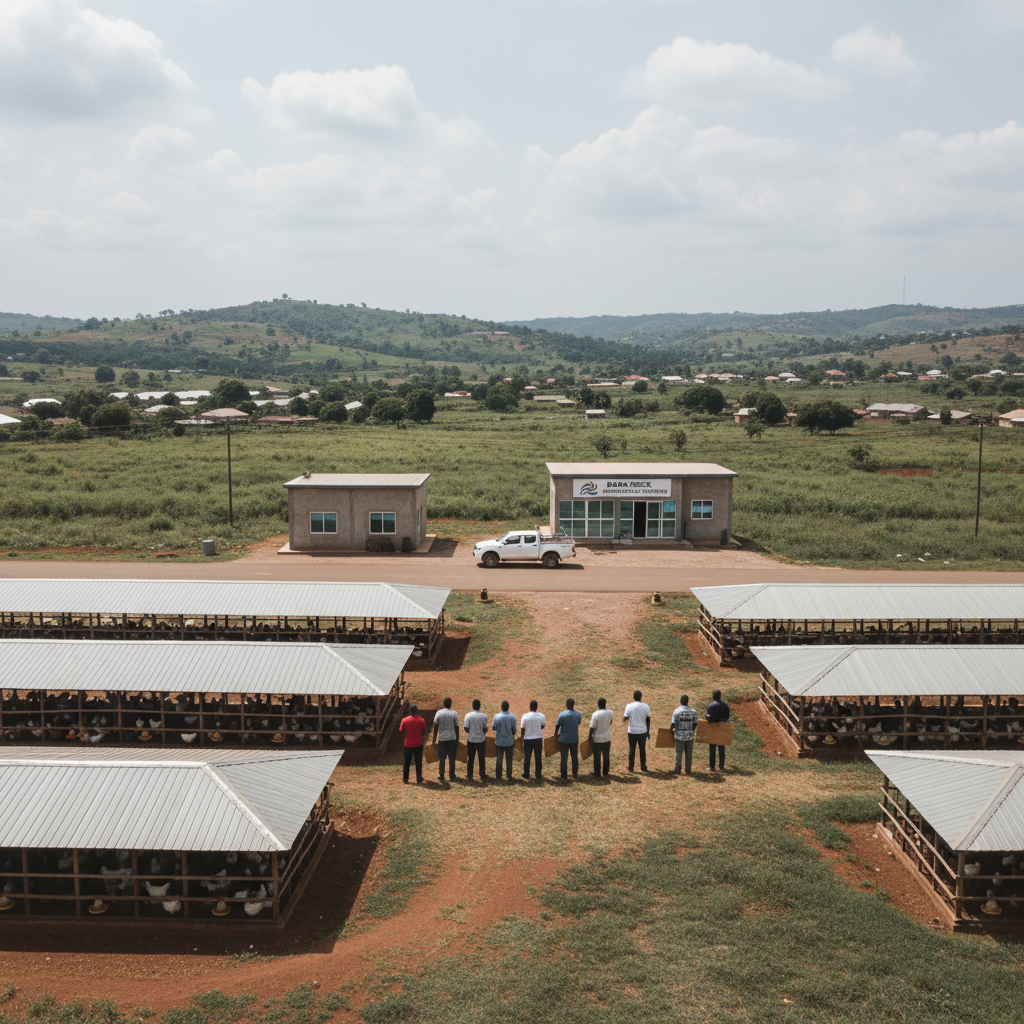
Bawa-Rock Limited, a gold trading and mining company, has provided GHS 700,000 in financial support to eight poultry farmers in the Greater Accra Region. These farmers experienced severe business disruptions due to the June 29, 2026 floods in Accra. The relief package aims to help them recover from the extensive damage.
The financial assistance addresses losses including birds, working capital, and farm infrastructure. Many farmers lost tens of thousands of birds and their entire livelihoods. This intervention is part of Bawa-Rock Limited's Corporate Social Responsibility (CSR) programme, designed to assist individuals and businesses facing unforeseen challenges.
Ghana's agricultural sector, particularly poultry farming, frequently faces vulnerabilities from natural disasters like floods. Such events disrupt food supply chains and impact local economies. The poultry industry contributes significantly to food security and employment, making its resilience crucial. This private sector support highlights the need for robust disaster preparedness and recovery mechanisms across key economic sectors. Previous data shows that flood events often lead to substantial economic losses for small and medium-sized enterprises (SMEs).
Eric Addae Boateng, Bawa-Rock Limited's Corporate and Social Responsibility Manager, presented the support. He reaffirmed the company's commitment to CSR and helping affected farmers rebuild their businesses. Mr. Addae Boateng explained that the financial assistance was carefully calculated to offset specific losses. Titus Frederick Lutterodt, Chairman of the Greater Accra Regional Association of Poultry Farmers, commended Bawa-Rock Limited. He stated the intervention renewed hope among farmers who suffered significant losses. Mr. Lutterodt noted, "Your kindness came at a moment when many of us have lost not only the birds and the farm structures but also our means of livelihood and hope for the future."
This support from Bawa-Rock Limited sets a precedent for private sector involvement in disaster recovery. It underscores the importance of corporate responsibility in mitigating economic shocks. The company previously supported over 300 traders affected by the September 5 Obuasi Town Hall fire with GHS 1.5 million. This included industrial sewing machines as start-up kits. Such initiatives can inspire other Ghanaian companies to contribute to community resilience. Decision-makers might consider incentives for businesses engaging in similar CSR activities. The long-term implications for the poultry sector include improved farmer confidence and potentially faster recovery times after future incidents. This proactive approach helps stabilize local economies and protect livelihoods.
The poultry farmers, including Madam Abena Kyei, expressed profound gratitude for the timely intervention. Madam Kyei, a veteran in poultry and piggery farming since 1995, recounted previous flood disasters where she received no external assistance. She stated the June floods destroyed tens of thousands of her birds, leaving her discouraged. "My joy started arousing when I heard of Bawa-Rock," she added. Shak Al-Mohammed of Shak Farms also expressed being "overwhelmed" by the support. He noted that without the assistance, restarting their businesses would have been extremely challenging. This private sector relief provides a critical lifeline where government aid might be delayed or insufficient. It also highlights the ongoing challenge of flood management in urban areas like Accra, which repeatedly affects businesses and residents.
The sustained efforts by Bawa-Rock Limited demonstrate a commitment beyond typical business operations. As an official aggregator for GoldBod, a wholly Ghanaian-owned company, Bawa-Rock aims to create lasting value through transparency and community impact. This model of corporate engagement is vital for Ghana's economic stability. It helps bridge gaps in disaster relief and fosters stronger community ties. The support ensures that vital sectors like poultry farming can continue to contribute to the national economy. This also reduces the burden on public funds for disaster recovery. The initiative serves as a practical example of how private entities can directly support economic recovery and resilience.