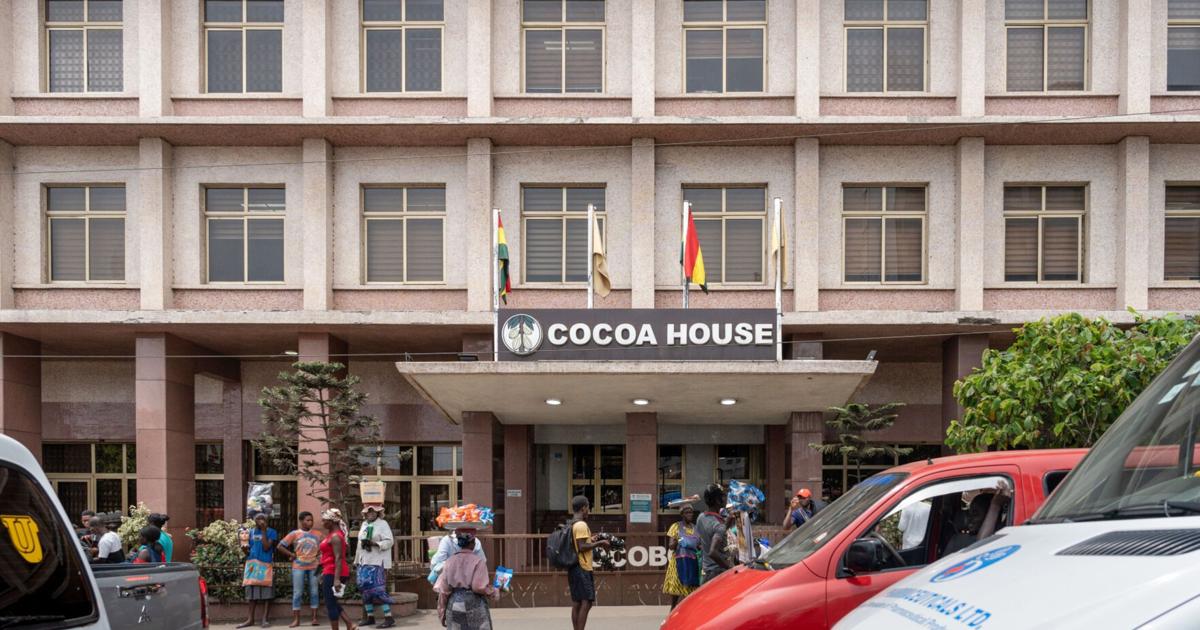
Cocoa Capital PLC, the financing arm of the Ghana Cocoa Board (COCOBOD), has officially admitted GHS 3.4 billion in commercial paper to the Ghana Fixed Income Market. This significant listing represents the first completed issuance under a broader GHS 16.3 billion domestic cocoa financing programme.
The security, identified as Series 01, Tranche 01, has an allotted amount of GHS 3,395,783,000. It carries a tenor of 266 days, maturing on June 28, 2027, after its issuance on October 5, 2026. This admission allows investors to buy or sell their holdings before maturity, transforming the paper from a primary market fundraising exercise into a tradable security.
This initiative marks a fundamental shift in how Ghana finances its crucial cocoa sector. For many years, COCOBOD relied heavily on annual syndicated loans from international banks to purchase cocoa beans from farmers. However, this model faced challenges, particularly after the syndicated facility collapsed during the 2023/24 season, leading to payment delays for licensed buyers.
The Ministry of Finance has endorsed this new arrangement as a “more sustainable financing model.” It aims to ensure timely cocoa purchases, address COCOBOD's inherited financial obligations, and strengthen the entire cocoa sector. The GHS 3.4 billion raised represents about 84.9 percent of the GHS 4 billion initially sought for this first tranche.
Cocoa Capital, wholly owned by COCOBOD, was established to raise funds for approved cocoa-sector needs. The wider GHS 16.3 billion programme includes GHS 14 billion for short-term commercial paper to finance cocoa purchases for the 2026/27 season. An additional GHS 2.3 billion is allocated for medium- to long-term bonds to refinance COCOBOD's existing debts. This structure aims to reduce COCOBOD's reliance on foreign currency borrowing for domestic cocoa purchases.
The admission of this commercial paper could deepen Ghana’s corporate debt market by introducing a large, regularly issued instrument. Eligible investors include banks, pension funds, insurance companies, and high-net-worth individuals. The reported interest rate of 11 percent appears competitive compared to Ghana’s prevailing policy rate of 14 percent and yields on some government securities.
Repayment for the programme will primarily come from receivables generated by selected cocoa export contracts assigned to Cocoa Capital. These proceeds will flow through designated collection, escrow, and debt-service accounts before reaching noteholders. This mechanism aims to separate cocoa export revenues from COCOBOD’s broader operational cash flows, providing greater clarity and security for investors.
However, the newly admitted instrument is described as senior and unsecured. This means investors rank ahead of subordinated creditors but do not hold a conventional security interest over specific physical assets. The success of the programme hinges on consistent cocoa production, favourable international prices, and efficient management of export contracts. These factors will directly influence the paper’s repayment profile and overall investor confidence.