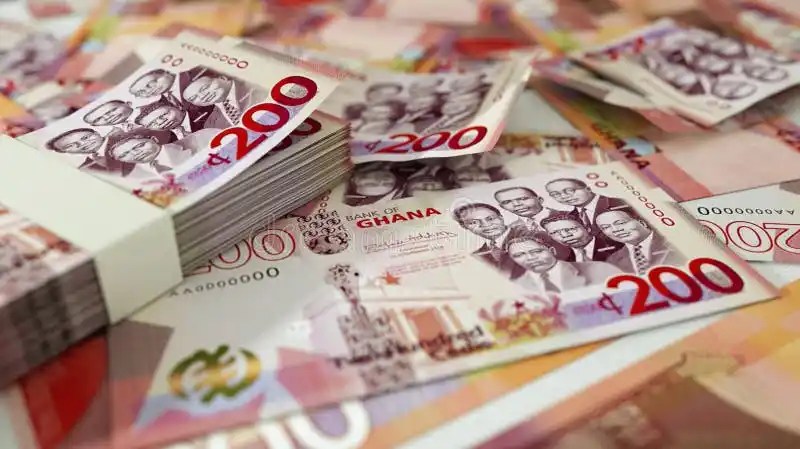
The Bank of Ghana (BoG) has absorbed a substantial GHS 228.08 billion from the financial system over a three-month period. This significant liquidity mop-up occurred between August and October 7, 2024, through the sale of 14-day bills in 20 separate auctions. The central bank's operations highlight its ongoing efforts to manage money supply within the economy.
Specifically, the BoG mopped up GHS 106.75 billion in August, followed by GHS 101.79 billion in September. An additional GHS 19.53 billion was absorbed in the first week of October. These 14-day bills offered an average interest rate of 10.5%. For banks and institutional investors, these short-term instruments provide a low-risk option to park cash, avoiding the complexities of traditional lending.
This aggressive liquidity management by the Bank of Ghana occurs while many Ghanaian businesses struggle to access affordable credit. Data from the BoG shows that the average lending rate stood at 15.9% at the end of August. Some commercial banks even charge rates as high as 30%. This disparity means that a small business needing a loan pays significantly more than what banks earn from risk-free investments with the central bank. The Ghana Reference Rate, a benchmark for loan pricing, was 10.6%, indicating that a large portion of the lending rate is the bank's profit margin.
The Bank of Ghana justifies its open market operations by citing its primary mandate of ensuring price stability. Excess cash in the economy can fuel inflation and put pressure on the Ghana cedi. In July, the Monetary Policy Committee held its policy rate at 14%, specifically mentioning inflation risks and external pressures as key concerns. These measures are standard tools for central banks globally to control inflation.
However, critics argue that the GHS 228.08 billion absorbed by the BoG could be put to more productive use. The High Street Journal suggests that authorities should innovate and channel these funds into critical sectors of the economy. Potential solutions include issuing longer-dated project bonds or five- to ten-year infrastructure bonds. These would still absorb liquidity but direct it towards vital projects like roads, power, and factories, rather than short-term rollovers. Such bonds would need to offer competitive returns to attract the same funds.
Other proposals include credit guarantees, where the government shares loan risks for manufacturers and agro-processors. This could make banks more willing to lend to productive sectors. Additionally, the BoG could offer rewards for lending, giving banks better terms on central bank paper if they lend to productive sectors, while pure cash parking earns less. A state-backed development window could also channel surplus funds to bankable, low-import projects selected through transparent criteria.
There are acknowledged trade-offs with these alternative approaches. Funds lent out circulate, which could reintroduce the inflation risk the BoG aims to control. Directed credit, where the government or central bank guides lending, has a mixed track record in many countries. Poorly managed projects could also leave banks with bad loans. Therefore, any repurposing of these funds must protect the central bank's independence and its inflation target. The central question remains whether a 14-day parking deal is the most effective way to achieve price stability, or if a portion of the GHS 228.08 billion could be deployed more actively in the real economy with careful oversight.