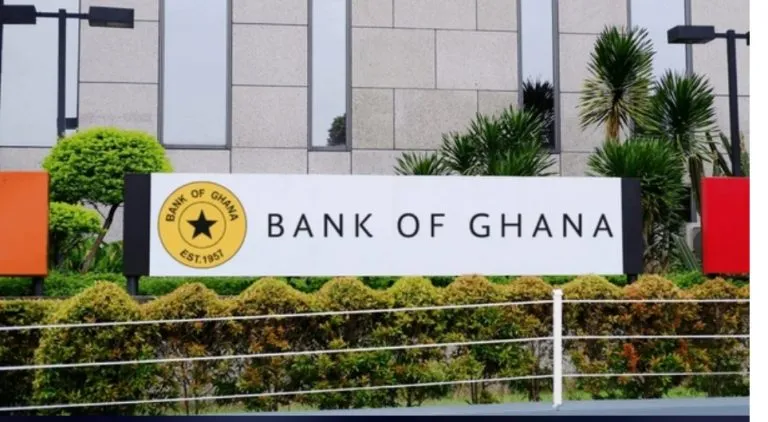
The Bank of Ghana (BoG) has proposed a new directive requiring all banks to maintain a 100% Liquidity Coverage Ratio (LCR). This means banks must hold enough readily convertible assets to withstand 30 days of severe financial stress without external emergency funding.
Under the proposed LCR Directive, a bank's unencumbered high-quality liquid assets must at least equal its projected net cash outflows over the subsequent 30 calendar days. This measure aims to ensure banks can meet obligations even if depositors withdraw funds or wholesale lenders refuse to renew financing. The directive is scheduled to become effective on September 1, 2027, with banks required to align their systems by August 31 of that year. Industry participants can submit comments until November 30, 2026.
This proposal represents a significant extension of Ghana's banking reforms initiated after the 2007 global financial crisis. That crisis showed that even adequately capitalised institutions could face severe liquidity problems. The BoG aims to prevent systemic instability arising from the inherent mismatch between short-term deposits and long-term loans in banking. This vulnerability means depositors can demand funds quickly, while loans mature much later.
The central bank stated that the role of banks involves transforming short-term deposits into long-term loans, making them vulnerable to liquidity risk. The LCR calculation divides a bank’s stock of unencumbered high-quality liquid assets by its projected net cash outflows over a 30-day stress period. A 100% ratio signifies GHS 1 in qualifying liquid assets for every GHS 1 of estimated net cash outflow under a regulatory stress scenario.
The BoG's model assumes various shocks, including retail deposit withdrawals and reduced access to wholesale funding. It also considers a potential downgrade of a bank's public credit rating by up to three notches. Banks must treat these assumptions as regulatory minimums and conduct their own internal stress tests. Under normal conditions, banks must maintain an LCR of at least 100% continuously. The central bank can impose a higher requirement on individual institutions if their liquidity profile presents greater risk.
The composition of eligible liquid assets will significantly impact how banks manage their balance sheets. Level 1 assets, which include physical cash and government-issued or guaranteed marketable securities, can be included without limit or regulatory haircut. This treatment provides a powerful regulatory advantage for government securities. Banks already hold substantial amounts of sovereign debt due to interest income, collateral use, and favourable regulatory treatment. Classifying marketable Government of Ghana securities as Level 1 assets without a haircut could reinforce their role as the banking sector’s primary liquidity instrument.
For banks, holding government paper could simultaneously generate income and support compliance with the new liquidity requirement. For the government, this directive could deepen institutional demand for Treasury bills and bonds. This increased demand would support domestic borrowing and secondary-market activity. However, the private sector faces more complicated consequences. If banks expand their stock of government securities to satisfy the LCR, they may allocate less of their balance sheets to private sector lending. This shift could potentially impact credit availability for businesses and individuals, affecting economic growth.
The new LCR directive is a proactive step to bolster the financial system's resilience. It aims to protect depositors and maintain financial stability in Ghana. The implementation will require careful monitoring to balance financial stability with the need for private sector credit. Stakeholders will closely watch how banks adjust their portfolios and how the directive influences lending practices and market dynamics.