Ghana's Cocoa Capital PLC successfully raised GHS 3.396 billion from domestic institutional investors. This achievement marks a significant step in the nation's effort to finance its vital cocoa industry through local capital markets.
The inaugural Series 1, Tranche 1 commercial paper attracted GHS 3.586 billion in bids, demonstrating strong local demand. This 266-day instrument offers an annual yield of 11 per cent and matures on June 28, 2027. This initial success is part of a larger GHS 16.3 billion programme, which includes GHS 14 billion in commercial paper and GHS 2.3 billion in bonds.
This domestic financing model offers a potentially transformative alternative to the traditional external funding arrangements. Historically, Ghana's cocoa sector has relied heavily on foreign loans. Shifting to local capital can reduce exposure to foreign-currency risk and global refinancing shocks. It also helps deepen Ghana's domestic capital market by connecting local savings with productive agricultural sectors.
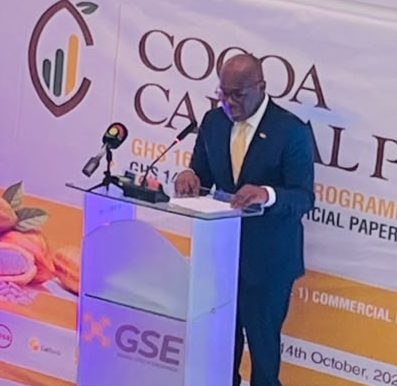
Kwamina Asomaning, President of the Ghana Association of Banks, welcomed the initiative but stressed the importance of discipline. Speaking at the instrument's admission to the Ghana Fixed Income Market on October 14, he stated that the programme's true success depends on sustained financial discipline. He highlighted the growing capacity of Ghana to mobilise Ghanaian capital for Ghanaian development.
Domestic funding, however, transfers economic risk to Ghanaian institutions and, indirectly, to household savings. This makes governance, disclosure, and cash-flow discipline paramount for the programme's legitimacy. Mr. Asomaning cautioned that borrowing must anchor in realistic assumptions about production, revenues, costs, and repayment capacity. He added that financial innovation works best when accompanied by discipline.
The cocoa industry faces inherent risks, including disease, ageing farms, and climate pressures, which can affect crop volumes. Fluctuations in international cocoa prices and domestic producer price decisions also impact revenue available for debt service. The financing structure attempts to mitigate some risks by linking repayment to receivables from selected cocoa forward-sales contracts. Collections will pass through designated ring-fenced accounts, creating a clearer path between export proceeds and investor payments.
While ring-fencing is valuable, it does not guarantee against weak harvests or revenue shortfalls. Its effectiveness relies on strong legal arrangements, quality reporting, and protection of funds from competing claims. Investors will require timely information on crop purchases, export deliveries, and forward-sales proceeds. Transparency must be a continuous obligation, not just a one-time disclosure.
The first maturity on June 28, 2027, will serve as a critical credibility test for the programme. Full and timely repayment would build confidence for future tranches and potentially lower financing costs. It would also establish cocoa-backed securities as a viable asset class in Ghana. Any delay or uncertainty, however, could quickly erode trust in Ghana's financial system and make future issuances more expensive. The initial paper absorbed nearly GHS 3.4 billion, and the overall programme is much larger, raising questions about concentration risk within the domestic financial system.