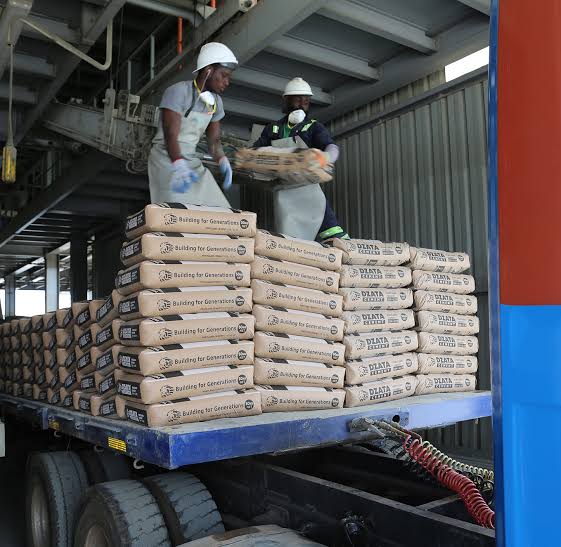
Dzata Cement Limited is significantly expanding its manufacturing operations, targeting an annual cement production capacity of approximately 3 million tonnes. This strategic move involves substantial investments in new receiving, storage, packing, and logistics infrastructure.
The expansion includes installing four additional cement silos, each with a 10,000-tonne capacity, bringing total storage to 40,000 tonnes. An automated packing facility capable of handling about 6,000 tonnes of cement daily will also be developed. These investments come as Dzata Cement marks five years of commercial operations and approaches production of its 30 millionth bag.
This growth initiative positions Dzata Cement to deepen its industrial footprint within Ghana's economy. The company aims to increase the scale at which locally owned capital participates in the cement value chain. This expansion reflects a broader national drive towards industrialisation and import substitution, contributing to local job creation and economic resilience.
Plant Director Abderrahim Ouahab confirmed the new capital expenditure programme received approval from CEO Ibrahim Mahama. Mr. Ouahab stated these immediate investments form the basis for the company’s longer-term ambition of producing approximately 3 million tonnes of cement annually. He added that achieving this target will require further expansion in storage, packing, bulk-loading, and truck-loading infrastructure.
The planned expansion will enhance Dzata Cement’s ability to receive, store, pack, and distribute cement more efficiently. It will also reduce truck waiting times and reliance on manual handling, improving safety and operational efficiency. The company plans to introduce additional cement grades and 25-kilogramme bags to meet changing customer requirements. Furthermore, Dzata Cement is strengthening its laboratory facilities for physical and chemical testing as production volumes increase. The company is also integrating digital technologies, including artificial intelligence for repetitive processes and an Enterprise Resource Planning system for stock management. These steps are crucial for maintaining competitiveness and meeting growing demand in the construction sector.
Dzata Cement Director of Finance, Godfred Barnes, highlighted the challenges faced during the company’s first five years. These included supply-chain disruptions, high freight costs, inflation, and exchange-rate volatility. Mr. Barnes noted that cedi depreciation significantly increased the cost of imported raw materials and spare parts. This often forced the company to redirect resources from long-term investments to immediate operational needs. He emphasised that financial management is central to the sustainability of an industrial operation.
Mr. Barnes acknowledged the support from GCB Bank, auditors Baker Tilly & Andah, and other partners in sustaining the company. He also credited founder and sole shareholder Ibrahim Mahama for maintaining a long-term focus on reinvestment and plant protection. Dzata Cement’s original ambition, announced in 2021, remains to become Ghana’s number-one cement manufacturing company by 2030. The company’s plant, located near the Tema Port, represents an investment of more than US$100 million. It currently has a stated capacity of approximately 2 million tonnes annually, using technology from German equipment developer Haver & Boecker.