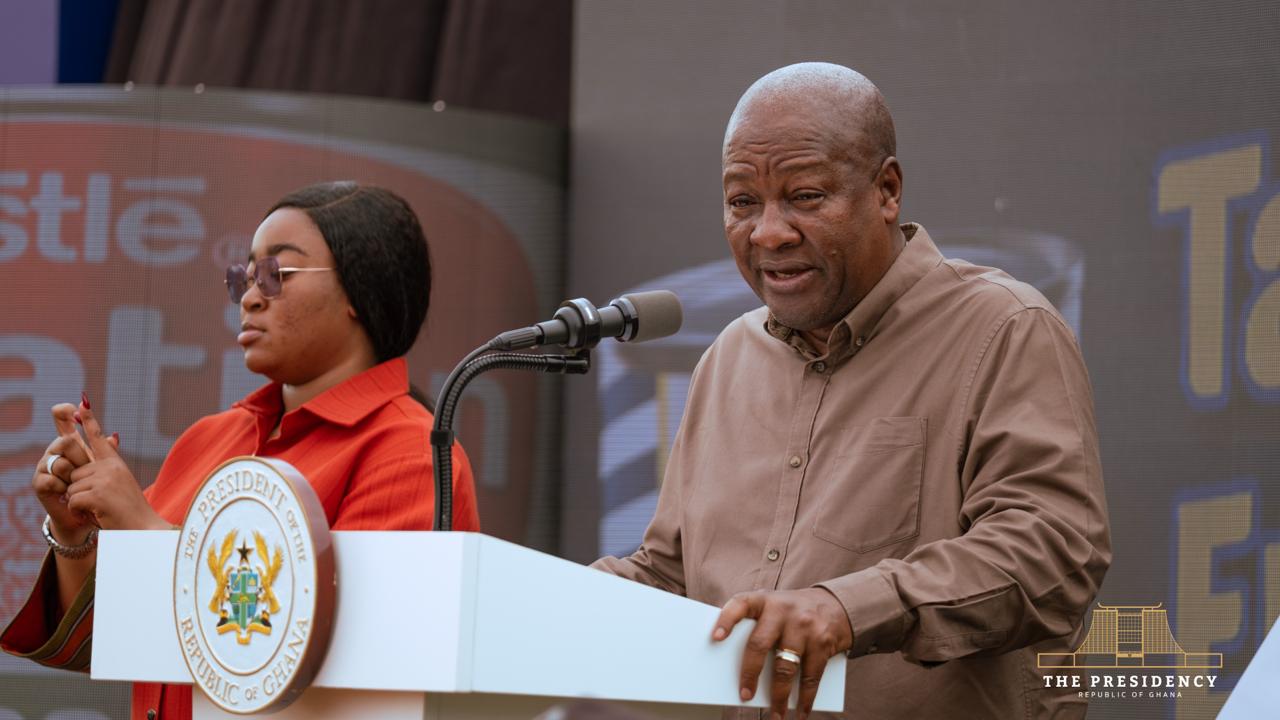
Nestlé Ghana Limited has significantly expanded its evaporated milk production capacity at its Tema factory, nearly tripling annual output. The facility's production capacity has increased from approximately 12,960 tonnes to almost 30,000 tonnes. President John Dramani Mahama commissioned the new production line, marking a major step for local manufacturing.
This substantial investment replaces a production line that had been in service for over 30 years. The upgrade is expected to strengthen Ghana's local manufacturing sector, create new economic opportunities, and support the nation's goal of becoming a key production hub in Africa. President Mahama described the investment as a clear sign of confidence in Ghana's long-term economic future.
The expansion directly supports the government's industrialisation agenda, aiming to boost domestic production and reduce reliance on imported goods. It also promotes the export of Ghanaian-made products across West and Central Africa. This move fits into Ghana's broader economic strategy to diversify its economy and enhance its position in regional trade, especially with the African Continental Free Trade Area (AfCFTA) Secretariat based in Accra.
President Mahama commended Nestlé for its enduring presence and commitment to Ghana, even through challenging economic periods. He noted Nestlé began operations in Ghana in 1957, the year of independence, with its Tema factory opening in 1971. The President highlighted popular brands like Ideal Milk and Milo, which have become household staples, reflecting Nestlé's deep roots in the country. He encouraged Nestlé to further engage with local farmers, suppliers, and businesses.
The factory's round-the-clock operations exemplify the government's 24-hour economy initiative. Nestlé Ghana currently supports approximately 1,200 full-time workers and an additional 1,300 third-party workers. A significant 94.4 percent of its employees are Ghanaian. The President stressed that expanding industrial capacity must directly lead to more employment opportunities and allow more Ghanaians to participate in economic growth. The government pledges to provide the necessary infrastructure and a supportive business environment for industries to thrive.
President Mahama also noted Tema's resurgence as an industrial powerhouse, a vision first conceived by Ghana's first President, Dr. Kwame Nkrumah. He cited the expansion of the Port of Tema, the recommencement of operations at the Tema Oil Refinery, and efforts to revive the Volta Aluminium Company (VALCO) as evidence of this broader industrial development. The government's Big Push infrastructure programme, which covers roads, railways, ports, and energy, complements the 24-hour economy initiative. Efficient transport systems, reliable electricity, and improved port operations are crucial for supporting factories and ensuring Ghanaian products can compete regionally and internationally.
Improving macroeconomic conditions are bolstering investor confidence and encouraging business expansion. President Mahama pointed to declining inflation and interest rates, alongside an improved performance of the Ghana cedi, as factors encouraging longer-term investment decisions. He emphasized that economic stability must translate into tangible investments, increased production, and new job opportunities. The government is also working to simplify customs procedures, review tax incentives, and digitise public services to make doing business in Ghana faster and more predictable.
President Mahama urged Nestlé Ghana to leverage its increased production capacity to boost exports across Africa. Ghana's role as host of the AfCFTA Secretariat positions it to become a major manufacturing and export hub. He also called for vigilance against illicit imports and customs evasion to protect legitimate local manufacturing and ensure fair competition. Ghanaian entrepreneurs, especially small and medium-sized enterprises, should explore opportunities in food processing, agribusiness, and light manufacturing. Ghana and Nestlé will both mark their 70th anniversaries in 2027, highlighting their long-standing partnership.