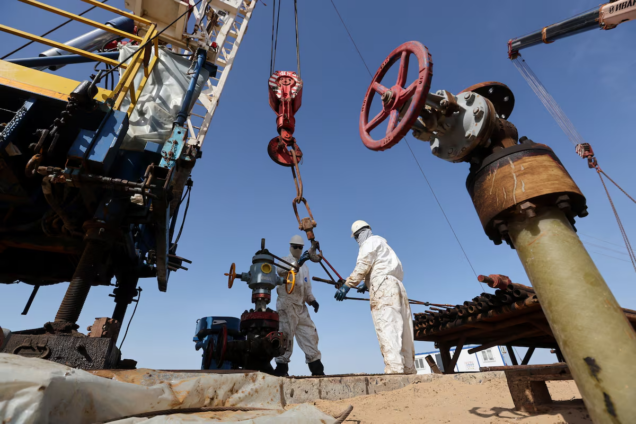
Oil prices edged lower on Monday as rising Middle East crude exports and a significant release of oil stocks by the Group of Seven (G7) nations boosted global supplies. Brent crude futures, a key international benchmark, fell by 66 cents, or 0.65%, to settle at $101.59 a barrel. Similarly, US West Texas Intermediate (WTI) crude dropped by 95 cents, or 1.03%, trading at $90.12 a barrel.
This decline follows a decision by G7 countries on Friday to release 100 million barrels of diesel and crude from their emergency reserves. This move aims to increase supply and stabilize prices. The G7 also pledged to avoid energy export restrictions, responding to pressure from US President Donald Trump. This release adds to an already growing supply from the Middle East, where crude exports surpassed pre-war levels on four of seven days in the final week of September, according to shipping data.
For Ghana, a net importer of crude oil, lower international prices can translate into reduced costs for fuel imports. This directly impacts the cost of living and doing business across the country. Stable or falling oil prices help manage inflation, which has been a persistent challenge for the Ghanaian economy. The cedi's depreciation, which saw a 3.1% drop against the dollar in July 2026, further highlights the importance of stable global commodity prices to mitigate import costs.
Tim Waterer, chief analyst at KCM Trade, noted that the G7 decision eased immediate supply anxiety. He also observed that Saudi export volumes are returning to pre-war levels, despite higher costs and less efficient routes. This combination, he explained, is enough to subdue prices for now, even with ongoing risks to energy infrastructure in the Gulf region. Analysts from ING also pointed out that Brent prices remain above $100 per barrel due to persistent geopolitical tensions and increased attacks on commercial vessels in the Gulf.
The immediate implication for Ghana is a potential easing of pump prices, which could offer some relief to consumers and businesses. However, the market remains volatile, with geopolitical risks in the Middle East continuing to pose a threat to supply stability. The ongoing conflict between the US and Israel against Iran, coupled with Houthi attacks on Saudi Aramco sites, underscores these risks. Any escalation could quickly reverse the current downward trend in prices. Decision-makers in Ghana will closely monitor these global developments, as they directly influence the nation's import bill and economic stability. The delayed review of 2027 oil output quotas by OPEC+ also adds uncertainty to future supply projections, making long-term price forecasting challenging.
The Bank of Ghana, in its role of managing the economy, pays close attention to global oil price movements. These prices significantly impact the country's balance of payments and foreign exchange reserves. A sustained period of lower oil prices could provide a much-needed buffer for the cedi, which has faced significant depreciation pressure. Conversely, a sudden spike in prices would exacerbate inflationary pressures and increase the cost of essential goods and services for Ghanaian citizens. The government's fiscal planning also relies heavily on stable energy costs, making these global oil market dynamics crucial for national economic health.